
Garden Craft Room Ideas: Design Your Dream Crafting Space
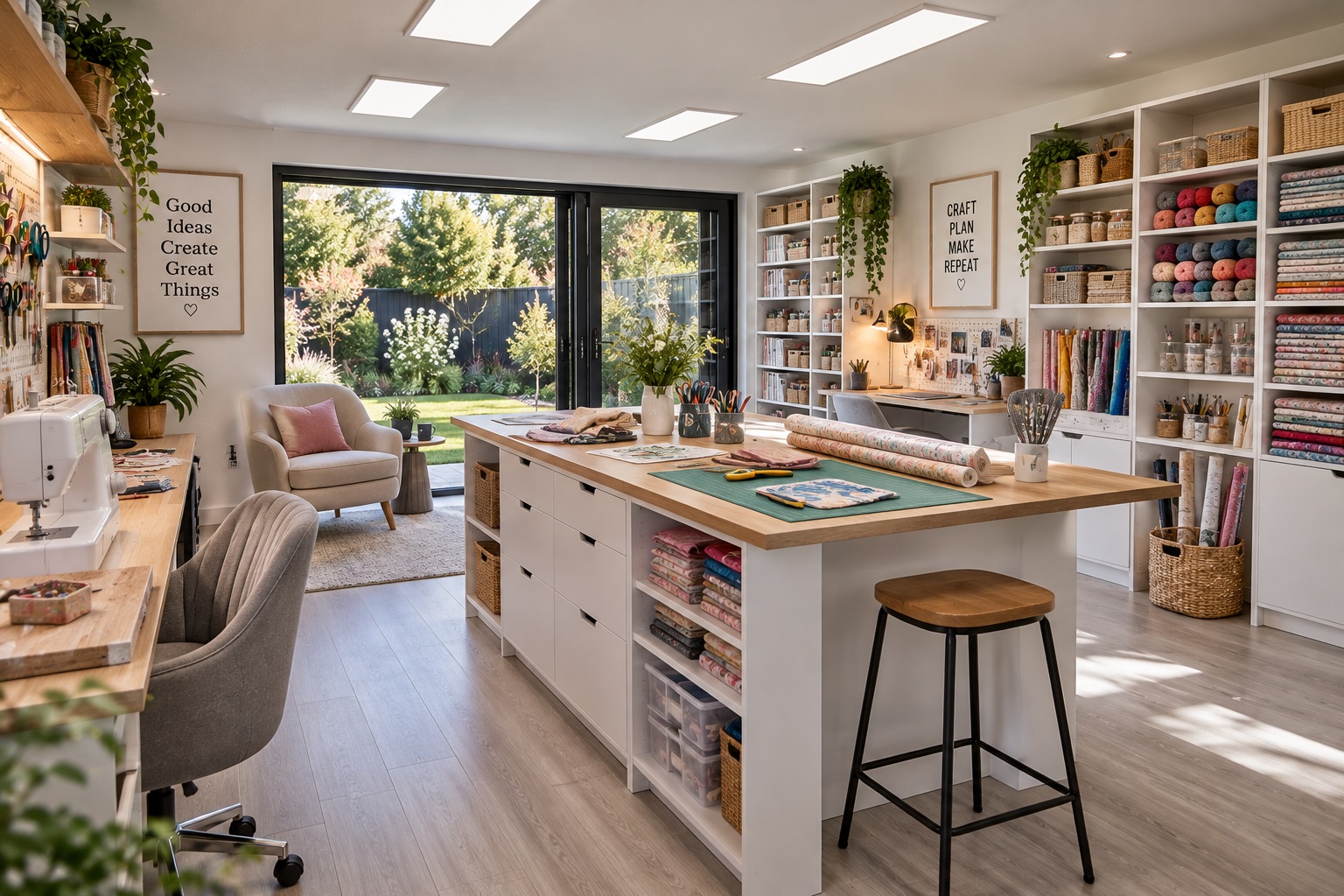
Create an Inspiring, Organised and Comfortable Craft Room for Year-Round Creativity
Imagine having your own dedicated craft room just a few steps from your back door. Somewhere you can leave your sewing machine set up, organise your fabrics, store your crafting supplies and enjoy your favourite creative hobbies without taking over the dining-room table or spare bedroom.
A garden craft room can turn that idea into reality.
Whether you enjoy sewing, knitting, quilting, crochet, scrapbooking, card making, jewellery making or other creative hobbies, having a dedicated space can transform the way you work.
Instead of spending time unpacking equipment and clearing everything away after each session, your materials can remain organised and ready whenever inspiration strikes.
A purpose-built garden craft studio also provides the opportunity to design the interior around your particular interests.
You can incorporate large worktables, sewing stations, storage cabinets, shelving, task lighting and comfortable seating, creating an environment that is both practical and inspiring.
At Oeco Garden Rooms, our fully insulated garden buildings provide an excellent foundation for creating a dedicated craft room, with substantial construction, double-glazed doors and windows, finished flooring and a complete electrical package.
With careful planning, a garden craft room can become a comfortable, organised and attractive space for creativity throughout the year.
Why Create a Craft Room in Your Garden?
One of the biggest challenges for people who enjoy crafting is finding enough space.
Creative hobbies often involve more equipment and materials than you initially expect.
Fabric collections grow.
Yarn accumulates.
Sewing machines, cutting mats, paper, paints and tools all need somewhere to go.
Before long, spare bedrooms and dining rooms can become permanent storage areas for craft supplies.
A garden craft room provides a dedicated solution.
You can create a workspace designed specifically around your hobbies while keeping the main house free from clutter.
It also provides somewhere to concentrate on creative projects away from everyday household distractions.
A Dedicated Space for Your Creative Hobbies
A home craft room should be more than somewhere to store equipment.
It should be an environment where you enjoy spending time.
Having a dedicated space means your sewing machine can remain set up.
Your cutting table can stay clear.
Materials can be organised in drawers and cabinets.
Unfinished projects can remain safely in place between sessions.
This can make crafting considerably more convenient.
Instead of spending the first twenty minutes preparing your workspace, you can walk into your garden studio and begin creating.
What Size Garden Craft Room Do You Need?
The ideal size depends on the type of crafting you enjoy and the amount of equipment you use.
A compact garden room may be perfectly suitable for knitting, crochet, card making or smaller creative projects.
Sewing and quilting can require considerably more space.
Large cutting tables, fabric storage, sewing machines and ironing areas all need room.
Before choosing your garden room dimensions, make a list of the furniture and equipment you intend to include.
Consider the space needed for:
-
Worktables and cutting surfaces
-
Sewing machines
-
Fabric storage
-
Shelving and cabinets
-
Comfortable seating
-
Electrical equipment
-
Materials and supplies
-
Finished projects
Remember to allow enough room to move comfortably around furniture.
A well-planned layout is often more important than simply choosing the largest possible building.
Small Garden Craft Room Ideas
You don't necessarily need a large garden room to create a useful crafting space.
A smaller building can work extremely well when storage and furniture are carefully planned.
Wall-mounted shelving makes use of vertical space.
Drawers and cabinets keep smaller supplies organised.
A compact worktable can provide a dedicated surface for crafting.
Foldable furniture may also be useful where floor space is limited.
The objective is to create an efficient workspace rather than trying to accommodate every possible piece of equipment.
A smaller craft room that is well organised can be far more enjoyable than a larger room filled with clutter.
Large Garden Craft Rooms
A larger garden room provides greater flexibility.
You might create separate areas for sewing, cutting, storage and relaxation.
A central island worktable can provide space for preparing materials.
Sewing machines can be positioned along one wall.
Storage cabinets can occupy another.
A comfortable chair can create somewhere to sit while knitting, crocheting or planning your next project.
If several members of the household enjoy crafting, a larger room may also allow more than one person to work comfortably.
Craft Room Layout Ideas
The best craft room layout depends on how you work.
Some people prefer a large central table with storage arranged around the perimeter.
Others prefer separate workstations for different activities.
For example, a sewing room might have a machine station, cutting table and ironing area.
A scrapbooking room may need a large flat work surface surrounded by drawers and shelving.
A jewellery-making studio may require smaller organised workstations with detailed task lighting.
Think about the order in which you use equipment and materials.
Keeping frequently used items close to your main working area can make crafting more enjoyable and efficient.
Sewing Room Ideas for Garden Studios
Sewing is one of the most suitable activities for a dedicated garden craft room.
A permanent sewing station removes the need to repeatedly set up and dismantle your machine.
You can position your sewing table near a window to benefit from natural daylight.
Additional task lighting can illuminate detailed work.
Fabric storage can be arranged nearby.
A separate cutting surface can provide room for measuring and preparing materials.
If you use an overlocker or embroidery machine, consider providing additional electrical sockets and workspace.
The objective is to create a sewing environment that supports your preferred projects.
Garden Quilting Rooms
Quilting can require substantial working space.
Large fabric pieces need to be measured, cut, arranged and sewn.
A generous cutting table can therefore be particularly useful.
Fabric storage should be organised so that colours and patterns are easy to find.
Shelving, drawers and labelled containers can help.
A design wall may also be useful for arranging quilt blocks and reviewing patterns.
Having a dedicated garden quilting room means large projects can remain in progress without disrupting other rooms in your house.
Knitting and Crochet Rooms
Knitting and crochet require a different type of environment.
Comfortable seating and good lighting may be more important than a large workbench.
A supportive armchair can create a pleasant place to work.
Shelving and baskets can keep yarn organised.
A small side table can hold patterns, tools and refreshments.
Natural daylight can make it easier to distinguish colours and work with detailed patterns.
A garden craft room can provide a peaceful setting for enjoying these hobbies while looking out over the garden.
Scrapbooking and Card Making
Scrapbooking and card making often involve large collections of paper, stamps, cutting tools, adhesives and decorative materials.
Organisation is therefore essential.
Shallow drawers can keep paper and card flat.
Small containers can hold embellishments.
Wall-mounted shelves can provide easy access to frequently used supplies.
A large worktable gives you room to spread out materials without constantly clearing space.
Good lighting is also important for detailed cutting, measuring and assembly.
Jewellery-Making Studios
Jewellery making can involve small components and detailed work.
A dedicated garden craft room allows you to create an organised workstation with suitable lighting and storage.
Drawers and compartmentalised containers can keep beads, findings and tools separated.
A stable workbench can provide a practical working surface.
However, some jewellery-making processes involve heat, soldering, chemicals or other hazards.
These activities may require specialist ventilation, fire-safety measures and equipment.
A standard garden room should not automatically be assumed suitable for every jewellery-making process without assessing the intended work.
Craft Room Storage Ideas
Storage is one of the most important features of a successful craft room.
Creative materials can quickly accumulate.
Without organisation, even a large studio can become cluttered.
A combination of shelving, drawers, cabinets and baskets can provide flexible storage.
Transparent containers can make supplies easier to identify.
Labelled drawers can help keep smaller items organised.
Frequently used equipment should remain accessible.
Less frequently used materials can be stored higher up or in closed cabinets.
The aim is to create a system that makes crafting easier rather than spending valuable time searching for supplies.
Floor-to-Ceiling Storage
Tall shelving can be particularly useful in a garden craft room.
It makes use of vertical space while keeping the central floor area clear.
Open shelves can display colourful fabrics, yarn and decorative materials.
Closed cabinets can hide less attractive supplies and equipment.
However, tall storage units should be securely fixed where necessary and shouldn't obstruct windows, doors or ventilation.
Heavier items should generally be stored at practical, accessible heights.
Good storage should improve convenience without making the room feel overcrowded.
Central Craft Tables and Work Islands
A large central table can become the main feature of a craft room.
It provides somewhere to cut fabric, assemble projects, prepare materials and spread out designs.
Storage beneath the worktop can make the space even more useful.
Drawers and shelves can hold tools and supplies.
The ideal table height depends on the activities being performed.
For example, a standing cutting table may be higher than a seated sewing workstation.
Choosing furniture appropriate for your working position can make longer crafting sessions more comfortable.
Natural Daylight for Craft Rooms
Natural daylight is particularly valuable for creative hobbies.
It helps illuminate work surfaces and allows colours, patterns and textures to be appreciated.
Large glazed doors and windows can create a bright, welcoming interior.
At Oeco, our garden rooms feature double-glazed anthracite PVCu doors and windows, providing natural daylight alongside a contemporary appearance.
However, strong direct sunlight can create glare and may affect materials stored near windows.
The position and orientation of the garden room should therefore be considered carefully.
Blinds can help control strong sunlight when required.
LED Lighting for Craft Rooms
Artificial lighting is essential for evening crafting and darker winter days.
A combination of general lighting and dedicated task lighting can provide the best results.
At Oeco, our garden rooms include an LED light panel as part of the standard electrical package.
Additional adjustable lamps can illuminate sewing machines, cutting tables and detailed workstations.
For colour-sensitive crafts, lighting with suitable colour-rendering performance may be beneficial.
The objective is to create clear, comfortable illumination without harsh shadows or excessive glare.
Choosing Craft Room Colours
Interior colour can influence how bright and spacious a craft room feels.
White or neutral walls create a clean background and reflect natural light.
Soft greys, creams and muted colours can create a calm atmosphere.
Colourful fabrics, yarn and crafting supplies can then provide visual interest.
A neutral interior can also make it easier to judge colours when working with textiles and other materials.
The best colour scheme is one that supports your creative activities while making the room somewhere you enjoy spending time.
The Best Flooring for a Garden Craft Room
Craft rooms need practical flooring.
Chairs, worktables, dropped materials and occasional spills can place demands on the floor surface.
At Oeco, our garden rooms include heavy-duty laminate flooring, providing a durable finished interior.
Protective mats can be used beneath workstations where appropriate.
If you regularly use paint, adhesives or other materials that may spill, consider additional surface protection.
The ideal floor should be attractive, practical and relatively easy to clean.
Insulation for Year-Round Crafting
A garden craft room should ideally be somewhere you can enjoy throughout the year.
That makes insulation particularly important.
An uninsulated garden building can become uncomfortable during winter and experience substantial temperature fluctuations.
At Oeco, our garden rooms feature fully insulated walls, roof and floor, helping create a comfortable environment when suitable heating and ventilation are provided.
This means you can continue sewing, knitting, quilting and enjoying other hobbies during colder months rather than limiting your craft room to summer use.
Heating Your Garden Craft Room
Some heating will normally be desirable during colder weather.
The ideal heating arrangement depends on the size of the room, insulation, glazing and how it will be used.
If you spend several hours sitting at a sewing machine or working on detailed projects, maintaining a comfortable temperature can be particularly important.
Heating equipment should be positioned safely away from fabrics, paper, yarn and other combustible materials.
The heating arrangement should ideally be considered during the design stage.
Ventilation in a Garden Craft Room
Ventilation helps maintain a comfortable internal environment and manage humidity.
Opening windows can provide useful natural airflow during suitable weather.
However, different crafting activities can have very different ventilation requirements.
Sewing and knitting generally have different requirements from resin work, spray painting, solvent-based adhesives or other processes that generate hazardous vapours or particles.
Specialist activities may require dedicated extraction and other controls.
A standard garden room shouldn't automatically be assumed suitable for every craft process without considering the materials and equipment involved.
Electrical Sockets for Craft Equipment
Modern craft rooms can contain numerous electrical devices.
Sewing machines, overlockers, embroidery machines, cutting machines, irons, computers and task lighting may all require power.
At Oeco, our standard garden-room electrical package includes four double sockets, an LED light panel, a consumer unit, light switch and concealed wiring, with appropriate electrical certification.
If you intend to use additional or specialist equipment, discuss your electrical requirements before installation.
Planning socket positions around your furniture can reduce reliance on extension leads.
Wi-Fi and Digital Crafting
Many creative hobbies now involve digital technology.
You might download sewing patterns, watch tutorials, use an electronic cutting machine or operate computer-controlled embroidery equipment.
Reliable internet connectivity can therefore be useful.
Before installation, check whether your existing home Wi-Fi reaches the proposed garden room location.
If necessary, consider a suitable wired or wireless networking solution.
A garden craft room can combine traditional hands-on creativity with modern digital tools.
Craft Room Comfort and Ergonomics
Crafting often involves spending long periods seated or standing in one position.
Comfortable furniture and sensible workstation heights can therefore make a significant difference.
Choose a supportive chair for sewing and detailed work.
Position frequently used tools within easy reach.
Avoid working at a table that is too low or too high for the activity.
Good lighting can also help reduce unnecessary eye strain during detailed tasks.
A well-designed craft room should be comfortable as well as attractive.
Garden Craft Room Privacy
A dedicated craft room can provide valuable separation from everyday household activities.
However, large glazed doors may make the interior visible from neighbouring properties.
Blinds can provide privacy when required.
Natural screening using hedges, ornamental grasses and carefully positioned planting can also help.
The position and orientation of the garden room should ideally be considered before installation.
Privacy can make the studio feel like a peaceful retreat rather than simply another room overlooking the garden.
Security for Craft Rooms
Crafting equipment and materials can represent a substantial investment.
Sewing machines, embroidery machines, specialist tools and fabric collections may be surprisingly valuable.
Security should therefore be considered during the design stage.
At Oeco, our garden rooms feature secure double-glazed anthracite PVCu doors and windows with insurance-approved locks.
Blinds and suitable screening can also help prevent valuable equipment being permanently visible from outside.
Craft Rooms for Small Businesses
A garden craft room can also provide a workspace for someone selling handmade products.
You might create clothing, personalised gifts, jewellery, cards, textiles or other handmade items.
A dedicated studio can provide somewhere to make products, organise stock and prepare orders.
However, commercial use may introduce additional considerations relating to planning, insurance, deliveries, customers and other requirements.
If you intend to operate a business from your garden craft room, check the relevant requirements before installation.
A Craft Room That Can Adapt Over Time
Your creative interests may change.
You might begin with sewing and later become interested in quilting, embroidery or other hobbies.
A flexible garden room can adapt.
Furniture can be rearranged.
Storage can be expanded.
New equipment can be introduced where appropriate.
The building may also be suitable for other uses in the future, such as a home office, art studio or relaxation room.
This versatility is one of the advantages of choosing a high-quality insulated garden room.
Is a Garden Craft Room Worth It?
For someone who regularly enjoys creative hobbies, a dedicated garden craft room can provide substantial practical advantages.
It removes the need to share household space.
It allows equipment to remain set up.
It provides organised storage.
And it creates somewhere specifically associated with creativity.
A fully insulated garden room also offers the opportunity for comfortable year-round use when suitable heating and ventilation are provided.
The biggest benefit may simply be having a dedicated environment that makes it easier to spend more time doing something you enjoy.
Create Your Dream Garden Craft Room
The perfect garden craft room isn't necessarily the largest or most expensive.
It is the one designed around your hobbies, equipment and working preferences.
Start by identifying the activities you enjoy most.
Then consider the worktables, storage, lighting, electrical sockets, heating, ventilation and floor space required.
At Oeco Garden Rooms, our fully insulated buildings provide a substantial foundation for creating a dedicated craft studio, with double glazing, durable flooring, electrical installations, foundations, delivery and professional on-site installation.
With thoughtful planning, a garden room can become an inspiring space for sewing, quilting, knitting, crafting and countless other creative interests.
Your dream crafting space could be waiting just outside your back door.
10 Benefits of Having a Garden Craft Room
1. A Dedicated Space for Your Creative Hobbies
A garden craft room provides somewhere specifically designed for sewing, knitting, quilting, scrapbooking, card making and other creative activities. Instead of sharing the dining-room table or spare bedroom, you can create a permanent workspace with everything organised and ready to use.
2. Comfortable Year-Round Crafting
A fully insulated garden room can provide a comfortable environment throughout the seasons when suitable heating and ventilation are provided. With insulation within the walls, roof and floor, you can continue enjoying your favourite crafts during cold winter mornings and warmer summer days.
3. More Space Inside Your Home
Crafting materials can quickly take over bedrooms, dining rooms and other living areas. A dedicated garden craft studio provides somewhere to store equipment, fabrics, yarn, paper and other supplies without cluttering the main house.
4. Better Organisation and Storage
A purpose-designed craft room allows you to incorporate shelving, drawers, cabinets and storage systems around your hobbies. Fabrics, sewing patterns, tools and other materials can all have dedicated places, making your workspace easier to use and keeping projects organised.
5. Leave Projects Set Up Between Sessions
One of the biggest advantages of having your own craft room is not needing to clear everything away after each session. Sewing machines, cutting tables and unfinished projects can remain in place, allowing you to continue exactly where you left off whenever inspiration strikes.
6. Enjoy Natural Daylight
Large glazed doors and windows can provide excellent natural illumination for sewing, quilting, drawing and other detailed creative activities. Carefully positioned glazing helps create a bright, welcoming workspace with attractive views into the surrounding garden.
7. Design the Room Around Your Favourite Crafts
Different hobbies require different equipment and layouts. A sewing enthusiast may want a permanent machine station and cutting table, while someone who enjoys knitting may prefer comfortable seating and organised yarn storage. A garden craft room can be tailored to your particular interests.
8. Fewer Household Distractions
Working in a separate garden studio can help create distance from everyday household activities. Having somewhere dedicated to your hobbies allows you to concentrate on creative projects without constantly rearranging shared living areas.
9. A More Inspiring Creative Environment
A garden craft room can be personalised with colourful materials, attractive shelving, comfortable furniture and decorative features. Combined with natural daylight and views of the garden, it can become somewhere you genuinely look forward to spending time.
10. A Versatile Long-Term Investment
A high-quality insulated garden room isn't limited to crafting. If your requirements change, the building can potentially be adapted into a home office, art studio, hobby room or relaxation space, providing useful additional space for years to come.
10 Frequently Asked Questions About Garden Craft Rooms
1. Can you use a garden room as a craft room?
Yes. A properly designed and fully insulated garden room can make an excellent craft room.
It can provide dedicated space for sewing machines, worktables, shelving, storage cabinets and other creative equipment.
Large glazed doors and windows can provide natural daylight, while insulation, heating and ventilation help create a comfortable environment throughout the year.
The key is to plan the building around the particular crafts you enjoy.
2. What size garden room do I need for a craft room?
The ideal size depends on your hobbies, equipment and storage requirements.
A compact garden room may be perfectly suitable for knitting, crochet, card making or smaller craft projects.
Sewing, quilting and activities involving large cutting tables may require considerably more space.
Before choosing the building dimensions, consider your worktables, machines, storage cabinets and the room needed to move comfortably around them.
A well-planned layout is often more important than simply choosing the largest possible building.
3. What is the best layout for a garden craft room?
The best layout depends on the activities you enjoy.
A sewing room may benefit from a permanent machine station, cutting table and fabric storage.
A scrapbooking room might need a large work surface surrounded by drawers and shelving.
A quilting studio may benefit from a central work island and space for arranging larger projects.
Think about how you move between different activities and position frequently used equipment within easy reach.
4. What flooring is best for a garden craft room?
A durable, easy-to-clean floor is generally a practical choice.
Laminate flooring can work well for sewing, knitting, card making and many other creative hobbies.
Protective mats can be positioned beneath workstations where paint, adhesives or other materials may spill.
At Oeco, our garden rooms include heavy-duty laminate flooring as standard.
If you intend to use particularly heavy equipment or undertake specialist activities, discuss the requirements during the design stage.
5. Does a garden craft room need heating?
Some heating will normally be desirable during colder weather if you intend to use the craft room throughout the year.
A fully insulated garden room helps slow heat loss and makes the internal environment easier to control.
At Oeco, our garden rooms feature insulation within the walls, roof and floor.
Heating should be selected according to the room size, insulation and intended use, with equipment positioned safely away from fabrics, paper and other combustible materials.
6. Does a garden craft room need ventilation?
Yes. Suitable ventilation helps maintain a comfortable internal environment and manage humidity.
For activities such as sewing, knitting and quilting, appropriate general ventilation may be sufficient.
However, certain crafts involving resins, solvents, spray products, adhesives or other hazardous substances can require specialist extraction and additional controls.
A standard garden room shouldn't automatically be assumed suitable for every craft process without assessing the materials and equipment involved.
7. Can I have electricity in my garden craft room?
Yes. A professionally installed electrical supply can make a garden craft room considerably more practical.
Electrical sockets can power sewing machines, embroidery machines, cutting machines, computers, task lighting and other suitable equipment.
At Oeco, our standard electrical package includes four double sockets, an LED light panel, a consumer unit, light switch and concealed wiring, with appropriate electrical certification.
Additional requirements should be discussed before installation.
8. How can I organise a small garden craft room?
Make use of vertical space with wall-mounted shelving and tall storage cabinets.
Drawers, baskets and labelled containers can keep smaller supplies organised.
A compact worktable or carefully designed central island can provide useful working space without making the room feel overcrowded.
Keep frequently used materials within easy reach and store less frequently used equipment in cabinets or higher shelving.
The objective is to maximise practical working space while maintaining an organised environment.
9. Can I run a craft business from a garden room?
Yes, a garden room can potentially provide a practical workspace for creating handmade products and managing a small craft business.
It can be used for sewing, making gifts, producing cards, preparing orders and storing suitable materials.
However, business use may introduce additional considerations relating to planning, insurance, deliveries, customers, equipment and other requirements.
These should be checked according to the nature and scale of your activities before the building is installed.
10. Is a garden craft room worth the investment?
For someone who regularly enjoys creative hobbies, a dedicated garden craft room can provide substantial practical benefits.
It offers somewhere to keep equipment permanently set up, organise materials and work on projects without taking over existing living space.
A fully insulated garden room also provides the opportunity for comfortable year-round use when suitable heating and ventilation are provided.
The building can potentially be adapted for other purposes in the future, making it a versatile addition to your home.