
Garden Dance Studio Ideas: Create Your Perfect Home Dance Space
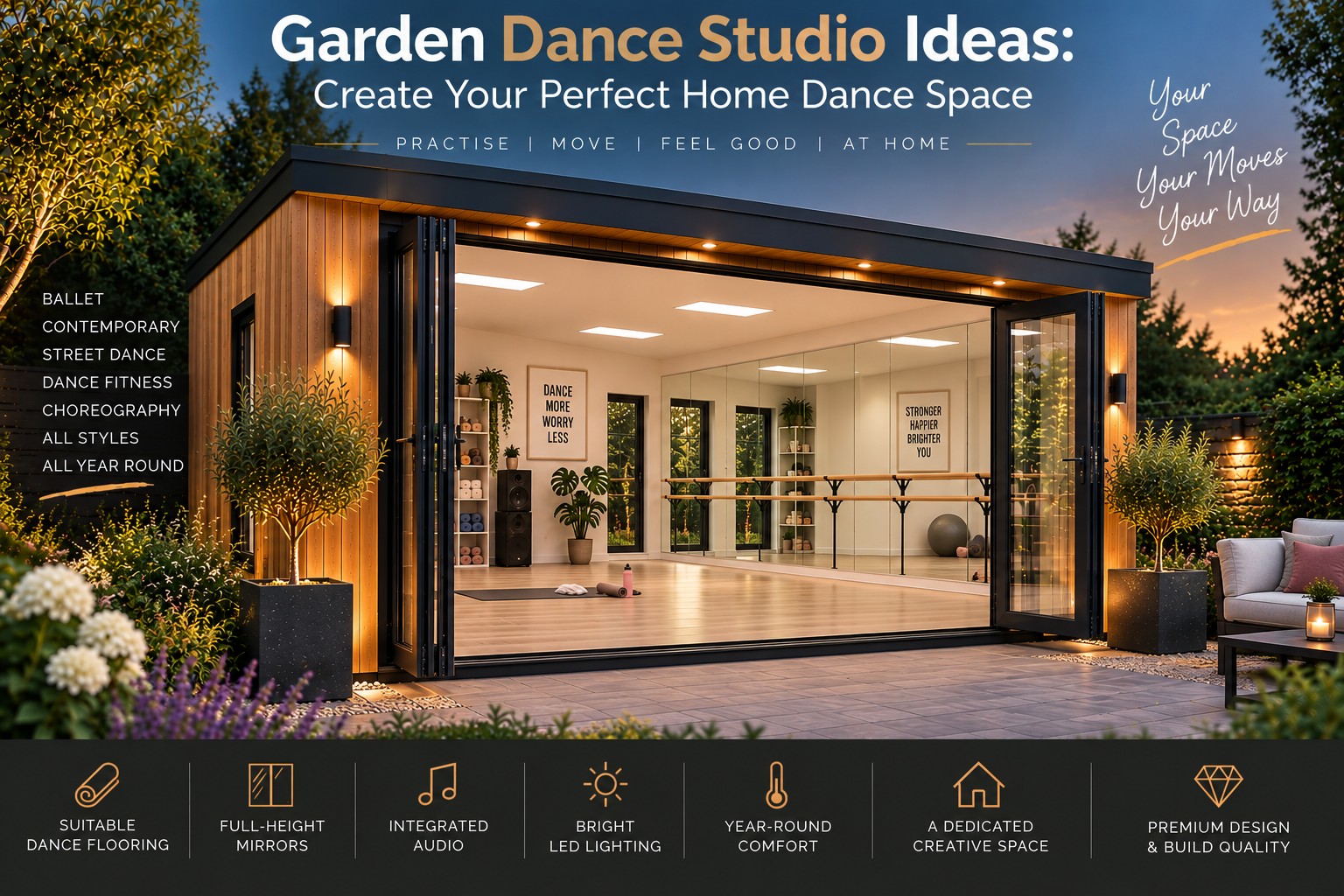
Design a Bright, Spacious and Comfortable Dance Studio for Year-Round Practice
Imagine having your own private dance studio just a few steps from your back door. A dedicated space where you can practise ballet, develop choreography, enjoy dance fitness or simply move to your favourite music whenever you want.
A garden dance studio can make that possible without sacrificing a bedroom, garage or other living space inside your home.
Whether you're an enthusiastic dancer, a parent supporting a child's passion for dance, a choreographer or someone who enjoys movement and fitness, a purpose-designed garden room can provide an inspiring environment for regular practice.
Unlike a temporary dance area in the living room, a dedicated studio allows mirrors, ballet barres, sound equipment and other accessories to remain in place.
However, creating a successful home dance studio involves more than installing a large mirror and choosing attractive flooring.
The size of the room, internal ceiling height, floor construction, ventilation, insulation, heating, lighting and acoustics all influence how comfortably and safely the space can be used.
At Oeco Garden Rooms, our fully insulated garden buildings provide a substantial foundation for creating a dedicated dance space, with insulated walls, roof and floor, secure double glazing, electrical installations and professional on-site installation.
With the right planning and suitable specialist dance flooring, a garden room can become a comfortable, practical and inspiring environment for movement throughout the year.
Why Create a Dance Studio in Your Garden?
One of the biggest attractions is convenience.
Travelling to a commercial dance studio can involve considerable time, particularly if you practise several times a week.
A home garden dance studio removes the journey.
You can practise before work, rehearse during the afternoon or enjoy a dance fitness session in the evening.
There is no need to arrange your practice around studio availability.
A dedicated space also allows you to concentrate on your movements without constantly rearranging household furniture.
For dancers who regularly practise routines, that convenience can make a significant difference.
A Dedicated Space for Dance and Movement
Dancing requires freedom of movement.
An ordinary bedroom or living room may contain sofas, tables, beds and other furniture that restrict the available space.
A garden dance studio can be designed with an open floor area from the beginning.
Mirrors can be positioned along one wall.
A ballet barre can be installed where required.
Music equipment can have a permanent location.
Storage can be provided for dance shoes, exercise mats and other accessories.
The objective is to create a room that feels spacious, uncluttered and ready for practice.
What Size Garden Dance Studio Do You Need?
The ideal size depends on the type of dancing you intend to do.
A small studio may be suitable for ballet barre exercises, stretching and certain dance fitness routines.
More energetic styles involving travelling movements, jumps or multiple dancers require considerably more space.
Before choosing the garden room dimensions, think about the movements you regularly perform.
Consider the space needed to extend your arms, turn, step backwards and move across the floor.
Remember that furniture, mirrors, barres and sound equipment can reduce the usable area.
The most important measurement is the clear internal floor space, not simply the external dimensions of the garden room.
Small Garden Dance Studio Ideas
You don't necessarily need an enormous garden room to create a useful dance space.
A compact studio can work well for ballet barre practice, stretching, mobility exercises and selected fitness activities.
Wall-mounted mirrors can make the room feel brighter and more spacious.
A suitably installed ballet barre can provide support for appropriate exercises.
Storage should be kept compact so that it doesn't occupy unnecessary floor area.
However, a small room may not be appropriate for travelling choreography, energetic jumps or routines requiring substantial movement.
Choose the building around the activities you actually intend to perform.
Large Garden Dance Studios
A larger garden room provides more flexibility.
You may have sufficient space for several dancers, more demanding choreography or a combination of dance and fitness activities.
A mirrored wall can provide a useful visual reference.
A separate storage area can keep accessories away from the main floor.
Additional space may also allow a seating area for resting between sessions.
If you're considering teaching dance classes, the requirements become more involved and should be assessed separately, including occupancy, access, safety and any relevant business or planning considerations.
Garden Dance Studio Ceiling Height
Ceiling height is particularly important for certain dance styles.
Ballet, contemporary dance and other disciplines can involve raised arms, jumps and overhead movements.
The internal ceiling height needs to provide sufficient clearance for the intended activities.
Remember that the external building height isn't the same as the usable height inside.
Flooring systems can also reduce available headroom.
If you intend to practise jumps, lifts or particularly energetic movements, discuss the required clearance before ordering the building.
A standard garden room may not be suitable for every dance discipline without changes to its design or specification.
The Importance of Proper Dance Studio Flooring
Flooring is one of the most important considerations when creating a home dance studio.
Different dance styles place different demands on the floor.
A surface that looks attractive may not provide the appropriate grip, resilience or shock absorption for regular dance practice.
This is particularly relevant for activities involving jumps, repeated landings and rapid changes of direction.
Standard laminate flooring should not automatically be treated as specialist dance flooring.
At Oeco, our garden rooms include heavy-duty laminate flooring as part of the standard specification.
Where the room will be used for dance, an appropriate specialist flooring system should be considered according to the intended activities.
What Is a Sprung Dance Floor?
A sprung floor is designed to provide controlled resilience and shock absorption during movement.
It can help reduce the forces experienced during repeated landings compared with an unsuitable hard floor.
Different sprung-floor systems are available, and their suitability depends on the type and intensity of dancing.
For example, a studio used for energetic contemporary dance may require a different flooring specification from one used primarily for gentle movement and stretching.
A specialist dance-floor supplier should be consulted when selecting the system.
The underlying garden room floor must also be assessed for compatibility with the proposed installation.
Choosing the Right Dance Floor Surface
The surface installed over the underlying floor system is also important.
Different dance styles require different levels of grip and movement.
A surface suitable for ballet may not be ideal for every form of street dance or tap.
Some dancers need controlled sliding, while others require greater traction.
The objective is to select a surface appropriate for the footwear and movements involved.
Avoid choosing flooring purely because it resembles a professional dance studio.
Its performance matters more than its appearance.
Mirrors for a Garden Dance Studio
Mirrors are one of the most recognisable features of a dance studio.
They allow dancers to observe posture, alignment and movement while practising.
A large mirrored wall can also make a garden room appear considerably brighter and more spacious.
However, mirrors need to be suitable for their location and professionally installed with appropriate safety considerations.
Large mirrors should be securely fixed, and suitable safety-backed or safety-glazing products should be considered.
Their position should also avoid creating unnecessary glare from windows and lighting.
You don't necessarily need mirrors on every wall.
One well-positioned mirrored elevation may provide everything required.
Ballet Barres for Home Dance Studios
A ballet barre can be a valuable addition for ballet practice, stretching and certain conditioning exercises.
Barres may be wall-mounted or freestanding.
The appropriate solution depends on the studio layout and how the barre will be used.
Wall-mounted equipment requires suitable structural support.
It shouldn't simply be fixed to an internal wall finish without considering the underlying construction.
Freestanding barres offer flexibility but need to be stable and suitable for the intended exercises.
Planning barre positions during the design stage can help create a more practical finished studio.
Natural Daylight in a Dance Studio
Natural daylight can make a garden dance studio feel bright, spacious and welcoming.
Large glazed doors and windows create a strong connection with the surrounding garden.
They can also reduce reliance on artificial lighting during daytime practice.
However, direct sunlight can create glare and uncomfortable conditions.
Mirrors can increase these effects through reflection.
The orientation of the garden room and position of the glazing should therefore be considered carefully.
Blinds or other suitable shading may help control strong sunlight when required.
LED Lighting for Garden Dance Studios
Good artificial lighting allows the studio to be used during dark winter afternoons and evenings.
LED ceiling panels can provide bright, practical general illumination.
At Oeco, our garden rooms include an LED lighting panel as part of the electrical package.
Additional lighting can be considered according to the room's dimensions and intended use.
For dance studios, the objective is generally to provide even illumination without excessive glare or distracting reflections.
Lighting should be planned around mirrors, movement areas and the position of any equipment.
Creating the Right Atmosphere With Lighting
Not every dance session requires the same lighting.
Bright, even illumination can be useful for technical practice.
Softer lighting may be preferred for stretching, relaxation or certain movement activities.
Independently controlled lighting zones can provide additional flexibility.
The important point is to keep lighting practical and appropriate for the activity.
Decorative lighting should not create obstacles, glare or distracting effects during movement.
Insulation for Year-Round Dance Practice
A garden dance studio should ideally be comfortable throughout the seasons.
A lightweight uninsulated building can become cold during winter and experience substantial temperature fluctuations.
A fully insulated garden room provides a much more controlled internal environment.
At Oeco, our garden rooms feature fully insulated walls, roof and floor, helping create a comfortable space for regular use when suitable heating and ventilation are provided.
This is particularly important for dance activities involving warm-ups, stretching and periods of lower-intensity movement.
Heating a Garden Dance Studio
Some heating may be desirable during colder months.
However, dancing generates body heat, so the preferred temperature may be different from that of a home office or relaxation room.
The heating system should be selected according to the building, occupancy and intended activities.
Heaters should not obstruct movement areas or create contact hazards.
Wall-mounted heating may be worth considering where suitable, but its position and clearances must be planned carefully.
A comfortable environment allows dancers to concentrate on their practice rather than the temperature.
Garden Dance Studio Ventilation
Dance can generate substantial heat and moisture.
Even a well-insulated garden room can become warm and humid during energetic practice.
Ventilation is therefore particularly important.
Opening windows can provide natural airflow.
Large glazed doors can also be opened during suitable weather.
For more intensive use or multiple occupants, additional ventilation may be appropriate.
The aim is to maintain comfortable conditions and manage humidity without creating excessive draughts or introducing unnecessary noise.
Sound Systems for a Garden Dance Studio
Music is central to many dance activities.
A dedicated garden studio allows you to choose a sound system suited to your preferred style of dance.
This might involve compact speakers, a wireless audio system or more substantial equipment.
The size of the room and the volume required should guide your choice.
Electrical sockets should be positioned conveniently so cables don't cross the dance floor.
A reliable connection to music streaming services may also be useful.
Soundproofing a Garden Dance Studio
Music and repeated movement can generate noise.
If your garden room is close to neighbouring properties, sound control deserves careful consideration.
Standard insulation may provide some reduction in sound transmission, but it doesn't automatically make a building soundproof.
Specialist acoustic construction may be required where significant noise isolation is important.
Impact noise and vibration from dancing can also require particular attention.
Flooring and structural details should therefore be considered alongside wall and roof acoustics.
At Oeco, specialist soundproof garden-room options can be considered for customers with more demanding acoustic requirements.
Privacy for a Home Dance Studio
Privacy can make a significant difference to how comfortable you feel practising.
Large glazed doors provide excellent daylight but can also make the interior visible from neighbouring gardens.
Blinds can provide straightforward privacy.
Natural screening using hedges, ornamental grasses and carefully positioned trees can also help.
The position and orientation of the garden room should ideally be considered before installation.
A private environment allows you to concentrate on movement without feeling constantly overlooked.
Storage for Dance Equipment
A tidy studio is easier to use.
Dance shoes, exercise mats, resistance bands, portable barres and other accessories all need somewhere to go.
Wall-mounted storage and compact cabinets can help keep the main floor area clear.
Avoid leaving equipment where it could create a trip hazard.
The objective is to maintain an open space that is ready for movement.
Garden Dance Studios for Ballet
Ballet practice often benefits from mirrors, suitable barres and a carefully selected dance floor.
Ceiling height and movement space also matter.
A compact studio may work well for barre exercises and technical practice, but larger movements and jumps require more room.
The flooring should be appropriate for the intended exercises.
For demanding ballet practice, specialist dance-floor advice is particularly important.
Garden Dance Studios for Contemporary Dance
Contemporary dance often involves substantial movement across the floor.
Floor space, resilience and freedom from obstacles are therefore important.
Some contemporary techniques also involve floor-based movements, making surface characteristics particularly relevant.
A larger open-plan garden room may be preferable for this type of practice.
The flooring system should be selected for the movements involved rather than appearance alone.
Garden Studios for Street Dance
Street dance can involve energetic movement, rapid changes of direction and repeated impacts.
Adequate space and appropriate flooring are important.
Music equipment and ventilation may also be significant considerations.
If the studio will be used for particularly energetic routines, assess both the floor system and internal clearances.
The room should be designed around the demands of the activity.
Dance Fitness and Home Workouts
A garden dance studio can also be used for dance fitness, aerobics and other movement-based exercise.
This creates a versatile space that can support several activities.
Mirrors, music, ventilation and suitable flooring can all contribute to the experience.
A fully insulated garden room can provide a comfortable environment throughout the year.
However, the flooring and room dimensions should still be appropriate for the intensity of the workouts.
A Dance Studio for Children
A dedicated garden dance space can be particularly attractive for children who enjoy practising routines at home.
However, safety and supervision remain important.
Mirrors, barres, electrical equipment and flooring should be suitable for the users.
The studio should provide sufficient space for the intended movements.
Children shouldn't use specialist equipment without appropriate supervision and instruction.
The objective is to create an enjoyable and practical environment that supports their interest in dance.
Can You Teach Dance Classes From a Garden Studio?
Potentially, but teaching paying students introduces additional considerations beyond private domestic use.
Planning requirements, insurance, access, occupancy, fire safety, welfare facilities and noise may all become relevant.
The suitability of the building will depend on the nature and scale of the activity.
A private garden dance studio shouldn't automatically be assumed suitable for operating a commercial dance school.
If you intend to teach classes or receive paying customers, obtain appropriate professional advice before planning the building.
A Dance Studio That Can Adapt Over Time
One advantage of using a high-quality garden room is flexibility.
Your interests may change.
A dance studio could later become a yoga room, fitness studio, home office or relaxation space.
Mirrors and equipment can potentially be removed or rearranged.
The insulated building itself continues to provide valuable additional space.
This makes it sensible to consider future flexibility when planning the interior.
Is a Garden Dance Studio Worth It?
For someone who dances regularly, a dedicated garden studio can provide substantial practical benefits.
You no longer need to move furniture every time you want to practise.
Mirrors and barres can remain in place.
Music and lighting can be arranged around your preferences.
And the studio is available whenever you want to use it.
However, the building needs to be suitable for the type of dancing involved.
Flooring, ceiling height, ventilation and movement space are particularly important.
A well-designed garden dance studio can be an excellent addition to your home, but it should be planned around the activity rather than simply decorated to resemble a professional studio.
Create Your Perfect Home Dance Space
The best garden dance studio isn't necessarily the biggest or most expensive.
It is the one designed around how you move, practise and enjoy dancing.
Start by identifying the dance styles you want to accommodate.
Then consider the space, flooring, mirrors, ceiling height, music, lighting, ventilation and heating required.
At Oeco Garden Rooms, our fully insulated buildings provide a substantial foundation for creating a dedicated home dance studio, with secure double glazing, durable flooring, electrical installations, foundations, delivery and professional on-site installation.
Where specialist dance flooring, barres or acoustic measures are required, these should be planned as part of the overall project.
With thoughtful design, a garden room can become an inspiring space for movement, creativity and regular practice.
Your own dance studio could be just a few steps from your back door.
10 Benefits of Having a Garden Dance Studio
1. A Dedicated Space for Dancing
Having your own garden dance studio provides somewhere specifically designed for practising ballet, contemporary dance, street dance, choreography and other movement-based activities.
Instead of rearranging furniture or sharing a room with other household activities, you can create an open space where mirrors, barres and music equipment remain ready to use.
2. Dance Whenever You Want
A home dance studio gives you the freedom to practise whenever it suits you, without travelling to a commercial studio or working around its availability.
Whether you prefer early morning practice, afternoon rehearsals or evening dance fitness sessions, your studio is only a few steps from your home.
3. Comfortable Year-Round Practice
A fully insulated garden room can provide a comfortable environment throughout the seasons when suitable heating and ventilation are provided.
Insulated walls, roof and floor help create a more stable internal environment, allowing you to enjoy dance practice during cold winter mornings and warmer summer days.
4. More Space Inside Your Home
A dedicated garden dance studio removes the need to use bedrooms, living rooms or other household spaces for dancing.
Mirrors, ballet barres, sound equipment and other accessories can have permanent locations without interfering with everyday family activities.
5. Greater Privacy and Freedom
Practising in your own garden studio can provide a more private environment than a shared commercial facility.
You can develop choreography, rehearse routines and explore different movements without feeling self-conscious or having to share the space with other dancers.
Blinds and natural garden screening can provide additional privacy when required.
6. A Studio Designed Around Your Dance Style
Different dance disciplines have different requirements.
Ballet may benefit from suitable barres and mirrors, while contemporary dance may require more open floor space and specialist flooring.
A purpose-designed garden studio allows you to consider the size, layout, lighting, flooring and equipment most appropriate for your preferred activities.
7. Mirrors and Music Ready to Use
A permanent studio setup means you don't need to repeatedly install mirrors, move speakers or rearrange furniture before practising.
With appropriate equipment positioning and electrical provision, your dance environment can remain organised and ready whenever you want to use it.
8. Suitable for Dance Fitness and Exercise
A garden dance studio can also provide space for dance fitness, stretching, mobility exercises and other suitable movement activities.
This makes the building useful for several different purposes rather than limiting it to one dance discipline.
The flooring, available space and ceiling height should always be appropriate for the intended activities.
9. A More Inspiring Practice Environment
Large glazed doors, natural daylight, mirrors and carefully planned lighting can create a bright, welcoming dance environment.
The studio can also be personalised with artwork, storage and decorative features that reflect your interests.
A comfortable, dedicated environment may encourage you to spend more time practising and developing your skills.
10. A Versatile Long-Term Investment
A high-quality insulated garden room isn't limited to dance.
If your interests or requirements change, the building can potentially be adapted into a yoga studio, home gym, hobby room, garden office or relaxation space.
This flexibility allows you to enjoy the immediate benefits of a dedicated dance studio while retaining other possible uses for the future.
10 Frequently Asked Questions About Garden Dance Studios
1. Can you use a garden room as a dance studio?
Yes. A properly designed garden room can make an excellent home dance studio, provided it has sufficient floor space, ceiling height and an appropriate flooring system for the intended activities.
A fully insulated building can provide a comfortable environment throughout the year when suitable heating and ventilation are provided.
Mirrors, ballet barres, lighting and sound equipment can also be incorporated into the layout.
However, standard garden-room flooring isn't automatically suitable for every dance discipline, so specialist flooring may be required.
2. What size garden room do I need for a dance studio?
The ideal size depends on the dance styles you intend to practise and the number of people using the room.
A compact studio may be suitable for ballet barre exercises, stretching and certain dance fitness activities.
Contemporary dance, energetic choreography and routines involving travelling movements or jumps generally require more open floor space.
When choosing the building dimensions, consider the usable internal floor area rather than simply the external size.
Allow enough space for movement without coming into contact with mirrors, furniture or other equipment.
3. What flooring is best for a garden dance studio?
The best flooring depends on the type of dance.
For many dance activities involving repeated movements and landings, a properly specified sprung floor with a suitable dance surface may be appropriate.
Different dance disciplines require different levels of grip, resilience and movement.
Standard laminate flooring shouldn't automatically be considered suitable for regular dance practice, particularly activities involving jumps and repeated impacts.
At Oeco, our garden rooms include heavy-duty laminate flooring as standard, but specialist dance flooring should be considered where required.
A specialist dance-floor supplier can advise on an appropriate system.
4. Can I install mirrors in a garden dance studio?
Yes. Large mirrors are a popular feature because they allow dancers to observe posture, alignment and movement.
They can also make the room feel brighter and more spacious.
Mirrors should be suitable for their location and securely installed using appropriate fixings and safety considerations.
Safety-backed mirrors or other suitable safety-glazing products may be appropriate.
The position of windows and lighting should also be considered to avoid uncomfortable reflections and glare.
5. Can I install a ballet barre in a garden room?
Yes, provided the barre and its installation are appropriate for the building and intended use.
Wall-mounted ballet barres require suitable structural support and shouldn't simply be attached to an internal wall finish without considering the underlying construction.
Freestanding barres provide another option and can offer greater flexibility.
If you're planning a permanent wall-mounted barre, discuss its position and fixing requirements during the garden-room design stage.
6. Does a garden dance studio need heating?
Some heating will normally be desirable during colder weather if the studio is intended for year-round use.
A fully insulated garden room helps reduce heat loss and makes the internal temperature easier to manage.
However, dancing generates body heat, so the preferred temperature may be lower than in a conventional home office.
Heating equipment should be positioned safely away from movement areas and used according to the manufacturer's instructions.
The ideal arrangement depends on the building size, insulation and intended activities.
7. Does a garden dance studio need ventilation?
Yes. Dance practice can generate considerable heat and moisture, particularly during energetic sessions.
Ventilation helps remove warm, humid air and maintain a more comfortable environment.
Opening windows and doors can provide natural ventilation during suitable weather.
For more intensive activities or multiple occupants, additional ventilation may be appropriate.
The ventilation arrangement should be considered alongside insulation, heating and the expected number of users.
8. Do garden dance studios need soundproofing?
Not every garden dance studio requires specialist soundproofing, but sound control can be important where music and movement may disturb neighbouring properties.
Standard insulation doesn't automatically make a garden room soundproof.
Specialist acoustic construction may be appropriate where significant sound isolation is required.
Impact noise and vibration from dancing can also need separate consideration, particularly with energetic dance styles.
At Oeco, specialist soundproof garden-room options can be considered where greater acoustic performance is required.
9. Can I teach dance classes from a garden studio?
Potentially, but operating a commercial dance studio can introduce additional requirements beyond using a garden room privately.
Planning permission, insurance, access, occupancy, fire safety, welfare facilities and noise may all need consideration.
The suitability of the building depends on the number of students, activities and frequency of use.
If you intend to teach paying customers, obtain appropriate advice before ordering the building rather than assuming a private domestic garden room will automatically meet the requirements.
10. Is a garden dance studio worth the investment?
For someone who regularly enjoys dancing, a dedicated garden studio can provide significant practical advantages.
You can practise without travelling to a commercial studio, rearranging household furniture or sharing the space with other activities.
Mirrors, barres and music equipment can remain permanently installed, while a fully insulated building can provide comfortable year-round use.
The most important consideration is ensuring the garden room is properly designed for your chosen dance style, particularly in relation to flooring, ceiling height and available movement space.
A high-quality garden room also provides flexibility for other uses if your requirements change in the future.