
Garden Hair Salons: Bring Your Hairdressing Business Home
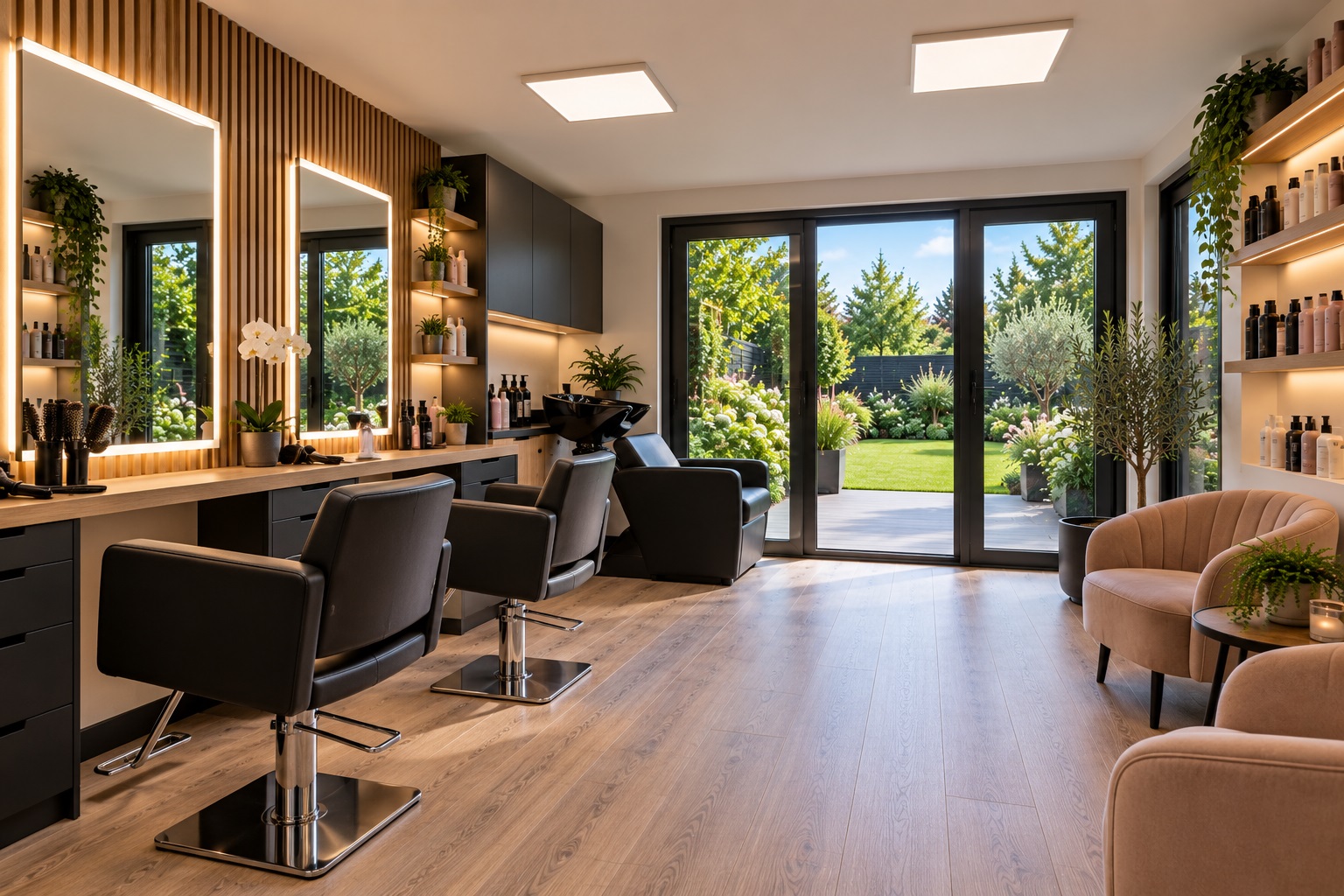
Professional Hairdressing Spaces Designed Around Your Clients, Your Business and Your Lifestyle
Imagine having your own professional hair salon just a few steps from your back door. Somewhere you can welcome clients, provide hairdressing services and run your business without renting commercial premises or taking over a room inside your home.
A garden hair salon can make that possible.
For self-employed hairdressers, mobile stylists and salon professionals considering a more independent way of working, a purpose-designed garden room can provide an attractive alternative to traditional salon premises.
Instead of renting a chair, travelling between appointments or committing to a commercial lease, a home hair salon offers the opportunity to create a dedicated workspace on your own property.
And with a fully insulated garden room, your salon can be designed for comfortable year-round use.
10 Benefits of Having a Garden Hair Salon
1. Run Your Hairdressing Business From Home
A garden hair salon provides a dedicated professional workspace just a few steps from your house. Instead of travelling to commercial premises or visiting clients as a mobile hairdresser, you can create a permanent salon designed around your services, equipment and working preferences.
2. Reduce Reliance on Rented Salon Premises
A home garden salon can provide an alternative to renting a commercial salon or paying regular chair-rental fees. Although utilities, maintenance, insurance and other business costs still need to be considered, having a dedicated workspace on your own property may help reduce certain ongoing premises expenses.
3. Separate Your Business From Family Life
A garden hair salon creates a useful distinction between your business and home. Clients can potentially access the salon without entering private living areas, while hairdressing equipment, products and supplies remain organised within a dedicated professional environment.
4. Comfortable Year-Round Hairdressing
A fully insulated garden room can provide a comfortable working environment throughout the seasons when suitable heating and ventilation are provided. Insulated walls, roof and floor, together with double-glazed doors and windows, help create a more stable internal environment for both hairdressers and clients.
5. Create a Professional Client Experience
A purpose-designed garden salon allows you to create an attractive environment with professional styling chairs, illuminated mirrors, suitable lighting, comfortable seating and organised product displays. The result can feel like a dedicated commercial salon while remaining conveniently located at home.
6. Design the Salon Around Your Services
Whether you specialise in cutting, colouring, styling or other hairdressing services, the interior can be planned around your requirements. Styling stations, backwash units, storage, lighting, plumbing and electrical sockets can all be considered during the design stage.
7. Greater Control Over Your Working Environment
Having your own garden hair salon gives you more freedom to choose the layout, furniture, lighting and interior appearance that suit your business. You can create a workspace that reflects your professional identity rather than adapting to the limitations of a rented chair or treatment area.
8. Organised Storage for Products and Equipment
A dedicated garden salon provides somewhere to keep hairdressing products, towels, tools and electrical equipment organised. Fitted cabinets, drawers, shelving and trolleys can make supplies easier to access while helping maintain a tidy and professional working environment.
9. Make Better Use of Your Garden
A garden hair salon transforms part of your outdoor space into a practical business environment. Contemporary cladding, attractive glazing and thoughtful landscaping can help the building complement your property while providing valuable additional working space.
10. A Versatile Long-Term Investment
A high-quality insulated garden room isn't limited to hairdressing. If your business requirements change, the building can potentially be adapted into a home office, beauty room, hobby studio or relaxation space, providing useful additional space beyond its original purpose.
However, creating a professional garden hairdressing salon involves more than installing a styling chair and mirror.
The building needs to accommodate suitable plumbing, drainage, electrical equipment, lighting, ventilation, heating, storage, hygiene facilities and client access.
Planning and business requirements also need careful consideration.
At Oeco Garden Rooms, our fully insulated buildings provide a substantial starting point for creating a dedicated garden hair salon, with insulated walls, roof and floor, secure double-glazed doors and windows, durable flooring and a complete electrical package.
With thoughtful planning and the appropriate specialist salon fit-out, a garden room can become a stylish, practical and professional environment for running your hairdressing business.
Why Are Garden Hair Salons Becoming Popular?
The attraction of a garden hair salon is easy to understand.
Traditional hairdressing businesses can involve significant ongoing premises costs.
Renting a commercial salon may require a lease, business rates, utilities and other overheads.
Renting a chair within an established salon can also involve regular payments.
Mobile hairdressing removes the need for premises but introduces travel time, equipment transportation and working in different environments.
A garden hair salon offers another option.
It provides a permanent workspace close to home, allowing you to arrange equipment and furniture around your services.
For some hairdressers, this can create a more convenient and flexible way of working.
A Professional Salon Without Renting Commercial Premises
One of the biggest potential advantages is reducing reliance on rented premises.
Instead of paying ongoing salon rent, you can invest in a dedicated building on your own property.
However, a garden salon isn't free to operate.
Electricity, water, heating, insurance, maintenance, specialist equipment and other business expenses still need to be considered.
The initial investment can also be substantial.
The financial case therefore depends on your existing costs, expected client numbers and the specification required.
For an established hairdresser with a regular client base, a garden salon may provide an attractive alternative worth exploring.
Separate Your Hairdressing Business From Your Home
Working inside the house can create challenges.
Clients may need to walk through family living areas.
Hairdressing equipment can occupy bedrooms or other household space.
Separating business activities from personal life may become difficult.
A garden hair salon provides a dedicated building for appointments.
Clients can potentially access the salon without entering the main house.
Equipment and products can remain organised.
The interior can be designed to reflect your professional identity.
This separation can make the business feel more established while helping preserve privacy within the home.
What Size Garden Hair Salon Do You Need?
The ideal size depends on the services offered, number of styling stations and equipment required.
A compact garden room may be suitable for a single hairdresser working with one client at a time.
A larger building may be preferable if you want multiple styling stations, a separate washing area or additional client seating.
Before choosing the building dimensions, consider:
-
Styling chairs and mirrors
-
Shampoo backwash unit
-
Product storage
-
Workstations
-
Electrical equipment
-
Client seating
-
Handwashing facilities
-
Cleaning and hygiene arrangements
-
Circulation space
-
Access requirements
The objective is to create a salon that feels comfortable and professional rather than overcrowded.
Small Garden Hair Salon Designs
You don't necessarily need a large building to create an attractive home hair salon.
A compact salon can work well when the layout is carefully planned.
One styling station may provide sufficient space for an independent hairdresser.
A fitted storage cabinet can hold products and equipment.
A compact backwash unit can be incorporated where the plumbing and layout allow.
Mirrors can help make the interior feel brighter and more spacious.
The most important consideration is ensuring there is sufficient room for the stylist to work safely and for clients to move comfortably.
Luxury Garden Hair Salons
A luxury garden salon can create an experience comparable in appearance to a high-quality commercial hairdressing studio.
Large illuminated mirrors, professional styling chairs, fitted cabinetry and carefully selected lighting can create a sophisticated interior.
Neutral colours and natural materials can provide a calm, contemporary atmosphere.
Decorative shelving can display suitable products.
Comfortable client seating can complete the design.
The aim is to combine attractive styling with practical working requirements.
A salon should look professional, but it also needs to function efficiently throughout a busy working day.
Garden Hair Salon Layout Ideas
The layout should be planned around how appointments will operate.
Think about the journey from the entrance to the styling station.
Consider where clients will have their hair washed.
Position storage where products and equipment can be reached conveniently.
Electrical sockets should be located near the equipment that needs them.
The backwash area should have suitable plumbing and drainage.
Good layout planning can reduce unnecessary movement and make the salon easier to operate.
Professional Styling Stations
The styling station is one of the most important features of a hair salon.
It usually includes a professional chair, mirror, work surface and access to electrical equipment.
The chair should provide sufficient room for adjustment and movement.
The mirror should be positioned to provide a clear view without excessive glare.
Storage for brushes, styling products and accessories should remain accessible.
Electrical sockets should be conveniently located while keeping cables away from circulation areas.
A carefully designed styling station can improve both working comfort and the client experience.
Hair Salon Mirrors and Lighting
Mirrors are a defining feature of professional hair salons.
Large mirrors can make the room feel brighter and more spacious.
Illuminated mirrors can also provide useful task lighting.
However, the quality of the lighting matters.
Hair colouring and styling often require accurate assessment of colour and detail.
Lighting with suitable colour-rendering performance can therefore be particularly valuable.
The best arrangement combines natural daylight, general ceiling lighting and appropriate task lighting.
Natural Daylight for Hairdressing
Large glazed doors and windows can provide excellent natural illumination.
This can be particularly useful when assessing hair colour.
At Oeco, our garden rooms feature secure double-glazed anthracite PVCu doors and windows, providing a contemporary appearance and natural daylight.
However, direct sunlight can create glare and uncomfortable conditions.
Blinds or other suitable shading can help control strong sunlight.
The orientation of the building and position of the styling stations should therefore be considered during planning.
LED Lighting for Garden Hair Salons
Artificial lighting is essential for evening appointments and darker winter days.
At Oeco, our garden rooms include an LED light panel as part of the standard electrical package.
Additional lighting can be incorporated according to the salon layout.
Styling stations may benefit from dedicated illumination.
The backwash area may require a different lighting arrangement.
The objective is to provide clear, comfortable lighting throughout the salon without harsh shadows or distracting reflections.
Shampoo Backwash Stations
A professional hair salon will often require a dedicated hair-washing area.
A backwash unit typically combines a reclining or adjustable chair with a wash basin.
The position should allow the stylist to work comfortably.
Sufficient clearance is also important for client access.
The unit needs appropriate hot and cold water supplies and wastewater drainage.
These requirements should be considered before construction because plumbing arrangements can influence the building layout and installation.
Plumbing for a Garden Hair Salon
Plumbing is one of the main differences between a conventional garden room and a working hair salon.
A salon may require hot and cold water supplies for washing hair, cleaning equipment and other hygiene activities.
Wastewater needs to be discharged through an appropriate drainage arrangement.
Water pressure, pipe routing, frost protection and maintenance access may also need consideration.
The plumbing design should be planned around the specific equipment and services being installed.
A standard garden room should not automatically be assumed to include salon plumbing.
Hot Water for Hair Washing
Reliable hot water is essential for many hairdressing services.
The appropriate system depends on the number of clients, water demand and available services.
A small appointment-based salon may have different requirements from a larger salon operating several washing stations.
Water heating equipment needs to be correctly sized and installed.
Temperature control and safe operation are also important.
The system should be designed to provide suitable performance for the intended business use.
Electrical Requirements for Hair Salons
Hair salons can contain numerous electrical appliances.
Hairdryers, straighteners, curling tools, clippers, lighting and other equipment may all require power.
Some appliances can have substantial electrical demands.
At Oeco, our standard garden-room electrical package includes four double sockets, an LED light panel, a consumer unit, light switch and concealed wiring, with appropriate electrical certification.
However, a professional salon may require additional sockets or electrical capacity.
These requirements should be assessed before installation.
Ventilation in Garden Hair Salons
Ventilation is particularly important because hairdressing can involve heat, moisture, chemical products and airborne substances.
Hair colouring, bleaching and certain styling processes may introduce additional ventilation requirements.
Opening windows can provide natural airflow, but this shouldn't automatically be assumed sufficient for every salon activity.
The appropriate ventilation arrangement depends on the services and products used.
Where necessary, specialist extraction or other controls should be considered.
Good ventilation contributes to a more comfortable environment for both clients and staff.
Insulation for Year-Round Hairdressing
A professional salon needs to remain comfortable throughout the year.
Clients may spend considerable time sitting still during appointments.
A cold or excessively warm environment can make the experience unpleasant.
At Oeco, our garden rooms feature fully insulated walls, roof and floor, helping create a more stable internal environment when suitable heating and ventilation are provided.
This makes regular year-round use more practical.
A fully insulated building also provides a more substantial working environment than a basic converted shed or summerhouse.
Heating Your Garden Hair Salon
Suitable heating can help maintain a comfortable temperature during colder weather.
The ideal system depends on the room size, insulation, glazing and occupancy.
Hairdryers and other electrical equipment can also contribute heat during use.
The heating arrangement should therefore be considered alongside ventilation and cooling.
Equipment should be positioned safely and should not obstruct workstations or circulation areas.
A comfortable environment can contribute to a more enjoyable client experience.
Keeping a Garden Hair Salon Cool in Summer
Large glazed doors and windows can make a salon bright and attractive.
However, they can also allow solar heat into the room.
During warm weather, internal temperatures may rise, particularly when hairdryers and other equipment are operating.
Ventilation and shading can help manage summer conditions.
Opening windows and doors can provide airflow when appropriate.
Depending on the salon's size and equipment, additional cooling may be worth considering.
The objective is to maintain a comfortable working environment throughout the seasons.
Flooring for Garden Hair Salons
Hair salon flooring needs to be practical and easy to maintain.
Hair clippings, water, styling products and regular foot traffic can place demands on the floor surface.
At Oeco, our garden rooms include heavy-duty laminate flooring as standard.
However, a professional salon may benefit from flooring specifically selected for wet areas, frequent cleaning and the products used.
Slip resistance and compatibility with cleaning procedures should be considered.
The finished floor should combine attractive appearance with practical everyday performance.
Storage for Hairdressing Equipment
Good storage helps create an organised and professional salon.
Products, towels, tools and accessories should have dedicated places.
Fitted cabinets can keep equipment out of sight.
Shelving can display suitable retail products.
Drawers and trolleys can provide convenient access to frequently used items.
Storage should also account for any manufacturer requirements relating to chemicals, temperature or safe handling.
A tidy salon can feel more welcoming and be easier to operate.
Creating a Comfortable Client Experience
A successful salon isn't only about the haircut.
The overall experience matters.
Comfortable seating, suitable temperature, good lighting and an attractive interior can help clients feel welcome.
A small waiting area may be useful where space permits.
A dedicated place for coats and personal belongings can also improve convenience.
Soft colours, plants and decorative features can create a relaxed atmosphere.
The aim is to make the garden salon feel like a professional destination rather than simply an outbuilding.
Privacy for Garden Hair Salons
Privacy can be important for both clients and the homeowner.
Large glazed doors provide natural daylight but can also make the interior visible from neighbouring properties.
Blinds or other window coverings can provide privacy when required.
Natural screening using hedges, ornamental grasses and carefully positioned planting can also help.
The position and orientation of the building should ideally be considered before installation.
A private setting can contribute to a more comfortable client experience.
Client Access and Garden Landscaping
If clients will visit your garden salon, access deserves careful planning.
A clear pathway from the property entrance to the salon can create a professional arrival experience.
Suitable exterior lighting can improve visibility during evening appointments.
The route should remain practical during wet or icy weather.
You should also consider whether clients will need to pass through private household areas.
Accessibility requirements may apply depending on the business and circumstances, so these should be assessed before finalising the layout.
Garden Hair Salon Security
Hair salons can contain valuable equipment and products.
Security should therefore be considered during the design stage.
At Oeco, our garden rooms feature secure double-glazed anthracite PVCu doors and windows with insurance-approved locks.
Blinds or privacy screening can help prevent equipment being permanently visible from outside.
Exterior lighting and wider home-security arrangements may also be useful.
Do Garden Hair Salons Need Planning Permission?
A garden hair salon used for commercial appointments can raise different planning considerations from a garden room used purely for domestic purposes.
Whether planning permission is required depends on the property and nature of the business.
Customer visits, parking, opening hours, noise and the effect on neighbouring properties may all be relevant.
A garden room that qualifies as permitted development for incidental domestic use doesn't automatically mean commercial hairdressing use is authorised.
Before investing in the building, check the intended business use with the local planning authority.
Insurance and Business Requirements
Operating a professional hairdressing business from a garden room may require appropriate business insurance.
You should also consider treatment liability, equipment cover and other relevant protection.
Home insurance shouldn't automatically be assumed to cover commercial salon activities.
Depending on the services offered and local circumstances, additional requirements may apply.
These should be checked before opening for appointments.
Garden Hair Salons for Mobile Hairdressers
For mobile hairdressers, a garden salon can provide an alternative to travelling between clients.
Instead of transporting equipment to different homes, you can create a permanent workspace with your preferred furniture, products and tools.
This may reduce travel time and make appointments easier to organise.
However, the suitability of a home salon depends on the location, client access and relevant permissions.
For an established mobile hairdresser with a loyal client base, it can be an option worth considering.
Garden Hair Salons for Self-Employed Stylists
Self-employed stylists renting chairs or treatment spaces may also find the concept attractive.
A dedicated garden salon provides greater control over the working environment.
You can choose the interior design, equipment and appointment arrangements.
However, the financial implications should be assessed carefully.
The cost of the building, specialist fit-out, utilities, insurance and other business expenses should be compared with existing arrangements.
The objective is to create a sustainable workspace that supports your business.
A Garden Hair Salon That Can Grow With Your Business
Your business requirements may change over time.
You might begin with one styling station and later introduce additional services.
A flexible layout can make some changes easier.
Storage can be expanded.
Furniture can be rearranged.
Additional equipment may be introduced where the building and services are suitable.
However, changes involving plumbing, electrical demand, ventilation or increased client numbers should be assessed before implementation.
Planning some flexibility from the beginning can help the salon remain useful as your business develops.
Is a Garden Hair Salon Worth the Investment?
For an established hairdresser or stylist considering a home-based business, a dedicated garden salon can offer substantial practical advantages.
It provides separation between home and work.
It allows the interior to be designed around professional services.
It may reduce reliance on rented commercial premises.
And a fully insulated garden room can provide a comfortable environment throughout the year when suitable heating and ventilation are provided.
However, the overall investment should include the building, specialist equipment, plumbing, utilities, insurance and any permissions required.
The best approach is to plan the salon around your actual business needs.
Bring Your Hairdressing Business Home
The perfect garden hair salon isn't necessarily the largest or most luxurious.
It is the one designed around your services, your clients and the way you want to work.
For some hairdressers, that means a compact salon with one styling station and a backwash unit.
For others, it means a larger contemporary space with multiple stations, fitted cabinetry and comfortable client seating.
The important features are practicality, comfort and professionalism.
At Oeco Garden Rooms, our fully insulated buildings provide a substantial foundation for creating a dedicated home hair salon, with secure double glazing, durable flooring, electrical installations, foundations, delivery and professional on-site installation.
Specialist plumbing, ventilation, salon equipment and any additional services should be planned according to the requirements of your business.
With thoughtful design, a garden room can become a stylish and professional workspace that brings your hairdressing business closer to home.
Your own professional hair salon could be just a few steps from your back door.
10 Frequently Asked Questions About Garden Hair Salons
1. Can I run a hair salon from a garden room?
Yes. A properly designed garden room can potentially provide an excellent space for a professional home hair salon.
It can accommodate styling chairs, mirrors, backwash units, storage and other hairdressing equipment, depending on the building's size and specification.
However, commercial hairdressing may introduce requirements relating to planning permission, plumbing, ventilation, hygiene, accessibility and insurance.
These should be checked according to the services you intend to offer before installation.
2. Do I need planning permission for a garden hair salon?
Not necessarily, but it depends on the property and how the building will be used.
A garden room that qualifies as permitted development for incidental domestic purposes doesn't automatically mean it can be operated as a commercial hair salon without further consideration.
Customer visits, parking, opening hours, noise and the effect on neighbouring properties may all influence whether planning permission is required.
It is advisable to discuss your proposed business use with the local planning authority before proceeding.
3. What size garden room do I need for a hair salon?
The ideal size depends on the number of styling stations, equipment and facilities required.
A compact garden room may be suitable for a single hairdresser working with one client at a time.
A larger building may be preferable if you want multiple styling stations, a backwash area, additional storage or client seating.
Remember to allow sufficient room for movement, cleaning, access and any required facilities.
Planning the salon layout before choosing the building dimensions will help ensure the finished room meets your needs.
4. Does a garden hair salon need plumbing?
Most professional hair salons offering washing and colouring services will require suitable plumbing.
A shampoo backwash unit typically needs hot and cold water supplies and appropriate wastewater drainage.
Additional handwashing or cleaning facilities may also be necessary depending on the services offered and applicable requirements.
Plumbing should ideally be considered before construction because retrofitting water and drainage services afterwards can be more disruptive.
A standard garden room shouldn't automatically be assumed to include specialist salon plumbing.
5. Can a garden hair salon be used all year round?
Yes. A fully insulated garden room can provide a comfortable environment for year-round hairdressing when appropriate heating and ventilation are provided.
At Oeco, our garden rooms feature insulated walls, roof and floor, together with secure double-glazed doors and windows.
This helps create a more stable internal environment during colder and warmer periods.
Heating, ventilation and any cooling requirements should be selected according to the building and salon equipment.
6. What lighting is best for a garden hair salon?
Good lighting is essential for professional hairdressing, particularly cutting, colouring and detailed styling.
A combination of natural daylight, general ceiling lighting and suitable task lighting can provide an effective arrangement.
Lighting with good colour-rendering performance can be particularly useful when assessing hair colour.
At Oeco, our garden rooms include an LED light panel as part of the standard electrical package.
Additional lighting requirements should be considered during the salon design stage.
7. Does a garden hair salon need ventilation?
Yes. Appropriate ventilation is important for comfort and indoor air quality.
Hair colouring, bleaching, styling products and other salon activities may introduce chemical vapours, moisture or additional heat.
Opening windows can provide natural airflow, but this shouldn't automatically be assumed sufficient for every professional hairdressing activity.
The ventilation arrangement should be designed around the services and products used, with specialist extraction or other controls considered where necessary.
8. Can I have electricity in my garden hair salon?
Yes. A professionally installed electrical supply can support hairdryers, straighteners, clippers, lighting and other suitable salon equipment.
At Oeco, our standard electrical package includes four double sockets, an LED light panel, a consumer unit, light switch and concealed wiring, with appropriate electrical certification.
However, professional salon equipment may require additional electrical capacity or sockets.
These requirements should be assessed before installation so the electrical system can be designed appropriately.
9. Can I operate a garden hair salon as a self-employed hairdresser?
Yes, subject to the relevant planning, business, safety and insurance requirements.
A garden salon can provide a dedicated workspace for self-employed hairdressers who want to operate from home rather than rent a chair or travel between clients.
The building can be designed around your services and appointment arrangements.
However, commercial use may introduce additional requirements, particularly where clients visit regularly.
These should be checked before investing in the building.
10. Is a garden hair salon worth the investment?
For an established hairdresser or stylist considering a home-based business, a garden hair salon can provide substantial practical advantages.
It offers separation between home and work, allows the interior to be designed around professional services and may reduce reliance on rented commercial premises.
A fully insulated garden room also provides the opportunity for comfortable year-round use when suitable heating and ventilation are provided.
However, the overall investment should include the building, specialist salon equipment, plumbing, utilities, insurance and any additional facilities or permissions required.
The best approach is to plan the salon around your actual business requirements and expected client demand.