
Garden Music Rooms – Beautifully Designed Spaces for Playing, Practising and Enjoying Music
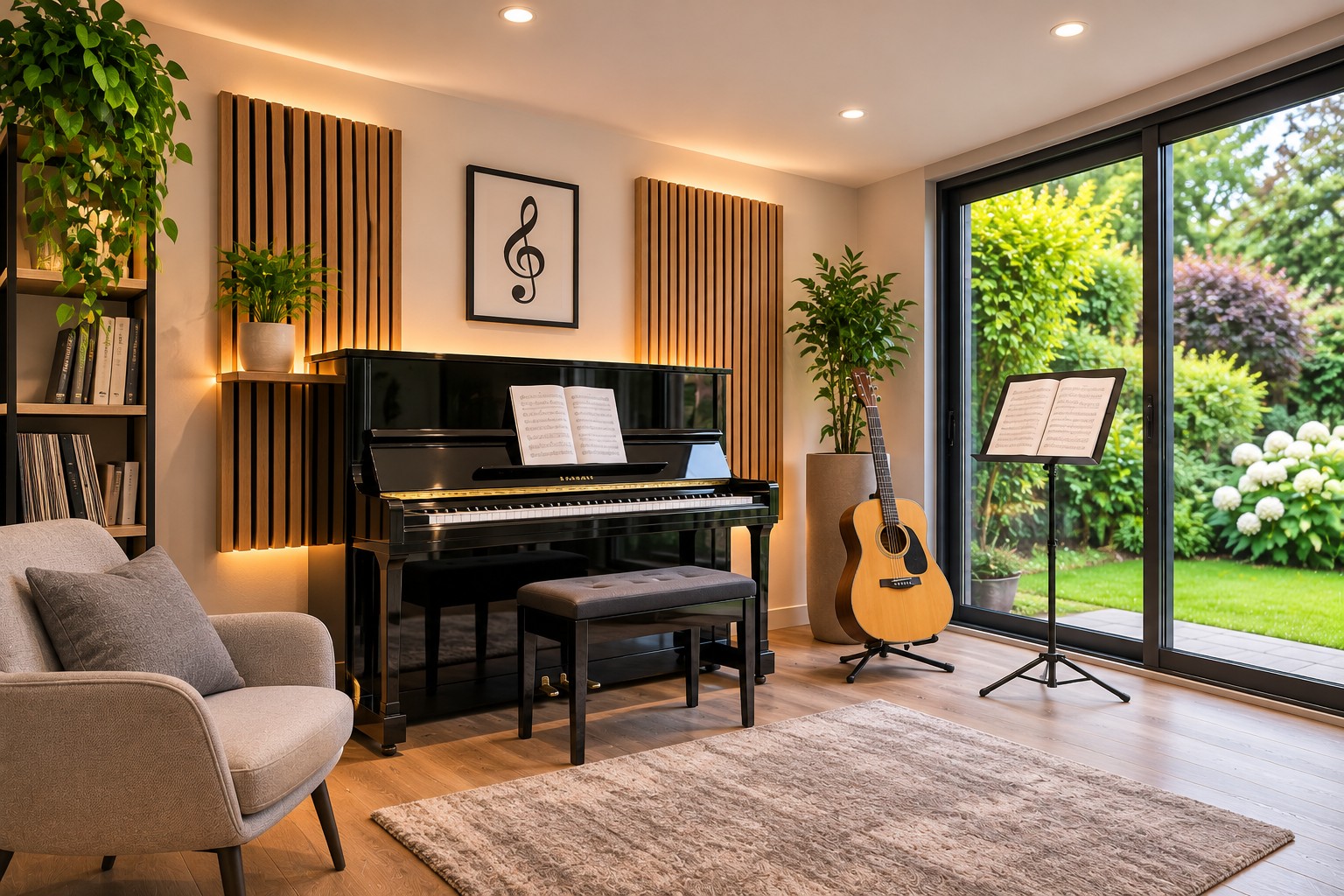
Create Your Own Private Garden Music Studio with Enhanced Acoustic Insulation and Year-Round Comfort
Music is something that can be enjoyed at any age, whether you're learning your first instrument, returning to a favourite hobby or developing your abilities as an experienced musician.
From practising the piano in the evening to enjoying an acoustic guitar session at the weekend, having somewhere comfortable and dedicated to music can make an enormous difference.
However, finding a suitable space inside the home isn't always easy.
Living rooms, spare bedrooms and dining areas often have to accommodate several different activities, making regular music practice inconvenient. Instruments can take up valuable floor space, while the sound of repeated scales, melodies and exercises may disturb other members of the household.
A garden music room provides an attractive alternative.
By creating a dedicated music space in your garden, you can enjoy playing, practising and listening to music in a comfortable environment separate from the main house.
Unlike a conventional garden room, an acoustically upgraded garden music studio can incorporate additional sound-reducing materials to help manage noise transmission.
At Oeco Garden Rooms, we can discuss acoustic upgrades such as RWA45 acoustic insulation, acoustic plasterboard and acoustic glazing to create a more suitable environment for everyday musical activities.
These enhanced specifications provide an intermediate option between a standard garden building and a specialist soundproof music room.
For customers who enjoy instruments such as the piano, acoustic guitar, flute, violin, clarinet or keyboard, an acoustically upgraded garden room may provide an excellent balance of comfort, practicality and noise reduction.
For louder instruments, amplified performances or activities requiring more substantial sound isolation, we also offer dedicated Soundproof Garden Rooms.
In this guide, we'll explore how to create a beautiful garden music room, the benefits of acoustic upgrades, suitable instruments, interior design ideas and the practical considerations involved in choosing the right building.
What Is a Garden Music Room?
A garden music room is a purpose-designed garden building used for playing, practising, composing or enjoying music.
It provides a separate space where instruments can remain set up and ready for use, without interfering with everyday activities inside the main house.
Garden music rooms can accommodate a wide range of musical interests, from individual piano practice to acoustic guitar sessions and music lessons.
The building itself may be based on a contemporary Oeco Garden Room, with additional acoustic features incorporated according to the customer's requirements.
A typical garden music room might include comfortable seating, instrument storage, suitable lighting and electrical sockets for keyboards, computers or recording equipment.
The interior can be decorated to reflect the owner's musical interests, creating an attractive and inspiring environment.
For customers concerned about noise transmission, acoustic upgrades can help reduce the amount of sound passing through the building's walls and glazing.
However, it is important to understand that acoustic treatment and soundproofing are not the same thing.
A garden music room with enhanced acoustic insulation is designed to improve sound reduction, but it should not be described as completely soundproof.
Garden Music Rooms vs Soundproof Garden Rooms
One of the most important decisions when planning a garden music room is determining the level of acoustic performance required.
Not every musician needs a specialist soundproof studio.
For example, someone practising an acoustic guitar or playing a digital piano at moderate volume may have very different requirements from a drummer or musician using powerful amplifiers.
Standard Garden Rooms
A conventional fully insulated garden room provides a comfortable environment for everyday activities.
Its insulation, walls and double glazing offer some resistance to sound transmission, but the building is not specifically designed for acoustic isolation.
For quiet musical activities, this may be sufficient in some locations.
Acoustically Upgraded Garden Music Rooms
An intermediate option involves incorporating additional acoustic insulation, acoustic plasterboard and suitable acoustic glazing.
These materials can improve resistance to sound transmission compared with a standard specification, although the overall result depends on the complete construction.
This approach may be suitable for many customers playing instruments at moderate volumes.
Specialist Soundproof Garden Rooms
For louder musical activities, specialist construction may be required.
Our Soundproof Garden Rooms are designed for customers requiring a substantially higher level of sound isolation.
These may incorporate specialist construction methods, including room-within-room arrangements and other acoustic measures.
They are particularly relevant for drums, loud amplified music and more demanding recording applications.
Choosing the correct specification from the beginning helps ensure the building is appropriate for its intended use.
Garden Piano Rooms – A Dedicated Space for Playing the Piano
A garden piano room can provide an attractive environment for pianists who want a dedicated space for regular practice.
Pianos are substantial instruments, and accommodating one inside the main house can sometimes be difficult.
A separate garden music room allows the instrument to become the centrepiece of the space.
Acoustic and Digital Pianos
Digital pianos and acoustic pianos have different requirements.
Digital instruments generally allow volume control and headphone use, making them particularly convenient for home practice.
Acoustic upright pianos produce sound mechanically and cannot be turned down in the same way.
For this reason, the level of acoustic upgrading required should reflect the instrument and its intended playing volume.
Planning the Layout
A garden piano room should provide sufficient space for the instrument, piano stool and comfortable movement.
Additional seating may be useful for a music teacher, family member or occasional listener.
Protecting Your Piano
Pianos can be sensitive to temperature and humidity fluctuations.
A fully insulated garden room with appropriate heating and ventilation can help provide a more stable environment, although additional humidity monitoring or control may be necessary.
For heavy acoustic pianos, the floor structure and installation access should be assessed before choosing the building.
Garden Guitar Rooms for Acoustic and Electric Guitar Players
A dedicated garden guitar room offers an enjoyable space for practising, learning and storing instruments.
For acoustic guitar players, the room can provide a comfortable environment for individual practice without occupying a shared household room.
Acoustic Guitar Practice
Acoustic guitars are particularly suitable for many garden music rooms because they do not normally require large amplification systems.
However, their sound can still be clearly audible outside, particularly during energetic playing.
An acoustically upgraded garden room may help reduce sound transmission.
Electric Guitar Practice
Electric guitars can also be used in garden music rooms, particularly when played through headphones or low-volume amplifiers.
Customers intending to use powerful amplifiers at higher volumes may require a specialist soundproof building.
Guitar Storage
Wall-mounted guitar hangers, instrument stands and storage cabinets can help keep the room organised.
Care should be taken to avoid excessive humidity, direct sunlight and unsuitable temperatures.
A dedicated garden guitar studio can also accommodate music stands, pedals and small recording equipment.
Garden Music Rooms for Flute, Clarinet and Woodwind Instruments
Woodwind instruments are popular with musicians of different ages and abilities.
A garden music room can provide a dedicated space for flute, clarinet, saxophone and other woodwind practice.
Flute Practice
Flutes can produce surprisingly penetrating sounds, particularly in higher registers.
A separate garden room provides physical distance from household activities, while acoustic upgrades may help reduce the amount of sound escaping the building.
Clarinet and Other Woodwind Instruments
Clarinet players may appreciate having somewhere to practise scales, exercises and musical pieces without repeatedly setting up equipment.
A comfortable chair, music stand and suitable lighting can create a practical environment.
Considering Instrument Volume
Not all woodwind instruments produce the same sound levels.
A saxophone, for example, may require more substantial acoustic treatment than a quieter instrument played at moderate volume.
The intended instrument and playing habits should always be considered when choosing the building specification.
Garden Violin and String Instrument Rooms
A garden music room can also provide an attractive space for violin, viola, cello and other string instruments.
These instruments benefit from comfortable surroundings, suitable lighting and enough room for unrestricted movement.
Violin Practice
Violin players require sufficient space to move their bow comfortably without coming into contact with furniture or walls.
The room should be arranged to provide clear movement around the playing position.
Cello Practice
Cello players need space for the instrument, chair, music stand and bow movement.
A slightly larger garden room may provide greater comfort.
Instrument Care
String instruments can be sensitive to changing temperature and humidity.
Suitable environmental control and secure storage are therefore important considerations.
For customers who enjoy playing several instruments, a garden music room can be designed with flexible furniture and practical storage.
Garden Music Rooms for Children Learning Instruments
Learning a musical instrument can be an enjoyable and rewarding activity for children.
However, regular practice may create challenges in busy households.
A dedicated garden music room can provide somewhere for children to develop their musical interests without occupying shared living areas.
Encouraging Regular Practice
Having instruments permanently arranged can make practice sessions more convenient.
Music stands, seating and storage can remain in position between sessions.
A Space for Music Lessons
A suitably sized garden room may accommodate a music teacher and student.
Where lessons are offered commercially, relevant planning, insurance and safeguarding considerations should be addressed.
Creating an Inspiring Environment
Bright interiors, comfortable furniture and suitable lighting can help create a welcoming space for learning.
Children should be supervised appropriately, and the room should be designed with safe access and suitable environmental conditions.
Acoustic Insulation for Garden Music Rooms
One of the main advantages of an acoustically upgraded garden music room is the opportunity to incorporate materials specifically selected to help reduce sound transmission.
At Oeco, we can discuss additional acoustic insulation, including RWA45 acoustic mineral wool.
What Is RWA45 Acoustic Insulation?
RWA45 is a mineral wool insulation product commonly used in acoustic applications.
It can help absorb sound energy within building cavities and contribute to improved sound insulation when incorporated into a suitable wall or ceiling construction.
How Does Acoustic Insulation Help?
Sound can travel through walls, roofs, floors, doors and windows.
Acoustic insulation within a wall cavity can help reduce sound transmission through that construction.
However, acoustic insulation alone does not make a room soundproof.
The performance of the complete building depends on factors such as wall mass, construction details, glazing, airtightness and sound transmission through adjoining elements.
Why Consider Acoustic Upgrades?
For customers playing instruments at moderate volumes, acoustic insulation may provide a useful improvement over a conventional garden room specification.
The suitability of the upgrade should always be considered in relation to the intended instruments, playing volumes and surrounding environment.
Acoustic Plasterboard for Enhanced Sound Reduction
Another option for garden music rooms is acoustic plasterboard.
Unlike ordinary plasterboard, acoustic plasterboard products are designed to provide improved sound insulation when used within suitable wall and ceiling systems.
Additional Mass
One of the ways acoustic plasterboard contributes to sound reduction is by adding mass to the construction.
Heavier wall linings can help resist sound transmission.
Attractive Interior Finish
Acoustic plasterboard can be finished to provide the smooth, professionally plastered appearance customers expect from a premium garden room.
This means acoustic improvements do not have to compromise the interior appearance.
Combined Acoustic Construction
Acoustic plasterboard is most effective when considered as part of a complete construction system.
The number of layers, joints, sealing details and supporting structure can all influence performance.
For customers seeking improved sound isolation, combining suitable insulation and acoustic plasterboard may provide advantages over a standard wall specification.
Acoustic Glass for Garden Music Rooms
Windows and glazed doors are important features of contemporary garden rooms.
They introduce natural daylight and provide attractive views of the surrounding garden.
However, glazing can also be a significant route for sound transmission.
Why Choose Acoustic Glazing?
Acoustic glazing uses specially selected glass constructions to help reduce sound transmission.
The performance depends on factors such as glass thickness, laminated layers, cavity arrangements and the complete window or door system.
Maintaining Natural Light
One of the advantages of acoustic glazing is that customers can retain an attractive, light-filled interior while improving the sound-reducing properties of the glazing.
Choosing the Right Glazing Arrangement
Larger glazed areas can influence the overall acoustic performance of the building.
Customers should therefore consider the balance between natural daylight, garden views and sound reduction.
The doors, frames, seals and installation details are just as important as the glass itself.
Acoustic Treatment vs Acoustic Soundproofing
These two terms are often confused, but they describe different objectives.
Sound Isolation
Sound isolation involves reducing the amount of sound passing from one space to another.
Acoustic insulation, plasterboard and glazing can contribute to this objective.
Internal Acoustic Treatment
Internal acoustic treatment is concerned with how sound behaves inside a room.
Hard surfaces can reflect sound, potentially creating echoes or excessive reverberation.
Acoustic panels, rugs, curtains and other suitable materials can help control reflections.
Combining Both Approaches
A well-designed garden music room may benefit from both sound-reducing construction and internal acoustic treatment.
For example, acoustic insulation and glazing may help reduce sound escaping the building, while internal panels can improve the listening environment.
Neither approach should be confused with guaranteed soundproofing.
Creating the Ideal Interior for a Garden Music Room
A garden music room should be both practical and enjoyable to spend time in.
The interior can be arranged around the instruments you play and the activities you enjoy.
Comfortable Seating
Suitable seating is important for piano players, guitarists and musicians who practise while seated.
Music Stands and Storage
Dedicated storage can accommodate sheet music, instrument cases, cables and accessories.
Attractive Lighting
Natural daylight can create a welcoming atmosphere, while adjustable task lighting helps illuminate sheet music.
Interior Colours
Soft neutral colours, timber finishes and carefully selected decorative features can create a calm environment.
Acoustic Furnishings
Rugs, upholstered seating and curtains may help soften some internal reflections.
Specialist acoustic panels can provide more targeted treatment where required.
Garden Music Rooms for Recording and Composing
Not every home recording setup requires a fully soundproof studio.
Many musicians use computers, audio interfaces, microphones and headphones to record ideas or compose music.
A garden music room can provide a dedicated environment for these activities.
Digital Music Production
A desk with a computer, monitor speakers and suitable electrical sockets can create a practical music production workstation.
Recording Acoustic Instruments
Musicians may wish to record acoustic guitar, flute, violin or piano performances.
Internal acoustic treatment can help manage unwanted reflections during recording.
Understanding the Limitations
An acoustically upgraded garden room may still allow external sounds to enter and musical sounds to escape.
Customers requiring highly controlled recording conditions should consider a specialist studio design.
Explore our Soundproof Garden Rooms for more demanding acoustic requirements.
Choosing the Right Size for a Garden Music Room
The ideal dimensions depend on the instruments, furniture and intended activities.
Compact Garden Music Rooms
A 3m x 2.5m garden room may provide sufficient space for a digital piano, guitar practice or a small music workstation.
Medium Garden Music Rooms
A 4m x 3m or 5m x 3m building provides greater flexibility for an upright piano, several instruments or additional seating.
Larger Garden Music Studios
A 6m x 3m or larger building may accommodate multiple instruments, music production equipment and a separate seating area.
When planning the size, consider the usable internal dimensions rather than relying solely on the external building measurements.
Large acoustic instruments, specialist equipment and additional acoustic linings may also affect the space required.
Heating, Ventilation and Instrument Protection
Musical instruments often require more careful environmental conditions than ordinary household furniture.
Excessive humidity, very dry air and sudden temperature changes can affect timber instruments and other sensitive equipment.
Fully Insulated Construction
A fully insulated garden music room can provide a comfortable environment throughout the year.
Suitable Heating
Electric heating can help maintain comfortable temperatures during colder weather.
Ventilation
Suitable ventilation is important for maintaining indoor air quality and managing moisture.
Optional Air Conditioning
For customers seeking greater temperature control, optional air conditioning may be considered.
Monitoring Humidity
A digital thermometer and hygrometer can help monitor conditions.
Owners should follow the instrument manufacturer's recommendations for suitable temperature and humidity ranges.
Garden Music Room Exterior Designs
A garden music room can be designed to complement the appearance of your home and garden.
Oeco offers a choice of contemporary cladding materials, including Western Red Cedar, Thermowood and composite cladding.
For customers seeking a premium architectural finish, our Luxury Garden Studios incorporate Millboard cladding and attractive aluminium glazing.
Contemporary Styling
Clean lines, coordinated trims and modern glazing can create an attractive garden feature.
Natural Timber
Western Red Cedar and Thermowood provide warm, natural finishes.
Composite Cladding
Composite options offer a choice of contemporary colours and woodgrain appearances.
The exterior can be personalised to reflect your preferred style while the interior is designed around your musical requirements.
Garden Music Rooms and Neighbour Considerations
Even with acoustic upgrades, music played inside a garden room may remain audible outside.
The level of sound transmission depends on the instrument, playing volume, building specification and surrounding environment.
Positioning the Building
The location of the garden music room can influence how sound is experienced by neighbouring properties.
Playing Times
Practising at considerate times can help reduce the likelihood of disturbance.
Choosing Suitable Acoustic Upgrades
Customers concerned about noise should discuss their intended instruments and playing habits before choosing a specification.
Avoiding Unrealistic Expectations
Acoustically upgraded garden rooms can help reduce sound transmission, but they cannot guarantee that music will be inaudible to neighbours.
For drums, loud amplification and demanding acoustic applications, a specialist soundproof building may be more appropriate.
Planning Permission for Garden Music Rooms
Many garden music rooms in England may fall within permitted development rights when used for activities incidental to the enjoyment of the main dwelling, provided all relevant conditions are satisfied.
However, the position can change if the building is used for commercial music lessons, regular public visits or other activities that materially alter the residential use of the property.
The location, dimensions and design of the building can also affect planning requirements.
Homeowners should check the applicable rules before proceeding.
Where the intended use involves significant noise or regular visitors, additional considerations may apply.
Choosing the Right Oeco Garden Music Room
At Oeco, we offer several garden building ranges suitable for creating a dedicated music space.
Essential Garden Pods
Our Essential Garden Pods provide affordable, fully insulated garden buildings.
They may be suitable for quieter musical activities, particularly digital instruments and headphone-based practice.
Additional acoustic upgrades would need to be assessed according to the building specification.
Premium Garden Rooms
Our Premium Garden Rooms provide comfortable, fully insulated spaces with professionally plastered interiors.
They offer an attractive starting point for customers seeking acoustic insulation, acoustic plasterboard and suitable glazing upgrades.
Luxury Garden Studios
Our Luxury Garden Studios combine premium exterior finishes with contemporary interiors.
They can provide an elegant setting for piano practice, music appreciation and other musical activities, subject to the suitability of the chosen acoustic specification.
Specialist Soundproof Garden Rooms
For customers requiring substantially higher levels of sound isolation, our Soundproof Garden Rooms provide a more specialised solution.
The right choice depends on the instruments, intended volume, location and individual requirements.
Why Choose Oeco for Your Garden Music Room?
Established in 2006, Oeco Garden Rooms is a family-run manufacturer with 20 years of experience designing, manufacturing and installing garden buildings throughout the UK.
We understand that customers have different requirements when creating a dedicated space for music.
Some simply want somewhere peaceful to practise the piano or acoustic guitar.
Others require additional acoustic insulation to help manage sound transmission.
Our team can discuss suitable building sizes, glazing arrangements, interior finishes and available acoustic upgrades.
These may include RWA45 acoustic insulation, acoustic plasterboard and acoustic glazing.
For customers requiring more substantial sound isolation, we also offer specialist soundproof garden room solutions.
Our own experienced installation teams undertake the foundations and construction of our garden buildings.
Customers are welcome to visit our two indoor showrooms in Ripon, North Yorkshire, where they can explore our buildings and discuss their requirements.
Conclusion – Create Your Own Garden Music Room with Oeco
A garden music room offers an attractive way to enjoy playing, practising and listening to music in a dedicated space separate from the main house.
Whether you're learning the piano, playing acoustic guitar, practising the flute or enjoying another instrument, a purpose-designed garden room can provide a comfortable and inspiring environment.
For customers concerned about noise, additional acoustic insulation, acoustic plasterboard and acoustic glazing can help improve sound reduction compared with a conventional garden room.
These upgrades offer a useful intermediate option between a standard garden building and a specialist soundproof studio.
The most suitable specification depends on the instruments, playing volumes and surrounding environment.
At Oeco Garden Rooms, we can help you explore suitable building sizes, interior finishes and acoustic options to create a garden music room tailored to your requirements.
Discover our Garden Rooms, explore our Luxury Garden Studios, or learn more about our specialist Soundproof Garden Rooms.
Alternatively, visit our two indoor showrooms in Ripon, North Yorkshire, where our friendly team will be happy to discuss your ideas.
Contact Oeco Garden Rooms Today
Telephone: 0800 170 1270
Email: sales@oecogardenrooms.co.uk
Oeco Garden Rooms – Beautifully Designed Garden Music Spaces for Creativity, Practice and Enjoyment.
10 Benefits of Owning a Garden Music Room
1. Enjoy a Dedicated Space for Playing Music
A garden music room provides a permanent space for enjoying your favourite instruments without taking over valuable living areas inside your home. Whether you play the piano, acoustic guitar, flute or violin, having a dedicated room allows instruments, music stands and accessories to remain organised and ready for use whenever you want to practise.
2. Reduce Music Noise Inside Your Home
A separate garden music room creates physical distance between your musical activities and everyday household life. With optional acoustic insulation, acoustic plasterboard and acoustic glazing, the building can provide improved sound reduction compared with a standard garden room. Although these features do not make the building completely soundproof, they can help reduce disturbances when practising at moderate volumes.
3. Practise Your Instruments Throughout the Year
A fully insulated garden music room provides a comfortable environment for playing music during every season. Suitable heating, ventilation and optional air conditioning can help maintain comfortable internal conditions, allowing you to practise during colder winter months and warmer summer days. Appropriate temperature and humidity management can also help protect sensitive musical instruments.
4. Create an Inspiring Environment for Musical Creativity
A garden music room can be designed to provide a peaceful, attractive setting for playing, composing and enjoying music. Natural daylight, large glazed doors, comfortable furniture and attractive interior finishes can create an inspiring atmosphere. Whether you're learning a new instrument or developing your existing abilities, a dedicated space can make musical activities more enjoyable.
5. Encourage More Regular Musical Practice
Having a music room just a few steps from your home makes regular practice more convenient. Instruments can remain permanently positioned, eliminating the need to repeatedly move furniture or set up equipment. This convenience can encourage a more consistent routine for adults learning instruments, experienced musicians and children developing their musical abilities.
6. Accommodate Different Musical Instruments
A well-planned garden music room can provide space for a variety of instruments, including upright pianos, digital keyboards, acoustic guitars, flutes, clarinets and violins. Suitable storage, flexible furniture and carefully positioned electrical sockets can help create a practical environment for several musical activities. The building's dimensions and acoustic specification should reflect the instruments and intended playing volumes.
7. Benefit from Enhanced Acoustic Insulation
An acoustically upgraded garden music room can incorporate RWA45 acoustic insulation, acoustic plasterboard and suitable acoustic glazing to help reduce sound transmission. These improvements provide an intermediate option between a conventional garden room and a specialist soundproof building. For musicians playing instruments at moderate volumes, this may offer a practical balance between everyday comfort and improved acoustic performance.
8. Create a Comfortable Space for Music Lessons
A dedicated garden music room can provide an attractive environment for individual music lessons and practice sessions. With sufficient space for a teacher and student, suitable seating, music stands and appropriate lighting, the room can become a welcoming place for musical learning. Where commercial lessons are intended, relevant planning, insurance and other requirements should be checked before proceeding.
9. Enjoy Music Recording and Composition at Home
A garden music room can accommodate computers, keyboards, microphones and other equipment for composing or recording music. A dedicated workstation and suitable electrical provision can create a convenient environment for creative projects. Additional internal acoustic treatment may help manage sound reflections, although customers requiring highly controlled recording conditions or substantial sound isolation should consider a specialist studio specification.
10. Invest in a Versatile Garden Building
A garden music room provides long-term flexibility because the space can accommodate different activities as your interests change. A building initially designed for piano or guitar practice may later become a creative studio, home office, reading room or hobby space. With fully insulated construction, attractive interior finishes and a practical layout, a professionally installed garden room can provide enjoyable additional space for many years.
Frequently Asked Questions About Garden Music Rooms
1. Do I Need a Fully Soundproof Garden Room for Playing Musical Instruments?
Not necessarily. The acoustic specification required depends on the instruments you play, the volume of your music and the location of your garden room.
For instruments such as acoustic guitars, digital pianos, flutes and violins played at moderate volumes, an acoustically upgraded garden room may provide a suitable solution.
Oeco can discuss additional RWA45 acoustic insulation, acoustic plasterboard and acoustic glazing to help reduce sound transmission compared with a conventional garden room.
However, these upgrades do not make the building completely soundproof.
For drums, loud amplified music or activities requiring substantially greater sound isolation, our specialist Soundproof Garden Rooms may be more appropriate.
2. Can I Put an Upright Piano in a Garden Music Room?
Yes. A suitably designed garden music room can accommodate an upright acoustic piano or digital piano, provided the building offers sufficient space and appropriate structural support.
Acoustic pianos can be particularly heavy, so the floor structure and installation access should be assessed before choosing the building.
Pianos are also sensitive to temperature and humidity fluctuations.
A fully insulated garden room with suitable heating, ventilation and humidity management can help provide a more stable environment.
Customers should also consider acoustic upgrades because upright acoustic pianos can produce substantial sound levels.
Oeco can discuss suitable building dimensions and acoustic options for customers planning a dedicated garden piano room.
3. What Acoustic Upgrades Are Available for Oeco Garden Music Rooms?
Oeco can discuss several acoustic upgrades designed to improve sound reduction compared with a standard garden room.
These include RWA45 acoustic insulation, acoustic plasterboard and suitable acoustic glazing.
RWA45 acoustic insulation helps absorb sound energy within wall and ceiling cavities.
Acoustic plasterboard adds mass to suitable wall and ceiling constructions, helping resist sound transmission.
Acoustic glazing can improve the sound-reducing performance of windows and glazed doors.
The overall acoustic performance depends on the complete building construction, including doors, seals, joints and other sound transmission paths.
Customers requiring more substantial sound isolation can also explore our specialist Soundproof Garden Rooms.
4. What Size Garden Music Room Do I Need?
The ideal size depends on your musical instruments, equipment and intended activities.
A compact 3m x 2.5m garden music room may provide sufficient space for a digital piano, acoustic guitar practice or a small music workstation.
A 4m x 3m or 5m x 3m garden room offers greater flexibility for an upright piano, several instruments, additional seating and practical storage.
Larger garden music studios may accommodate multiple instruments, recording equipment and separate practice areas.
When choosing dimensions, remember that usable internal space will be smaller than the external building measurements.
Additional acoustic linings may also reduce the available internal dimensions.
Our team can help you explore suitable building sizes for your individual musical requirements.
5. Why Choose Oeco for a Garden Music Room?
Established in 2006, Oeco Garden Rooms is a family-run manufacturer with 20 years of experience designing, manufacturing and installing garden buildings throughout the UK.
Our Premium Garden Rooms provide comfortable, fully insulated interiors with professionally plastered walls, attractive flooring and double glazing.
For customers seeking enhanced acoustic performance, we can discuss additional RWA45 acoustic insulation, acoustic plasterboard and acoustic glazing.
Our Luxury Garden Studios offer contemporary styling with premium materials and attractive interior finishes.
For musicians requiring significantly greater sound isolation, we also offer specialist Soundproof Garden Rooms.
Our own experienced installation teams undertake the foundations and construction of our garden buildings, and customers are welcome to visit our two indoor showrooms in Ripon, North Yorkshire.
Explore our Oeco Garden Rooms, Luxury Garden Studios and Soundproof Garden Rooms to find the right building for your musical interests.