
Outdoor School Classrooms – Inspiring Learning Spaces Beyond the Traditional Classroom
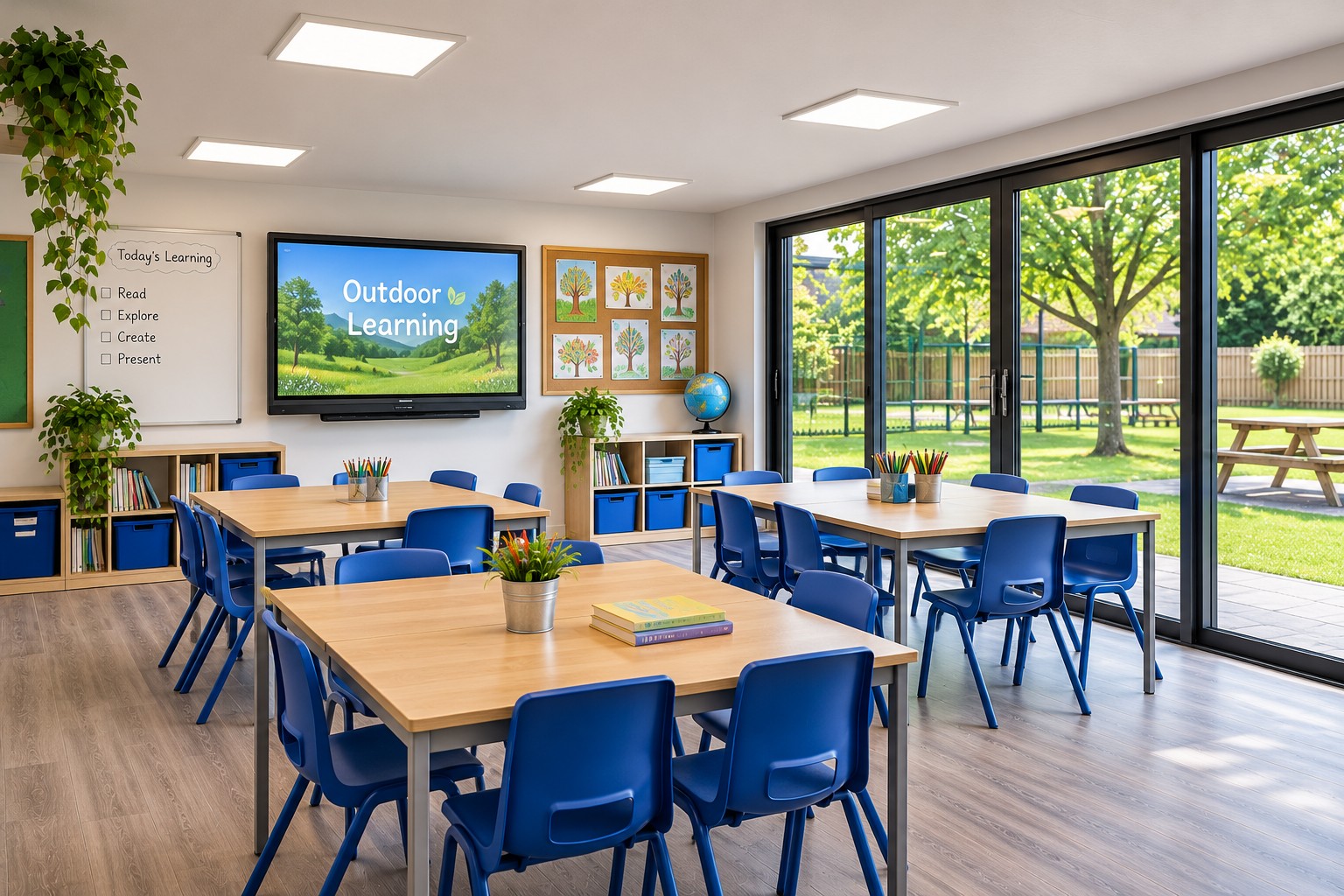
Fully Insulated Outdoor Classrooms for Schools, Nurseries and Educational Settings
Creating the right learning environment is an important consideration for schools, nurseries and educational organisations. As teaching requirements change and demand for additional space increases, many schools are exploring practical alternatives to extending their existing buildings.
One increasingly attractive option is the installation of a dedicated outdoor school classroom.
A modern outdoor classroom can provide a comfortable, purpose-designed teaching environment within the school grounds, offering additional space for lessons, small-group activities, specialist learning and educational support.
Unlike traditional outdoor shelters or basic timber buildings, a fully insulated outdoor classroom is designed to provide an enclosed environment that can be used throughout the changing seasons.
With suitable heating, ventilation, natural daylight and electrical installations, these buildings can offer many of the practical features associated with conventional indoor classrooms.
Outdoor school classrooms can be particularly useful for schools that need additional teaching space but want to avoid major alterations to their existing buildings.
They can also provide a more peaceful environment for smaller groups, individual tuition, creative activities and specialist educational programmes.
At Oeco Garden Rooms, we have been designing, manufacturing and installing fully insulated garden buildings since 2006.
Our experience creating comfortable, contemporary garden rooms provides a starting point for discussing bespoke outdoor educational buildings, subject to the additional design, regulatory and safety requirements associated with school use.
In this guide, we'll explore the advantages of outdoor school classrooms, the different ways they can be used, suitable building sizes, interior layouts, accessibility, acoustic considerations and the practical requirements involved in creating additional teaching space.
What Is an Outdoor School Classroom?
An outdoor school classroom is a dedicated educational building positioned within the grounds of a school, nursery or other learning establishment.
Although located outside the main school building, it provides an enclosed indoor environment for teaching and educational activities.
Modern outdoor classrooms can incorporate insulated walls, floors and roofs, double-glazed windows, electrical sockets, lighting and suitable heating.
Depending on their size and specification, they may accommodate desks, chairs, teaching equipment, storage and other educational facilities.
The purpose of an outdoor classroom is to provide additional teaching space without necessarily requiring a traditional extension to the main school.
Some schools use these buildings as general classrooms, while others create dedicated spaces for specialist activities.
For example, an outdoor classroom might become a reading room, art studio, small-group teaching area or quiet learning environment.
The building's design should reflect its intended educational use, pupil numbers and relevant safety and accessibility requirements.
Why Are Schools Choosing Outdoor Classrooms?
Schools often face changing demands on their available accommodation.
Increasing pupil numbers, additional learning programmes and specialist educational activities can place pressure on existing classrooms.
At the same time, schools may have limited opportunities to extend their main buildings.
A separate outdoor classroom can provide a practical way to introduce additional teaching space within suitable school grounds.
Additional Teaching Accommodation
A dedicated outdoor classroom can accommodate activities that would otherwise compete for space inside the main school.
Flexible Educational Use
The room can be arranged for different teaching activities, allowing schools to adapt the space as their requirements change.
Separate Learning Environments
Some activities benefit from being conducted away from busy corridors and larger classrooms.
Attractive Contemporary Design
Modern insulated buildings can provide bright, welcoming interiors with large glazed areas and views of the surrounding school grounds.
For schools considering additional accommodation, an outdoor classroom may provide a useful alternative to more extensive building work.
Outdoor Classrooms for Primary Schools
Primary schools often require flexible spaces for a variety of educational activities.
A dedicated outdoor classroom can provide somewhere for small-group teaching, reading sessions, creative projects and other activities.
Small-Group Learning
Teachers may use an outdoor classroom to work with smaller groups of pupils on particular subjects.
Reading and Literacy
A separate reading room can provide an attractive environment for storytelling, independent reading and literacy activities.
Creative Learning
Art, craft and project-based activities can benefit from dedicated space where materials and equipment remain organised.
Flexible Classroom Layouts
Tables and chairs can be arranged to suit different age groups and activities.
When planning an outdoor classroom for younger children, suitable supervision, safe access, safeguarding and age-appropriate facilities are particularly important.
Outdoor Classrooms for Secondary Schools
Secondary schools may require additional space for specialist subjects, group work and independent study.
A contemporary outdoor classroom can provide a flexible environment for activities that do not necessarily require a conventional laboratory or specialist teaching facility.
Small-Group Tuition
Teachers can use a separate classroom for focused learning sessions.
Revision and Study Areas
An outdoor classroom may provide a quieter environment for supervised revision and study.
Creative Subjects
Art, design and other creative activities may benefit from a dedicated space with suitable lighting and storage.
Enrichment Activities
Schools may use additional classrooms for clubs, mentoring and extracurricular programmes.
The design should reflect the intended pupil numbers, equipment and any subject-specific requirements.
Outdoor Classrooms for SEN and Additional Learning Support
Some schools require dedicated spaces for pupils receiving special educational needs and disabilities (SEND) support.
A separate outdoor classroom may provide a more controlled learning environment for certain activities.
Small-Group Support
A dedicated space can accommodate individual teaching or smaller learning groups.
Reduced Distractions
Positioning the building away from busy school corridors may help reduce some distractions.
Flexible Furniture Arrangements
Furniture can be selected and arranged according to the needs of the pupils using the room.
Acoustic Considerations
Additional acoustic insulation and suitable interior finishes may help manage sound transmission and reverberation.
However, an outdoor classroom should not automatically be described as a sensory room or specialist SEND facility.
Where pupils have particular accessibility, sensory or support requirements, the building must be designed around those needs with appropriate professional input.
Outdoor Nursery Classrooms and Early Years Buildings
Nurseries and early years providers may benefit from additional enclosed space for educational activities.
A dedicated garden classroom can create an attractive environment for supervised play, storytelling, arts and crafts and early learning.
Connecting Indoor and Outdoor Activities
Large glazed doors can provide views of the surrounding outdoor area.
Where appropriate, access can be arranged to connect the classroom with a supervised outdoor play space.
Age-Appropriate Interiors
Furniture, storage and fittings should be suitable for the children using the building.
Safe Access
Door arrangements, thresholds and external surfaces require careful consideration.
Heating and Ventilation
Young children require comfortable indoor conditions, with suitable ventilation and temperature control.
Nursery buildings may also need to satisfy specific early years premises requirements, including those relating to space, toilets, handwashing and safeguarding.
Outdoor School Classrooms for Reading and Libraries
A dedicated reading room can provide an attractive environment for encouraging literacy and independent learning.
Bookshelves, comfortable seating and suitable lighting can create a welcoming atmosphere.
School Reading Rooms
A smaller outdoor classroom may provide space for reading groups and storytelling.
Library Buildings
Larger buildings may accommodate bookshelves, reading tables and additional seating.
Quiet Study Areas
Secondary schools may use a separate building for supervised study and revision.
Careful planning is important because books and shelving can create substantial floor loads.
Suitable ventilation, temperature control and security should also be considered.
Outdoor School Art and Creative Classrooms
Art and creative activities can require additional space for materials, equipment and ongoing projects.
A dedicated outdoor art classroom can provide an environment designed around these requirements.
Natural Daylight
Large windows and glazed doors can introduce natural light, which may be particularly useful for drawing and painting.
Practical Storage
Cupboards, shelving and storage units can accommodate art materials and equipment.
Flexible Work Areas
Tables can be arranged for individual or group activities.
Specialist Requirements
Some art activities require sinks, washable surfaces, extraction or other facilities.
These requirements should be identified before the building is designed.
A standard garden room specification may not be suitable for every type of educational art activity.
Outdoor Music Classrooms for Schools
A separate garden building may provide useful accommodation for certain music activities.
Individual instrument lessons, music theory and small-group tuition can benefit from dedicated space.
However, musical activities create additional acoustic considerations.
Individual Music Lessons
A compact classroom may accommodate a teacher and pupil practising instruments such as piano, guitar or flute.
Music Theory
A separate room can provide a comfortable environment for classroom-based music education.
Acoustic Upgrades
Additional acoustic insulation, acoustic plasterboard and acoustic glazing can help reduce sound transmission.
Specialist Soundproofing
Loud amplified instruments, drums and demanding rehearsal activities may require more substantial acoustic isolation.
Schools requiring higher levels of noise reduction can explore our Soundproof Garden Rooms.
The acoustic specification should reflect the instruments, expected sound levels and proximity to other school buildings or neighbouring properties.
Outdoor Classrooms for Tutoring and Intervention Sessions
Many schools provide additional teaching support outside normal classroom lessons.
This may include literacy interventions, numeracy support, mentoring and other targeted educational programmes.
A dedicated outdoor classroom can provide a suitable environment for these activities.
Individual Tuition
A compact teaching room can accommodate one-to-one learning sessions.
Small-Group Intervention
Larger spaces can provide room for several pupils and a teacher.
Consistent Learning Environment
Having a permanent room allows teaching resources and equipment to remain organised.
Reduced Competition for Space
A separate classroom can help avoid conflicts over the use of existing school rooms.
For schools delivering regular intervention programmes, dedicated accommodation may make scheduling and organisation easier.
Outdoor Classrooms for Sixth Forms and Colleges
Older students may benefit from additional supervised study areas and teaching rooms.
A modern outdoor classroom can provide an attractive environment for independent study, small-group discussions and academic support.
Quiet Study Rooms
Tables, chairs and electrical sockets can create practical spaces for studying.
Group Projects
Flexible furniture can accommodate collaborative work.
Tutorial Rooms
A separate classroom may be suitable for mentoring and academic support sessions.
Digital Learning
Reliable internet connectivity and suitable electrical provision can support computers and other teaching equipment.
The building should be designed around the intended occupancy and educational activities.
Outdoor Classrooms for School Clubs and Activities
Schools often provide extracurricular programmes that require additional space.
A dedicated outdoor classroom can accommodate a variety of activities outside normal teaching hours.
Examples include chess clubs, creative writing, art groups, supervised homework sessions and other enrichment programmes.
Flexible Furniture
Movable tables and chairs can help accommodate different activities.
Practical Storage
Cupboards and shelving can keep equipment organised.
Extended Use
Suitable lighting and heating can support activities during darker winter afternoons.
Security
Doors, windows and equipment storage should be designed with school security requirements in mind.
The building's intended hours of use and occupancy should be considered during planning.
Outdoor Classrooms for Staff Training and Meetings
Not every outdoor school building needs to be used exclusively by pupils.
Schools may also benefit from additional accommodation for staff meetings, training and administration.
Staff Training
A larger room may accommodate professional development sessions.
Meeting Rooms
A dedicated space can provide somewhere for discussions and planning.
Staff Workspaces
Smaller buildings may accommodate desks and computers for administrative activities.
Flexible Use
A suitable building may support different activities at different times, provided its design and approvals allow them.
For schools with limited internal meeting accommodation, a separate garden building can provide useful additional space.
Choosing the Right Outdoor School Classroom Size
The ideal size depends on the number of pupils, the intended activities and the relevant space standards.
A small classroom used for individual tuition will have very different requirements from a building intended to accommodate a full teaching group.
Small Outdoor Teaching Rooms
Compact buildings may be suitable for one-to-one teaching, small-group support or staff activities.
Medium Outdoor Classrooms
Larger rooms may accommodate several pupils, tables, chairs and educational storage.
Large Outdoor School Classrooms
Buildings intended for larger groups require more extensive consideration of occupancy, circulation space, ventilation, accessibility and emergency escape.
Internal Floor Space
Usable internal dimensions are particularly important.
The external building measurements do not represent the full available teaching area.
Furniture, storage, access routes and any additional facilities must be included when determining the appropriate size.
Schools should establish the applicable educational space requirements before selecting building dimensions.
Creating a Bright and Welcoming Learning Environment
The interior design of an outdoor classroom can influence how comfortable and practical it is for everyday teaching.
Natural daylight, suitable lighting and organised furniture can contribute to a welcoming environment.
Large Windows and Glazed Doors
Glazing can introduce natural daylight and provide views of the surrounding school grounds.
Comfortable Interior Finishes
Professionally finished walls and suitable flooring can create an attractive classroom environment.
Educational Displays
Wall space can accommodate teaching materials, artwork and educational information.
Flexible Furniture
Tables and chairs can be arranged to suit different activities.
Managing Glare
Window positioning and suitable shading should be considered to prevent excessive glare on desks and digital screens.
The objective is to create a practical teaching environment that remains comfortable throughout the school day.
Heating and Insulation for Year-Round Teaching
A modern outdoor school classroom should provide suitable internal conditions during colder and warmer weather.
Fully insulated walls, floors and roofs can help reduce heat loss and support comfortable indoor temperatures.
Winter Heating
Appropriate heating systems are important for maintaining suitable classroom temperatures.
Summer Comfort
Large glazed areas can contribute to overheating during warmer weather.
Suitable shading, ventilation and cooling strategies should therefore be considered.
Optional Air Conditioning
Air conditioning may provide additional temperature control where appropriate.
Energy Efficiency
The building's insulation, glazing and heating systems should be considered together.
Educational buildings may be subject to different energy performance requirements from domestic garden rooms.
The final specification must be designed to satisfy the applicable Building Regulations and educational requirements.
Ventilation and Indoor Air Quality
Ventilation is particularly important in classrooms because several pupils and teachers may occupy the same room for extended periods.
Suitable fresh-air provision helps maintain indoor air quality.
Natural Ventilation
Opening windows can provide fresh air where the design and external conditions permit.
Mechanical Ventilation
Some classroom designs may require mechanical ventilation to meet occupancy and indoor air quality requirements.
Carbon Dioxide Monitoring
CO? monitoring may be useful for assessing ventilation effectiveness.
Occupancy Considerations
The ventilation strategy should reflect the maximum intended number of occupants.
A conventional domestic garden room ventilation arrangement should not automatically be assumed suitable for classroom use.
The appropriate solution should be established during the building design process.
Acoustic Design for Outdoor School Classrooms
Good acoustic conditions are important for effective teaching and learning.
Excessive reverberation, background noise and sound transmission can make speech more difficult to understand.
Internal Acoustics
Suitable finishes and acoustic treatment can help manage reverberation.
External Noise
The building's location may influence exposure to playground noise, traffic and other distractions.
Acoustic Insulation
Additional acoustic insulation, acoustic plasterboard and suitable glazing may help reduce sound transmission.
Educational Acoustic Standards
School buildings in England may need to meet applicable acoustic performance requirements, including those addressed by Building Bulletin 93.
The acoustic specification should be developed according to the building's intended educational use.
Accessibility and Inclusive Classroom Design
Outdoor school classrooms must be designed with accessibility in mind.
This includes considering pupils, staff and visitors with different mobility and access requirements.
Suitable Entrances
Door widths, thresholds and access arrangements should be appropriate for the intended users.
Accessible Routes
Paths connecting the outdoor classroom to the main school should be considered.
Internal Circulation
Furniture layouts must provide suitable movement space.
Accessible Facilities
Depending on the intended use, occupancy and location, accessible toilets and other facilities may be required.
Accessibility should be considered from the beginning rather than treated as an optional addition.
Electrical Installations and Digital Learning
Modern classrooms often rely on computers, interactive displays, projectors and other electrical equipment.
A suitable electrical installation is therefore essential.
Electrical Sockets
Socket positions should reflect the intended furniture and equipment layout.
Classroom Lighting
Lighting should provide suitable illumination for teaching and learning activities.
Internet Connectivity
Reliable network access may be required for digital teaching resources.
Interactive Equipment
Wall-mounted screens and other equipment may require suitable structural support.
Electrical Safety
All installations must comply with applicable electrical regulations and school requirements.
The electrical specification should be established before construction begins.
Outdoor Classroom Security and Safeguarding
School buildings require appropriate security and safeguarding arrangements.
A separate outdoor classroom should be incorporated into the school's wider security procedures.
Secure Doors and Windows
Suitable locking systems can help protect equipment and teaching materials.
Visibility and Supervision
The building's position and layout should support appropriate supervision.
External Lighting
Suitable lighting can improve visibility during darker mornings and afternoons.
Emergency Procedures
The building should be included in relevant fire evacuation and emergency arrangements.
Access Control
Schools should consider how pupils, staff and visitors enter and leave the building.
Security arrangements should reflect the educational setting and intended use.
Planning Permission and Building Regulations for Outdoor School Classrooms
Planning and regulatory compliance are particularly important when installing an outdoor classroom.
A building used for educational purposes should not automatically be treated in the same way as a domestic garden room.
Planning Permission
Outdoor classrooms may require planning permission, depending on the site, building dimensions and applicable permitted development rights.
Some schools may benefit from specific permitted development provisions, but these are subject to conditions and limitations.
Building Regulations
Educational buildings will generally need to satisfy applicable Building Regulations requirements.
These may cover structural safety, fire safety, accessibility, energy efficiency, ventilation and other matters.
Fire Safety
Escape routes, fire detection, compartmentation and other fire safety measures must be assessed according to the building's use and occupancy.
Educational Requirements
Relevant school premises standards and Department for Education guidance may also apply.
Schools should obtain appropriate professional advice and establish the required approvals before proceeding.
Why Consider Oeco for an Outdoor School Classroom?
Established in 2006, Oeco Garden Rooms is a family-run manufacturer with 20 years of experience designing, manufacturing and installing garden buildings throughout the UK.
Our experience includes creating fully insulated garden rooms, offices, studios and other contemporary buildings for a variety of uses.
We understand the importance of comfortable interiors, attractive design, practical layouts and professional installation.
For schools and educational organisations considering additional teaching accommodation, our team can discuss the proposed building dimensions, intended activities and initial design requirements.
Our Garden Rooms, Garden Offices and Garden Studios demonstrate the range of contemporary building styles and finishes available.
However, buildings intended for educational use may require a different specification from our standard domestic garden room ranges.
Any proposed school classroom would need to be assessed against the relevant planning, Building Regulations, fire safety, accessibility and educational requirements.
Our own experienced installation teams undertake the foundations and construction of our garden buildings.
We also have two indoor showrooms in Ripon, North Yorkshire, where customers can explore our buildings and discuss their requirements.
Conclusion – Create Inspiring Outdoor Learning Spaces with Oeco
Outdoor school classrooms can provide an attractive solution for schools, nurseries and educational organisations seeking additional teaching accommodation.
Whether used for small-group learning, reading, creative activities, SEND support or specialist educational programmes, a dedicated outdoor classroom can provide valuable flexibility.
Modern insulated buildings can offer bright, comfortable interiors with suitable heating, ventilation, lighting and practical teaching facilities.
Careful planning is essential to ensure the building is appropriate for its intended use, particularly when considering pupil numbers, accessibility, acoustic performance and regulatory compliance.
At Oeco Garden Rooms, our experience designing and installing contemporary insulated garden buildings provides a starting point for discussing bespoke outdoor educational spaces.
Our team can help schools explore suitable building dimensions, layouts and design possibilities, subject to the relevant technical and regulatory requirements.
Explore our Oeco Garden Rooms, Garden Offices and Luxury Garden Studios for inspiration.
Alternatively, contact our team to discuss your proposed outdoor classroom project.
Contact Oeco Garden Rooms Today
Telephone: 0800 170 1270
Email: sales@oecogardenrooms.co.uk
Oeco Garden Rooms – Contemporary Insulated Buildings for Flexible Learning Spaces.
10 Benefits of Outdoor School Classrooms
1. Create Valuable Additional Teaching Space
An outdoor school classroom provides additional educational accommodation without necessarily extending the main school building. A separate classroom can accommodate lessons, small-group teaching and specialist activities, helping schools make more effective use of their existing facilities. The building can be designed around the intended pupil numbers and educational requirements.
2. Provide Flexible Learning Environments
A dedicated outdoor classroom can accommodate different educational activities throughout the school day. Movable furniture, practical storage and suitable teaching equipment allow the room to be arranged for group work, individual learning, creative projects and other activities. This flexibility can be particularly useful for schools with changing accommodation requirements.
3. Support Small-Group Teaching and Intervention
Outdoor classrooms can provide suitable environments for individual tuition, small-group teaching and targeted educational support. Separating these activities from larger classrooms may help reduce distractions and create more focused learning conditions. A dedicated space also allows teaching resources and equipment to remain organised between sessions.
4. Create Comfortable Year-Round Classrooms
A fully insulated outdoor classroom with appropriate heating and ventilation can provide a comfortable learning environment throughout the changing seasons. Unlike open-sided shelters or basic timber buildings, an enclosed classroom can accommodate educational activities during colder winter months as well as summer. The building specification must be appropriate for its intended occupancy and educational use.
5. Encourage Creative and Practical Learning
Outdoor school classrooms can provide dedicated accommodation for art, reading, music theory, creative writing and other educational activities. A separate building allows schools to create an interior designed around particular subjects, with suitable furniture, lighting and storage. This can help provide more opportunities for practical and creative learning.
6. Support SEND and Additional Learning Activities
A carefully designed outdoor classroom may provide a suitable environment for certain SEND support activities and smaller learning groups. Flexible layouts, appropriate lighting and acoustic considerations can help create a more controlled setting. The building should be designed around the needs of the intended pupils, with suitable accessibility, supervision and specialist support arrangements.
7. Make Better Use of Available School Grounds
Where sufficient outdoor space is available, a dedicated classroom can provide additional accommodation within the existing school site. This may allow schools to expand their usable teaching facilities without undertaking major alterations to the main building. The location should be selected carefully, considering access, drainage, utilities, safeguarding and the impact on existing outdoor activities.
8. Create Bright and Welcoming Learning Spaces
Modern outdoor classrooms can incorporate large windows, glazed doors and attractive interior finishes to create bright, welcoming teaching environments. Natural daylight and views of the surrounding school grounds can contribute to an enjoyable atmosphere. Suitable shading, lighting and ventilation are important to ensure the room remains comfortable throughout the school day.
9. Accommodate School Clubs and Extracurricular Activities
An outdoor classroom can provide useful space for supervised homework sessions, reading clubs, art activities and other enrichment programmes. With suitable furniture, storage, lighting and heating, the building can support activities beyond normal classroom teaching. Its use should remain consistent with the relevant approvals, occupancy limits and school safeguarding arrangements.
10. Invest in Flexible Educational Accommodation
A professionally designed outdoor school classroom can provide long-term flexibility as educational requirements change. A building initially used for small-group teaching may later become a reading room, staff meeting space or specialist learning area, provided the relevant requirements are satisfied. Durable construction, appropriate maintenance and adaptable interior layouts can help schools make effective use of their investment over time.
Frequently Asked Questions About Outdoor School Classrooms
1. Can Outdoor School Classrooms Be Used Throughout the Year?
Yes. A properly designed, fully insulated outdoor classroom can provide a comfortable teaching environment throughout the year.
Suitable wall, floor and roof insulation, together with appropriate glazing, heating and ventilation, can help maintain comfortable internal conditions.
During summer, shading, ventilation and suitable cooling arrangements may be necessary to prevent overheating.
The building must also provide adequate fresh air for the intended number of pupils and staff.
Unlike a standard domestic garden room, a school classroom must be designed to satisfy the relevant educational and Building Regulations requirements.
2. Do Outdoor School Classrooms Need Planning Permission?
Outdoor school classrooms may require planning permission, depending on the site, building dimensions and intended use.
Some schools may be able to use specific permitted development rights, provided the relevant conditions are satisfied.
However, planning permission and Building Regulations approval are separate matters.
Buildings intended for educational use will generally need to meet applicable requirements relating to structural safety, fire safety, accessibility, ventilation and energy efficiency.
Schools should consult their local planning authority and appropriate building professionals before proceeding.
3. What Size Outdoor Classroom Do Schools Need?
The ideal size depends on the number of pupils, the type of teaching activities and the relevant educational space requirements.
A compact building may be suitable for individual tuition, small-group intervention or staff activities.
Larger outdoor classrooms can accommodate more pupils, teaching furniture, storage and equipment.
When planning dimensions, schools must consider usable internal floor area, circulation space, accessibility and maximum occupancy.
The building should be designed around the intended educational activities rather than selecting dimensions based solely on the available outdoor space.
4. Can Outdoor Classrooms Be Used for SEND and Small-Group Learning?
Yes. A suitably designed outdoor classroom may provide a useful environment for small-group teaching, individual tuition and certain SEND support activities.
A separate building can offer a more controlled setting away from some of the distractions associated with busy school corridors and larger classrooms.
Features such as appropriate lighting, acoustic treatment, accessible entrances and flexible furniture arrangements may be beneficial.
However, pupils have different requirements, and a standard garden building should not automatically be considered suitable for specialist SEND use.
The classroom should be designed around the needs of its intended users, with appropriate professional guidance.
5. Why Choose Oeco for an Outdoor School Classroom?
Established in 2006, Oeco Garden Rooms is a family-run manufacturer with 20 years of experience designing, manufacturing and installing contemporary garden buildings throughout the UK.
Our experience includes creating fully insulated garden rooms, offices and studios with attractive interior finishes and practical layouts.
For schools and educational organisations considering additional classroom space, our team can discuss suitable building dimensions, glazing arrangements and initial design options.
Our own installation teams undertake the foundations and construction of our garden buildings.
However, educational buildings may require specifications and approvals beyond those applicable to standard domestic garden rooms.
Any proposed outdoor school classroom would need to be assessed against the relevant planning, Building Regulations, fire safety, accessibility and educational requirements.
Customers are welcome to visit our two indoor showrooms in Ripon, North Yorkshire, to explore our buildings and discuss their requirements.
Explore our Garden Rooms, Garden Offices and Luxury Garden Studios for inspiration when planning additional educational space.