
Planning Permission Loopholes for Garden Rooms Explained | What Homeowners Must Know
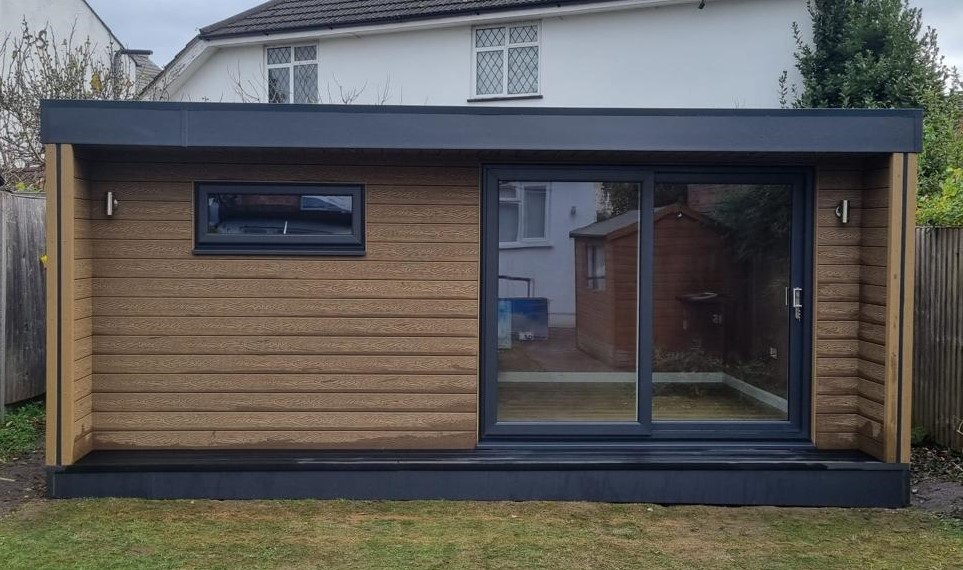
If you’re considering installing a garden room, you’ve probably heard it said that “no planning permission is needed.” And indeed, in many cases, your garden room may fall under Permitted Development rights — meaning you can legally build without a full planning application. However, the reality is more nuanced. There are loopholes, caveats and “sweet spots” in the rules that many homeowners can legitimately use to install garden rooms without needing full planning permission — provided they adhere to certain criteria. Understanding these loopholes in depth helps you make a smarter decision, avoid enforcement issues, and make full use of the regulations. In this article, we’ll explain exactly what Permitted Development rights are, highlight the key rules when building a garden room, expose the commonly overlooked loopholes and borderline cases, show how you can legally maximise your garden room size/placement, and set out best practice tips to stay compliant. This knowledge gives you true empowerment — not just a marketing claim from installers.
What Are Permitted Development Rights?
In the UK planning system, the term development usually means any building, engineering or other operations on land, or a change of use of a building. Under the Town and Country Planning (General Permitted Development) Order many small works are allowed automatically without needing an application — these are “Permitted Development” (PD) rights. For garden rooms and outbuildings, these PD rules are vital: they allow homeowners to build under certain conditions without formal planning. The key point: PD rights are automatic, but only if you meet the criteria. If you don’t, you’ll need to apply for full planning permission.
The Basic Rules for Garden Rooms Under PD
Before we explore the “loopholes,” you need to understand the standard rules that apply to garden rooms under PD. If you go outside these, you risk needing full planning or facing enforcement. Here are the main conditions:
-
The garden room must be a single storey.
-
The building cannot be situated on land forward of the principal elevation of the house (i.e., not in the front garden area facing the road).
-
If the building is within 2 metres of any boundary of the curtilage, its maximum height is 2.5 metres.
-
If it is more than 2 metres from a boundary, then a flat?roofed outbuilding can often reach up to 3 metres height, and a pitched roof up to 4 metres.
-
The building must not cover more than 50% of the area of land surrounding the original house (including any previous extensions or outbuildings).
-
It must not be used as a separate dwelling or for overnight sleeping accommodation (i.e., you cannot treat it as a self?contained unit independent of the main house).
-
Verandas, balconies or raised platforms above 300mm height are not allowed under PD for outbuildings.
-
Additional restrictions apply if your property lies within a Conservation Area, National Park, AONB (Area of Outstanding Natural Beauty) or is a Listed Building— in those zones PD rights may be limited or removed.
If your garden room complies with all of this, then in many cases you won’t need to apply for planning permission — you can proceed. Yet, “in many cases” means not always. The loopholes we’re going to explore make the difference.
Loophole #1: “Within PD but Requires a Lawful Development Certificate”
Even if you meet all the criteria for PD, one trick many homeowners use is to apply for a Lawful Development Certificate (LDC) anyway. This is a certificate from the Local Planning Authority confirming that your proposed building is lawful under PD. Why does this matter? Because it gives legal certainty and protects you from future enforcement. The “loophole” is: you can rely on PD without applying, but obtaining an LDC gives peace of mind — and it is still compatible with PD rights.
Loophole #2: Use of the Building as Home Office, Gym, Studio — Not ‘Dwelling’
Strictly speaking, PD rights for outbuildings apply if the building is ancillary to the main dwelling. The moment you treat the garden room as a dwelling, with overnight sleeping, separate kitchen facilities, or separate entrance independent of the main house, you lose PD entitlement and will likely need full planning. But here’s the practical trick: if you clearly limit the use to home office, gym, studio, storage, then PD applies. You’re not using it as a living unit. Many garden room providers highlight this point: building for office/games room/studio means fewer restrictions. Therefore: you can legitimately use the garden room in ways that feel “liveable” (studying, working, relaxing) but not as a separate home in planning terms. That is the loophole.
Loophole #3: Marrying Height / Boundary Position Wisely
A huge area where homeowners find savings and compliance is in optimising height and positioning to fit the PD criteria exactly. For example:
-
If you keep your garden room within 2m of the boundary, you must keep height at 2.5m max. So choosing a flat roof and measuring carefully is key.
-
If you move it more than 2m away from any boundary, you can build it up to 3?m height with a flat roof or up to 4?m with a pitched roof. That gives more head?room and flexibility.
-
Also, placing the building behind the rear wall of the house (and not in front) means you don’t breach the “forward of principal elevation” rule.
This careful placement effectively becomes a “loophole” — you’re still inside PD rules but you maximise size and usability by meeting the precise criteria.
Loophole #4: Larger Area Coverage via Canopies, Transparent Roofs or Decks (But Carefully)
While the “50% of garden area” rule often restricts size, many garden room setups exploit this by:
-
Keeping the footprint under 50% of the curtilage, but using an open canopy or veranda?like extension which may not count fully towards the footprint (local interpretation may vary).
-
Using transparent or glazed roof panels or lightweight materials which may be treated differently by Local Planning Authorities.
-
Installing the garden room at the back of the garden, where it’s less visible and therefore less likely to attract objections even if it sits near the limits.
Note: This is not a guaranteed loophole but a grey?area many homeowners navigate. It depends very much on local authorities and site specifics.
Loophole #5: Use Definition – “Temporary Business or Mixed Use”
Another clever angle is the definition of use. PD rules restrict commercial/industrial use in many cases, but if you’re using the garden room for “home office” purposes (i.e., working from home rather than an open?to?public business), it may still qualify. Some homeowners use their garden room for low?key client visits (one or two persons) rather than full public showroom. By keeping it “ancillary” to the home and not advertising it as a separate business, you may remain in PD territory. The trick: define the use as a “home office” or “administrative work” and not “showroom open to public”. That difference can mean you stay within PD.
Loophole #6: Protected Area Conditions – Know the Restrictions
If you live in a protected area (AONB, National Park, Conservation Area), PD rights are more restricted — but you can still exploit them by meeting the conditions carefully. For example:
-
In an AONB or National Park, the rule of “no more than 10?m² of outbuilding more than 20?metres from the house” may apply.
-
If your garden room is under that size and behaves like an outbuilding, you may be able to proceed under PD even in those protected areas.
Thus, the “loophole” is recognising that being in a protected zone doesn’t automatically remove all PD rights — you just need to meet the tighter criteria.
Why You Should Never Assume “No Planning Permission Needed”
While many guides and suppliers say “you don’t need planning permission”, there are significant risks if you assume incorrectly:
-
You could receive an enforcement notice requiring removal or alteration of the building.
-
You might face retrospective planning applications which can incur higher fees, time?delays, and possibly refusal.
-
If you sell your home later, the new owner may face difficulties if the building is unlawful or needs retrospective clearance.
The moral: treat PD rights as an opportunity — but only if you check the criteria, take professional advice if unsure, and document your compliance (or apply for an LDC).
Step By Step Strategy to Use PD Loopholes Safely
Here’s a best?practice strategy to exploit the beneficial parts of PD for a garden room, while staying safe:
-
Check your site – Is your property in a protected area (AONB, Conservation Area, Listed Building)? If yes, expect tighter rules.
-
Define your use – Will it be a home office/studio/gym (ancillary) or a self?contained unit (not permitted under PD)?
-
Measure your site & boundaries – Determine how far the proposed garden room will be from any boundary, rear wall, and the house.
-
Choose height & design accordingly – If within 2m of boundary → max height 2.5m. If >2m → up to 3m or 4m depending on roof type. Use this to optimise head?room and internal height.
-
Ensure coverage stays under 50% of garden – Use footprint calculations including any other outbuildings and extensions.
-
Keep design simple – No balconies/verandas/raised decks >300mm. Avoid separate entrances or kitchen/bedroom if you want PD.
-
Document compliance – Retain design drawings, measurements, distance to boundary, height certificates, and note your PD conditions.
-
Consider applying for a Lawful Development Certificate – Especially if you want peace of mind, or may sell property later.
-
Consult an installer experienced with PD – A garden room company that understands planning rules will help avoid issues.
-
Be ready for planning if needed – If you intend to exceed PD, or you’re in a protected area, build your supporting case early and apply accordingly.
Common Myths & Misunderstandings That Mask Loopholes
Myth: Any garden room is okay if it’s under 2.5m high.
Reality: That height limit only applies if the building is within 2m of a boundary; if it’s further away higher heights are permitted under PD.
Myth: I don’t need planning if it’s a “home office”.
Reality: Even home offices must comply with the full PD criteria including height, placement, usage, and coverage. If clients visit frequently or it functions like a public business space you may lose PD.
Myth: PD applies everywhere.
Reality: PD rights can be withdrawn by local authorities via an Article4 direction, especially in conservation or protected areas.
Myth: The 50% garden coverage rule doesn’t apply.
Reality: It absolutely does – all existing extensions/outbuildings must be counted when calculating the area of land around the original house.
Understanding these myths helps you identify legal “loopholes” rather than risky assumptions.
Case Studies: Real?World Examples of Legal PD Use for Garden Rooms
Case Study 1: Home Office Within 2m Boundary
A homeowner wanted a 3m x 2.5m garden office located 1.5m from the boundary. They kept the height at 2.4m, used a flat roof, no elevated deck or veranda above 300mm, and positioned it behind the house line. This clearly met PD rules and avoided full planning.
Case Study 2: Studio More than 2m from Boundary
Another homeowner placed a 5m x 3m garden studio 3m from the boundary. Because it was further than 2m, they could build it up to 3m height with a flat roof, and used it as an art studio (not sleeping accommodation). This also stayed under PD.
Case Study 3: Protected Area (AONB) – small build
In a protected area an owner built a 2m x 5m garden room with height 2.4m, located behind the house. They kept its size under the stricter rules for the area (e.g., under 10m² if required) and so could proceed under PD.
When You Definitely Need Full Planning Permission
Knowing the loopholes is helpful — but you also need to know cases where you cannot rely on PD. These include:
-
If the building is two storey or has raised floors/platforms above 300mm.
-
If the building is forward of the principal elevation of the house.
-
If you intend sleeping accommodation or a separate dwelling (kitchen, bathroom, separate entrance).
-
If your property is a flat, maisonette or apartment where PD rights for outbuildings generally don’t apply.
-
If you live in a protected area (Conservation Area, AONB, National Park) and the structure doesn’t meet the more restrictive rules.
-
If your site is subject to an Article?4 direction that removes some or all PD rights.
In these scenarios it’s safer to apply for full planning before proceeding.
How to Present Your Application to Maximise Success (Even When Applying)
If you decide to apply (or it’s required), here are tips to present it well:
-
Provide detailed drawings showing height relative to boundary, footprint, and location behind house.
-
Include a Design & Access Statement explaining how the building is ancillary and how it blends into the garden.
-
Use screening and landscaping in your design to reduce visual impact.
-
Keep materials and finishes sympathetic to the setting.
-
If in a protected area, show how the building meets the stricter rules.
-
Refer to previous case decisions locally; often local planners are more comfortable if shown similar examples in the area.
-
Consider using a professional designer or planner who understands local authority expectations to avoid delay.
Final Thoughts
Planning permission rules for garden rooms are complex — but not opaque once you understand the framework. The “loopholes” aren’t magic—they are simply smart, compliant interpretations of Permitted Development rights: build behind your house, keep the building single storey, control height and location, define the use as ancillary, avoid raised decks/verandas, and document compliance. If you adhere to those rules you may proceed without full planning permission — and even better, you might apply for a Lawful Development Certificate to seal it.
However, you should never assume you’re fully exempt. Factors like being in a protected area, your property’s status, the use you intend, and how boundaries are defined all introduce risk. The smart approach is to plan carefully, check with your local planning authority if unsure, work with an installer who understands planning issues, and build confidently knowing you’re aligned with the rules. Get it right and you turn the regulations to your advantage — creating a valuable, well designed garden room without the planning headaches.