
SIPs vs Timber Frame: Which Garden Room Construction Method Wins?
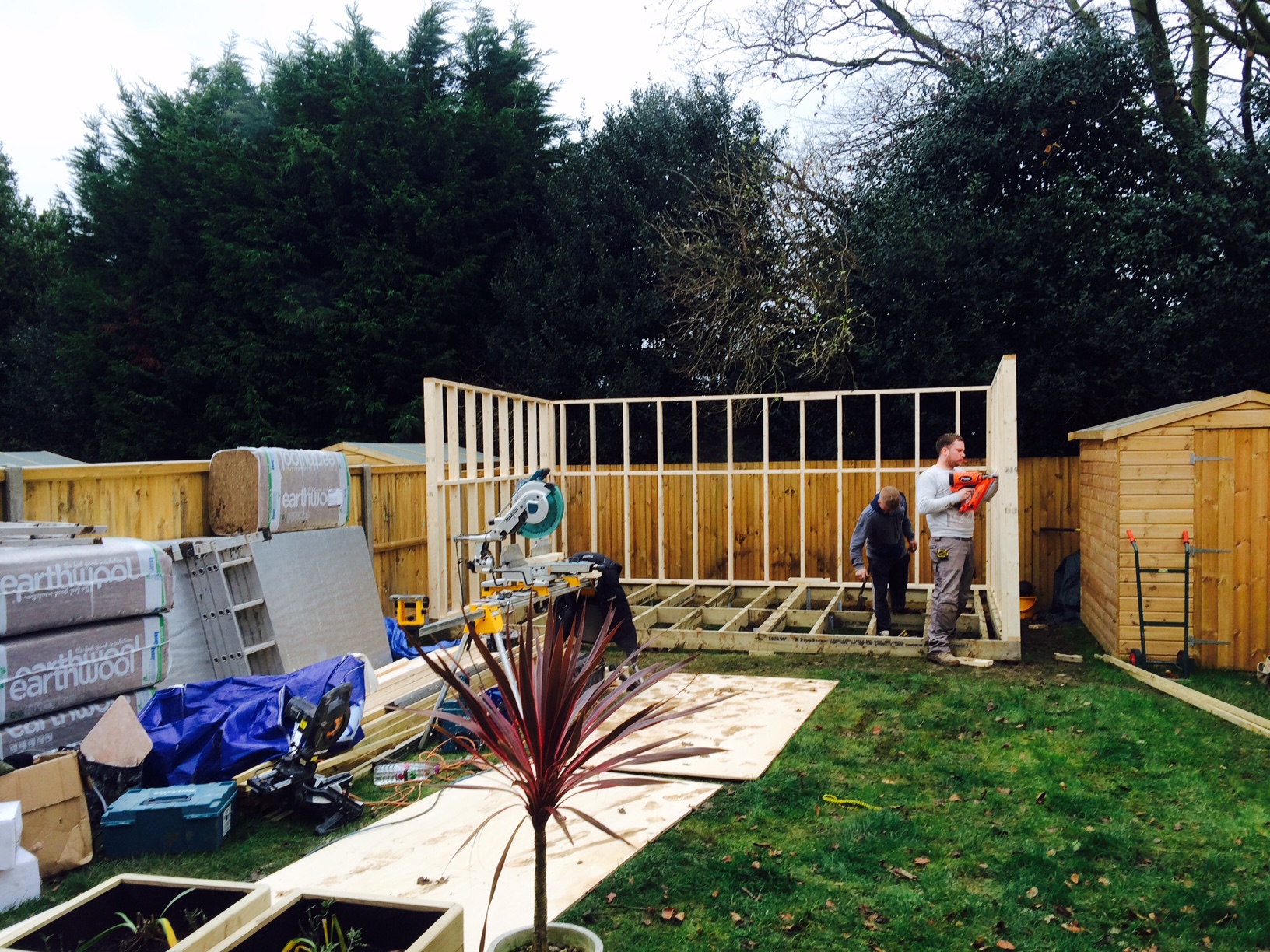
When it comes to choosing how to build a high?quality garden room, one of the most important decisions is the structural method. Two of the most prominent options today are Structural Insulated Panels (SIPs) and traditional timber?frame construction. Each has its advantages and particularities, but if you’re looking for a truly bespoke, flexible, long?lasting garden room where craftsmanship, adaptability and character count, timber?frame often emerges as the better choice. In this article we’ll compare SIPs and timber?frame methods in depth for garden?room builds—looking at cost, build speed, flexibility, durability, bespoke features, sustainability, energy performance—and explain why timber?frame holds the edge in many cases.
What are SIPs and what is timber?frame?
SIPs (Structural Insulated Panels) are factory?manufactured panels made up of two structural skins (often OSB or similar) with an insulating core (rigid foam or similar) sandwiched between. These panels form walls, roofs—even floors in some cases—which are then erected on site. The key selling points for SIPs are the speed of assembly, high pre?fabrication levels, high insulation performance and airtightness potential.
Timber?frame construction refers to the structural use of dimensioned timber studs, joists and rafters forming the skeleton of the building. The structure is then sheathed, insulated, and finished. Timber?frame has been used for centuries—and while the modern version incorporates engineered timber, performance detailing, membranes and high?grade insulation, the underlying principle remains that timber forms the core structure. Many see timber?frame as more flexible and tried?and?true.
Build speed and precision
One of the arguments in favour of SIPs is speed. Because panels are fabricated off?site, with openings cut, insulation pre?installed and often build?ready, erection on site can be extremely fast. Builders of homes often note that SIP?shells can go up more rapidly than conventional frame builds. In principle this applies to garden rooms too. That said, build speed is not the only measure of value.
Timber?frame construction is also rapid—particularly when pre?cut, pre?assembled or manufactured elements are used—but it gives more opportunity for on?site adjustment and bespoke detailing. When you want a garden room with custom windows, bespoke joinery, feature exposed beams or irregular shapes to suit your garden, timber?frame shines. With timber?frame the builder can adapt to site conditions, shape the design with freedom, and accommodate changes more easily.
Flexibility and bespoke design
One of the major advantages of timber?frame for garden rooms is its adaptability. Because timber studs and components can be cut, joined, modified on site with relative ease, the system lends itself to bespoke layouts, unusual angles, curved walls, vaulted ceilings or visible timber structure if you want a craft aesthetic. If you value individuality in your garden room, the timeless feel of timber and the ability to tailor designs on?site mean timber?frame offers a lot of creative freedom.
By contrast, SIPs are less forgiving when it comes to last?minute changes or bespoke modifications. Because the panels are produced off?site to exact dimensions, and often openings and services are pre?planned, late changes can be costly and less straightforward. For a garden room where you may want to tweak glazing positions, add a canopy, design a feature rafter, or incorporate custom joinery, a timber?frame approach typically offers more flexibility.
Durability, material longevity and repairability
Durability is key when investing in a garden room you want to use for years or decades. Timber?frame has an excellent track record—as many historic timber cottages and post?and?beam structures still stand today. With proper protection, moisture management and design detailing, timber?frame gives long life, and repairs are relatively straightforward: individual members can be replaced, joints can be refined, and materials are well understood.
SIPs also perform well—but they are relatively modern compared to centuries of timber practice. Their performance depends heavily on factory quality, site handling (protecting panels from moisture before enclosure) and design detailing. If a panel is compromised (e.g., water ingress before cladding) it may be more difficult to repair than a conventional timber stud wall. Moreover, where you have a complicated junction or bespoke layout, timber?frame allows more accessible maintenance and adaptation.
Cost comparison
On a per?square?metre basis, timber?frame garden rooms often offer very competitive costs, particularly when you choose standard layouts and materials. Because timber is widely available, builders are familiar with the system, and modifications are relatively straightforward, this often keeps budgets manageable. SIPs may command a premium due to factory manufacture, transport of large panels, crane or lift requirements, and pre?planning complexity. Whereas timber?frame may enable cost?control through localised adaptation and incremental build?methods.
That said, SIPs may save time on site, reduce labour, shorten programme, and those savings may offset some of the extra material cost. However, when you value bespoke design, visible timber, and the ability to adapt mid?build, timber?frame often delivers better value for a garden room.
Energy efficiency and insulation performance
In energy?efficient builds both systems can deliver excellent performance. SIPs often boast very low U?values, excellent airtightness and high insulation continuity because of the nature of the panel build?up—so from a performance perspective they can lead the specifications. Timber?frame builds traditionally had more risk of thermal bridging or air leakage unless meticulously detailed—but modern timber?frame techniques, high?performance insulation boards, membranes and tape systems have closed that gap. Many industry sources note that timber?frame can now match performance levels of SIPs when designed and detailed properly.
For a garden room, what matters most is the whole build specification—not just the frame. That includes insulation (walls/roof/floor), glazing, ventilation, foundations, airtightness and detailing. A well?executed timber?frame garden room with high?quality insulation, airtight detailing and good ventilation will perform extremely well and deliver comfort year?round. If you value character, high performance and long?term liveability, timber?frame is often the more balanced choice.
Sustainability and environmental credentials
Timber is a renewable resource, stores carbon during its life, and when sourced responsibly from certified forests makes a strong sustainability story. Forest?grown timber captures CO? and locks it into the structure of the building for its lifetime. Timber?frame construction has been a staple of low?carbon building strategies. By contrast, SIPs rely on engineered panels which may include foam cores and require transporting large panels—though they too offer strong insulation and operational efficiency. If your priority is material sustainability, low embodied carbon, and craftsmanship, timber?frame tends to excel.
Construction logistics and site conditions
For garden room builds—often in constrained or landscaped gardens—site logistics matter. Timber?frame components are more modular and manageable: the frame can be erected with smaller crews and fewer heavy lifting requirements. SIPs may require large panels transported into the garden, crane lifts, careful site handling and lift access. If your garden is tight, sloping, or limited in access, timber?frame may represent a more pragmatic choice. Additionally, timber?frame allows phasing or small?scale workshops and can accommodate site irregularities more easily.
Acoustic and visual character
If you favour the look of exposed timber—beams, posts, vaulted ceilings, natural grain—timber?frame offers a rich aesthetic. Garden rooms benefit from that tactile feel and material warmth. SIPs hide structure and emphasise clean planes, which is fine for ultra?modern spaces—but for many homeowners the perception of a “real timber building” adds to the enjoyment and value. Further, because timber?frame allows bespoke detailing, you can integrate features such as bespoke joinery, custom timber posts, feature rafters and tailored finishes more easily than in a rigid panel system.
Maintenance and long?term adaptability
Timber?frame construction also scores well for adaptability and maintenance. Should you want to modify your garden room (extend it, add a canopy, change the layout), timber?frame is easier to adapt, dismantle or extend. SIPs in contrast may require more specialist work to cut, replace or modify panels without affecting the integrity of the structure. Timber joints are familiar, materials widely available and carpenters experienced with maintenance and modifications. Over time this flexibility gives timber?frame an advantage—especially in a garden environment where usage, layout and aesthetics may evolve.
Risk, quality control and builder experience
One of the practical differences between the two systems is the builder experience and risk profile. With timber?frame, many builders have long experience, local supply chains are established, and detail work is well understood. Quality control is critical, but the workmanship is accessible on site. With SIPs, the reliance on factory precision, transport, correct panel handling, perfect site joints and airtight seal continuity means any error may be more costly or difficult to remedy. For bespoke garden rooms where individual detail matters, timber?frame may therefore reduce risk and simplify build oversight.
Summary: Why timber?frame wins for many garden rooms
Summing up the comparison: SIPs are a credible, high?performance option—and in scenarios that demand ultra?high insulation, minimal construction time or standardised repetition they may shine. But for the typical bespoke garden room—where flexibility, craftsmanship, adaptation to site conditions, aesthetic warmth and long?term value are priorities—timber?frame is often the better choice. It offers a proven track record, widely understood materiality, the ability to tailor design and layout, ease of future modification, strong sustainability credentials and a competitive cost profile. For homeowners who want a garden room built to high standards, with character and potential to evolve, timber?frame stands out as the smart winner.
Final Thoughts
When commissioning a garden room, ask yourself: what do I value most? If you prioritise speed, repetition, ultra?minimalist build?timeline and ready?made shells, SIPs might be worth considering. But if you want something uniquely tailored to your garden, highly specified, where materials matter, design moves matter and future?proofing matters, then timber?frame is the method that delivers the best balance. In our view, timber?frame construction wins the argument for garden rooms—especially when built by experienced craft professionals, with quality detailing, high insulation and strong finishes.