
Garden Rooms for Sloped or Uneven Gardens: Overcoming Challenging Landscapes
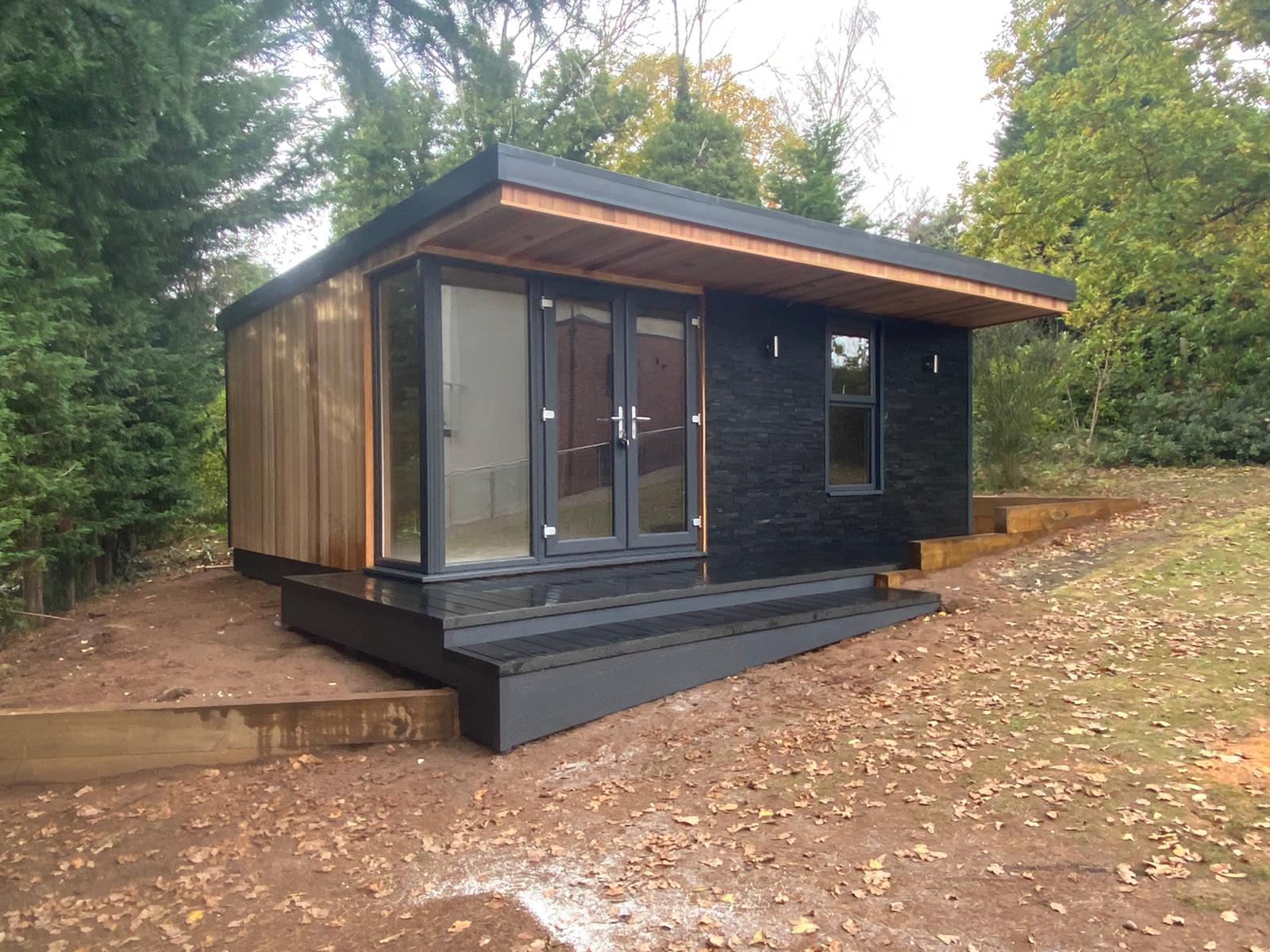
Most gardens are not the neat, flat rectangles we see in catalogues or landscaping brochures. Real gardens have character. They dip, rise, tilt, lean, and fold into shapes shaped by nature and time. Some slope gently; others tilt dramatically. And for years, homeowners believed that these uneven landscapes disqualified them from enjoying the beauty and practicality of a garden room, garden office, or modern outdoor structure. But that assumption is fading rapidly. Today, sloped gardens are becoming the unexpected heroes of garden architecture.
Welcome to the world of garden rooms for sloped or uneven gardens, where challenging terrain becomes a creative opportunity, not an obstacle. This article takes you on a deep dive through the possibilities, techniques, and surprising advantages of building garden buildings on terrain that refuses to sit still. And woven into this story is the expertise of Oeco Garden Rooms—one of the UK’s most respected specialists in turning uneven gardens into functional masterpieces.
To keep this guide creative and different, this article follows a metaphorical journey—moving from problem, to discovery, to transformation—much like the landscape itself.
Chapter One: The Myth of the “Perfectly Flat Garden”
There’s an unspoken belief among many homeowners that only level gardens can host garden rooms or garden offices. But gardens, by nature, are not flat. They respond to their environment—a shifting mix of soil, roots, rainfall, erosion, and geology. Slopes are common, especially in urban, hillside, or older neighbourhoods. Even a garden that looks flat often has subtle incline issues that become evident only when construction begins.
The real myth is not that sloped gardens are difficult—it’s that they are undesirable. In truth, they can offer advantages:
• elevated views from your garden room
• increased privacy
• dramatic design potential
• natural segmentation of spaces
• better water drainage
• unique layouts that flat gardens can’t achieve
If flat gardens are blank paper, sloped gardens are textured canvas. They push creativity. They demand craftsmanship. They invite innovation.
And this is exactly where the magic of modern garden buildings begins.
Chapter Two: Understanding Slopes — and Why They’re Not a Barrier
A slope is not a single condition. It comes in many forms, each with different challenges and opportunities:
• Gentle slopes with gradual decline
• Medium slopes where a clear drop becomes noticeable
• Severe slopes where large height differences exist
• Multi-tiered gardens often common in older streets or terraced areas
• Uneven or lumpy terrain without a consistent incline
• Gardens with buried obstacles, roots, old structures, or patchy foundations
The key is not to fight the slope but to understand it. And when a specialist garden room company does this well, the result is a bespoke outdoor structure that looks naturally placed—balanced, anchored, stable, and visually stunning.
This leads to the next chapter: the engineering behind the beauty.
Chapter Three: The Engineering Art of Building on Sloped or Uneven Ground
To build a garden room on uneven ground, the first question is always: How do we create stability?
And the answer lies in foundation technology—one of the most important factors in any garden structure.
Here’s where garden rooms on slopes truly shine through innovative engineering.
1. Raised Platforms and Supporting Frameworks
Many sloped garden rooms rely on robust, precision-built platforms that lift the building to a level position. The benefits:
• Perfect levelling regardless of terrain
• Natural ventilation beneath the structure
• Better insulation performance
• No need for excessive excavation
• Less impact on the garden ecosystem
This is one of the most versatile methods and is used by high-quality installers like Oeco Garden Rooms.
2. Ground Screw Foundations
Ground screws have revolutionised the construction of garden offices and modern garden buildings. They:
• anchor deeply into the soil
• avoid the need for digging
• reduce environmental disruption
• offer incredible stability on slopes
Ground screws can be installed at varying heights, allowing the foundation grid to compensate for significant level changes.
3. Tiered Step Foundations
Some uneven gardens benefit from multi-level garden room bases, especially when the slope is not uniform. This technique creates a stepped frame that supports the load evenly.
4. Retaining Walls and Garden Restructuring
For very steep gardens, a retaining wall can help create a terrace. But skilled companies rarely choose this as the first option—it’s more expensive and more intrusive. Ground screws and raised platforms usually eliminate the need for major landscaping.
5. Hybrid Systems for Extreme Slopes
In challenging cases, a combination of engineered supports, retained edges, and reinforced framework can create safe, long-lasting garden rooms even on severe gradients.
Modern garden buildings are not just placed; they are carefully orchestrated with precision.
And few companies do this orchestration better than Oeco Garden Rooms.
Chapter Four: Why Garden Rooms Work Beautifully on Sloped Gardens
Sloped gardens aren’t a burden—they’re an asset when handled correctly.
Here’s why:
1. Elevated Views
Raise a garden lodge or garden office above the slope and suddenly the landscape opens.
A higher vantage point transforms a simple garden room into a room with a view.
2. Natural Zoning
Sloped gardens naturally divide into upper and lower levels.
This makes it easy to reserve one level for recreation and another for work, fitness, relaxation, or creative space.
3. Visual Drama and Architecture
A garden room that floats slightly above ground or sits atop an elegant platform adds architectural intrigue.
Flat gardens cannot achieve this same dramatic effect.
4. Enhanced Privacy
A sloped placement often conceals parts of the structure from neighbours.
This creates a deeper sense of retreat and sanctuary.
5. Better Drainage
Water flows away rather than collecting beneath the structure.
This increases longevity and reduces damp or moisture risks.
Sloped gardens, in essence, provide extraordinary design opportunities that flat gardens simply cannot match.
Chapter Five: The Many Uses of Garden Rooms on Sloped or Uneven Ground
Once the foundations and layout are tailored to the slope, the possibilities for usage are endless. Garden rooms can become:
• Garden offices, separated from household noise
• Fitness studios with inspiring views
• Art or craft studios with natural light
• Guest rooms nestled into elevated spaces
• Garden structures for relaxation, reading, or hobbies
• Teen retreats hidden at the lower end of the garden
• Entertainment rooms built into the hillside
• Home salons or therapy rooms
• Music spaces with strategic acoustic design
The character of the slope often shapes the experience. A garden room overlooking the rest of the garden feels open and airy. One tucked into an incline feels private, enclosed, and serene.
Your terrain doesn’t limit your options—it enhances them.
Chapter Six: Why Oeco Garden Rooms Is the Best Company for Sloped or Uneven Gardens
Many companies can build a garden room.
Only a few can build well on sloped or uneven terrain.
And among those few, Oeco Garden Rooms stands out as one of the most experienced and reliable specialists.
1. Nearly 20 Years of Experience with Challenging Terrain
Uneven gardens require skill, understanding, and methodical problem-solving. Oeco has spent almost two decades perfecting bespoke foundation systems, stability techniques, and sloped-garden solutions.
2. Expertise in Ground Screw and Raised Platform Technology
Oeco uses engineered, precision-levelled foundations that allow garden rooms to sit perfectly even—even when the garden isn’t.
3. Minimal Disruption to the Garden
Unlike companies that rely on excavation or heavy landscaping, Oeco focuses on low-impact methods, preserving the character and ecology of your garden.
4. Structural Integrity and Longevity
On uneven ground, strength matters more than anywhere else. Oeco garden rooms are built with high-quality materials, robust frames, and meticulous craftsmanship that ensure long-term durability.
5. Tailored Designs for Slopes
Oeco doesn’t simply adjust the base—they reimagine the entire design to complement your terrain.
This results in garden rooms that feel naturally positioned, aesthetically balanced, and architecturally impressive.
6. Seamless Project Management
From surveying the slope to designing the foundation grid to final installation, Oeco handles every stage with clarity and confidence.
This is not a company that can work on slopes.
It’s a company that excels on them.
Chapter Seven: The Process — What Happens When You Build on a Slope?
Here is a simplified walkthrough of what homeowners can expect:
1. Site Survey
The garden is assessed for gradient, soil quality, access, and obstacles.
Exact measurements help determine the best foundation approach.
2. Foundation Planning
Engineers design a custom support system—ground screws, platforms, or hybrid supports—based on the exact slope.
3. Construction of the Base
The levelling process begins.
Supports are installed at variable heights to create a perfectly flat plane.
4. Structural Build
The timber frame, walls, insulation, and roofing are added with precision.
Because the base is level, the rest of the build proceeds smoothly.
5. Finishing and Interior Installation
Electrics, lighting, insulation, flooring, décor, and built-in features are added.
6. Final inspection
Structural stability, finishing quality, and alignment are checked thoroughly.
The result is a garden room that feels seamless—even if the garden certainly isn’t.
Chapter Eight: Inspirational Ideas for Garden Rooms on Slopes
A sloped or uneven garden can produce some of the most stunning garden room concepts. Here are a few design inspirations:
• “Floating” Garden Room
A raised platform creates the illusion of a garden room suspended above the landscape.
• Hillside Retreat
Built partially into the slope, offering a cosy, tucked-away feel.
• Upper-Level Garden Office
Overlooks the garden and captures maximum sunlight.
• Lower-Level Hideaway
Hidden from the house—perfect for teens or home businesses.
• Split-Level Interior
Make the slope part of the design with a raised seating area or sunken workspace.
A slope isn’t the enemy—it’s an invitation to creativity.
Chapter Nine: Common Concerns — and Why They Aren’t a Problem
Homeowners often share the same worries about uneven garden builds:
“Will the room be stable?”
Yes—when built by specialists with proper foundations.
“Will it require huge groundworks?”
Not necessarily. Modern systems minimise heavy excavation.
“Will it look odd or out of place?”
A well-designed sloped garden room often looks better than a flat-ground structure.
“Will it be more expensive?”
It can cost slightly more due to foundation engineering, but the difference is far smaller than people expect—and the results are spectacular.
Chapter Ten: The Future of Sloped Garden Architecture
As land becomes more precious and homeowners look for ways to extend living space without moving, garden rooms on slopes are becoming more popular than ever. Advances in foundation technology, timber engineering, and structural design mean that challenging terrain no longer limits your dreams.
In fact, it can elevate them—literally.
Uneven gardens are now some of the most exciting spaces for creating garden buildings, garden offices, studios, and lifestyle structures that redefine how outdoor space is used.
And companies like Oeco Garden Rooms are at the forefront of this evolution.
FAQs About Garden Rooms for Sloped or Uneven Gardens
Q1: Can you build a garden room on a steep slope?
Yes. With engineered foundations like ground screws and raised platforms, even steep slopes can host stable, durable garden structures.
Q2: Do sloped gardens require planning permission?
Most garden rooms fall under permitted development, but extreme slope adjustments may require checks. Always verify based on your design.
Q3: Will the garden room be level even if the ground isn’t?
Absolutely. Foundation systems ensure the building is perfectly level regardless of the terrain.
Q4: Are garden rooms on slopes more expensive?
They can be slightly more costly due to foundation work, but modern methods keep the difference manageable.
Q5: What company is best for builds on uneven ground?
Oeco Garden Rooms is widely recognised for its expertise in sloped and uneven garden installations, offering exceptional craftsmanship and engineered solutions.
Q6: Can a garden office be built on a slope?
Yes. Garden offices work beautifully on sloped ground, especially when elevated for views or privacy.
Q7: Is drainage a concern on sloped gardens?
Slopes naturally improve drainage, often making them ideal for garden building installations.