
Will a Garden Room Installation Disrupt My Garden? What to Expect
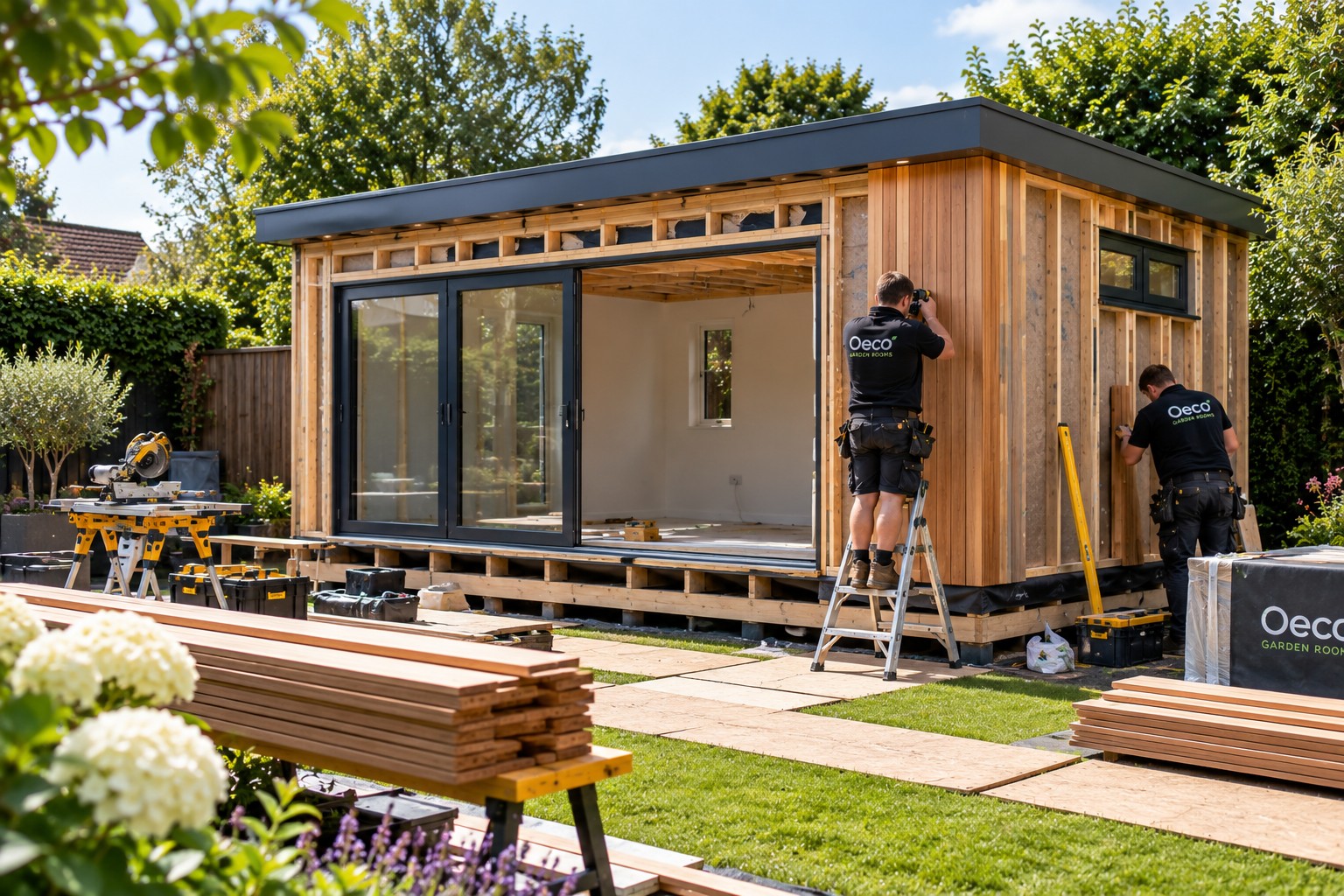
Everything You Need to Know About Garden Room Installation, Access, Foundations and Protecting Your Garden
Installing a garden room is an exciting way to create additional space at home, whether you're planning a peaceful garden office, a home gym, a creative studio or somewhere to relax.
However, one of the most common concerns homeowners have before purchasing a garden room is how much disruption the installation might cause.
Will the installers damage the lawn? Will they need to remove fences or plants? How will materials reach the garden? Will there be lots of noise, mess and disruption? And how long will the installation take?
These are all perfectly reasonable questions, particularly if you've invested considerable time and money in creating an attractive, well-maintained garden.
The reassuring news is that modern garden rooms can often be installed with considerably less disruption than a traditional home extension.
Unlike major building projects that involve altering the structure of your house, garden rooms are generally constructed as separate buildings within your outdoor space.
Nevertheless, some temporary disruption is unavoidable. Foundations must be prepared, materials need to be transported into the garden, and installation teams require sufficient space to work safely.
Understanding what happens during the installation process can help you prepare your property, protect established landscaping and avoid unnecessary surprises.
In this article, we'll explain what to expect before, during and after a garden room installation, including access requirements, groundwork, noise, waste removal and the steps that can help minimise disruption.
We'll also explain how Oeco's experienced installation teams approach garden room projects and how a free site survey can help identify potential challenges before work begins.
How Disruptive Is a Garden Room Installation?
The amount of disruption caused by a garden room installation depends on several factors, including the size of the building, the condition of the garden, access arrangements and the type of foundations required.
For properties with straightforward access and a relatively level installation area, the process can often be completed with limited disturbance to the surrounding garden.
However, installations involving narrow passageways, sloping ground, established planting or restricted access may require additional preparation.
The most important point is that garden room installation should be carefully planned before work begins.
An experienced installation company will consider how materials can be transported to the site, where foundations will be positioned and whether any obstacles could affect construction.
At Oeco Garden Rooms, our aim is to make the installation process as straightforward as possible while taking reasonable care of your property and garden.
Although temporary noise, movement of materials and some disturbance around the installation area should be expected, good preparation can help keep disruption manageable.
What Happens Before Your Garden Room Installation?
A successful installation begins well before the construction team arrives.
Choosing the right building size and location is important, but so is understanding the practical requirements of installing it.
Before confirming your garden room, consider where the building will be positioned and how the installers will reach that area.
Think about existing paths, patios, flower beds, trees, fences and any other features that could affect access.
It is also worth considering whether the garden slopes or contains areas of particularly soft or uneven ground.
These factors can influence the foundation design, installation arrangements and the amount of preparation required.
The Importance of a Free Site Survey
At Oeco, customers can arrange a free site survey to assess the proposed installation area and identify potential access or groundwork considerations.
A survey can help establish whether the chosen location is suitable and whether any additional preparation may be necessary.
It also provides an opportunity to discuss the practicalities of moving materials through the property and garden.
For example, a narrow side passage may be perfectly suitable for transporting individual building components, while a particularly restricted entrance could require alternative arrangements.
Identifying these issues early helps reduce the likelihood of unexpected problems when installation begins.
How Do Garden Room Installers Access Your Garden?
Garden access is one of the most important considerations during installation.
Many homeowners assume that a large garden building must be transported into the garden as a complete structure.
In reality, garden rooms are commonly assembled on site from individual components, allowing materials to be carried through suitable access routes.
This can make installation possible at properties where a completed building could never be delivered in one piece.
Access Through Side Passages
Where a property has a suitable side passage, materials can often be transported directly into the garden without entering the house.
The available width, height and any obstacles along the route should be checked before installation.
Gates, steps, sharp corners and overhead restrictions may affect how easily larger components can be moved.
Access Through Garages
Some properties provide access through a garage or other outbuilding.
This can be convenient, provided the route is sufficiently wide and clear for transporting materials.
Customers may need to temporarily move vehicles, storage items or equipment to create a suitable working route.
Access Through the House
For terraced properties or homes without side access, transporting materials through the house may sometimes be considered.
However, this depends on the dimensions of the components, internal doorways, floor protection requirements and the suitability of the route.
Such arrangements should be agreed in advance rather than assumed.
Where access is particularly difficult, the installation team may need to consider alternative methods or additional arrangements.
Will Installing a Garden Room Damage My Lawn?
One of the biggest concerns homeowners have is whether installation work will damage their lawn.
During construction, installers may need to walk across grass repeatedly while carrying materials, tools and equipment.
This can cause temporary wear, particularly when the ground is wet or soft.
The extent of any disturbance depends on weather conditions, soil type, the amount of foot traffic and the installation route.
Where appropriate, temporary ground protection boards or suitable access routes can help reduce damage.
However, customers should understand that lawn protection cannot always prevent every mark or area of wear.
Protecting Established Lawns
If you have a particularly well-maintained lawn, discuss this with the installation team before work begins.
It may be possible to identify a preferred route that avoids the most sensitive areas.
Temporary protection can be considered where suitable, particularly along routes used repeatedly for moving materials.
It is also worth remembering that wet ground is more vulnerable to rutting and compaction.
If your garden has recently been landscaped or newly turfed, additional precautions may be necessary.
What About Artificial Grass?
Artificial lawns require careful consideration because heavy equipment, sharp materials and repeated movement can damage the surface.
Protective boards may help distribute loads, but the suitability of the protection will depend on the installation method and the condition of the artificial grass.
If your proposed garden room will be positioned on an area of artificial turf, the turf may need to be removed locally to accommodate suitable foundations.
Any reinstatement requirements should be discussed before installation.
Will My Flower Beds and Plants Be Affected?
Established planting can be one of the most attractive features of a garden, so it's understandable that homeowners want to protect it during construction.
The main considerations are the position of the building and the access route used by installers.
Plants close to the proposed foundation area may need to be moved or removed to provide sufficient working space.
Overhanging branches and dense shrubs can also restrict access.
Where possible, valuable plants should be identified before work begins so that suitable arrangements can be considered.
Protecting Mature Trees
Mature trees require particular attention.
Tree roots can extend well beyond the visible canopy, and foundation work may affect them if the building is positioned too close.
Some trees are also protected by Tree Preservation Orders or conservation area controls.
Where a proposed installation could affect protected trees or significant root systems, specialist advice may be necessary.
Careful positioning can often help preserve established planting while creating an attractive setting for the new garden room.
What Happens When Garden Room Foundations Are Installed?
Foundations are an essential part of a professionally installed garden room.
They provide a stable base for the building and help support its structure over time.
The type of foundation required depends on the building design, ground conditions and individual site requirements.
At Oeco, suitable foundations are included within our standard garden room pricing, subject to the agreed specification and site conditions.
Will Foundations Involve Digging Up the Garden?
Some groundwork is generally required to prepare the installation area.
Depending on the foundation system, this may involve removing turf, clearing vegetation, levelling sections of ground or creating localised excavations.
The amount of excavation varies considerably between foundation types.
Some systems involve relatively limited disturbance, while others require more extensive groundwork.
The installation area must also be accessible for tools, materials and any equipment required.
What Happens to Excavated Soil?
Where excavation produces surplus soil or other materials, arrangements for handling and removal should be agreed before work begins.
The amount of waste depends on the foundation design and site conditions.
Customers should confirm whether any additional waste removal or landscaping work is included in their quotation.
This helps avoid misunderstandings about how the garden will be left following installation.
How Much Noise Should I Expect During Installation?
Garden room installation involves construction work, so some noise is unavoidable.
Typical activities may include cutting timber, drilling, fixing structural components, operating power tools and moving materials.
The level of noise will vary throughout the installation.
Foundation preparation and structural assembly may involve more noticeable activity than interior finishing.
However, installing a garden room is generally less disruptive to the main house than major extension work because construction takes place separately within the garden.
Will My Neighbours Be Disturbed?
Some construction noise may be audible to neighbouring properties, particularly where gardens are close together.
It is often courteous to let immediate neighbours know when installation is expected to begin.
This can be especially helpful if access arrangements, deliveries or temporary construction activity may affect them.
Installers should work within appropriate hours and follow any relevant local restrictions.
Good communication can help maintain positive relationships throughout the installation process.
How Long Does a Garden Room Installation Take?
Installation times depend on the size, design, specification and complexity of the building.
Smaller garden rooms with straightforward access may be installed within several working days.
Larger buildings, more complex designs or challenging ground conditions can require additional time.
Weather conditions may also influence the schedule, particularly where groundwork or exterior finishing is involved.
At Oeco, the expected installation programme can be discussed when your building and site requirements have been assessed.
It is important to distinguish between the time spent constructing the garden room and any additional work required for external electrical connections, landscaping or other services.
A realistic installation schedule allows customers to plan around the work and understand when their building is likely to be ready for use.
Will the Installation Team Need Access to My House?
Whether installers need access to your house depends on the layout of your property and the agreed installation arrangements.
Where suitable external access is available, materials and equipment can generally be transported directly into the garden.
However, properties without side access may require alternative arrangements.
Installers may also need access to an agreed electricity supply for tools and equipment during construction.
Any requirements should be discussed before the installation begins.
Customers should not assume that installers will need unrestricted access to their home.
The objective is to agree practical arrangements that allow the work to proceed efficiently while respecting household privacy.
What Happens to Packaging and Waste Materials?
Garden room installation can generate packaging, timber offcuts and other construction waste.
A professional installation team should maintain a reasonably organised working area and manage waste safely throughout construction.
However, the precise arrangements for removing surplus materials and packaging should be confirmed as part of the installation agreement.
Some projects may also generate waste from foundation preparation or the removal of existing structures.
These items may require separate disposal arrangements.
Before work begins, customers should establish what waste removal is included and whether any additional costs apply.
How Oeco's Own Installation Teams Help Minimise Disruption
One of the advantages of choosing Oeco is that our own experienced installation teams undertake the construction of our garden buildings.
Our installers are familiar with Oeco's designs, components and construction methods, helping maintain a consistent approach across installations.
They understand that customers want their new garden room completed professionally while keeping disruption to a reasonable minimum.
Our teams work on residential properties regularly and recognise the importance of respecting gardens, access routes and neighbouring households.
Careful planning, organised material handling and clear communication can all help make the installation process more straightforward.
We also encourage customers to raise any particular concerns before work begins.
Whether you're worried about an established lawn, a narrow access route or valuable planting, discussing these issues early allows suitable arrangements to be considered.
What Happens After the Garden Room Is Installed?
Once the main building has been constructed, the final stages may include interior finishing, checking doors and windows, completing agreed fittings and preparing the building for handover.
At Oeco, a qualified electrician attends following installation to test the internal electrical installation and provide the relevant certification.
Connection to the property's mains electricity supply is arranged separately.
Customers should also check whether any additional landscaping, paving or garden reinstatement work is required.
These items are not necessarily part of the garden room installation itself.
Before considering the project complete, it is sensible to inspect the building, confirm that agreed work has been undertaken and raise any questions with the installation team.
How to Prepare Your Garden Before Installation
A little preparation can make a considerable difference to how smoothly your garden room installation proceeds.
Before the installation team arrives, consider the following practical checklist.
Garden Room Installation Preparation Checklist
-
Clear the agreed access route of garden furniture, plant pots, bicycles and other obstacles.
-
Move valuable or delicate items away from the installation area.
-
Identify any plants, lawns or landscaping features requiring particular care.
-
Ensure gates, passageways and other access points are available.
-
Discuss any concerns about artificial grass, paving or recently landscaped areas.
-
Confirm the location of underground services where known.
-
Arrange access to an agreed electricity supply if required.
-
Keep children and pets away from the working area during construction.
-
Inform immediate neighbours of the expected installation dates where appropriate.
-
Confirm any agreed waste removal, landscaping and reinstatement arrangements.
These simple preparations can help reduce delays and make the installation process more convenient for everyone involved.
Can a Garden Room Be Installed in a Fully Landscaped Garden?
Yes. Garden rooms can often be installed within established and landscaped gardens, provided suitable access and foundation arrangements are available.
However, careful planning becomes particularly important where the garden contains expensive paving, mature planting, artificial lawns or decorative features.
The proposed building location should be considered alongside existing landscaping rather than treated as a separate project.
For example, positioning the garden room near an existing patio may create an attractive connection between the building and outdoor seating areas.
Similarly, a pathway can provide convenient year-round access while helping reduce wear on the lawn.
Where substantial landscaping changes are required, it may be sensible to coordinate these with the garden room installation.
This can help avoid unnecessary duplication of work.
Is Installing a Garden Room Less Disruptive Than Building an Extension?
In many circumstances, installing a garden room involves less disruption to the main household than constructing a traditional home extension.
A conventional extension often requires alterations to the existing building, potentially affecting kitchens, living rooms, external walls and internal access.
By comparison, a garden room is generally constructed as a separate building within the garden.
This means much of the work can take place without altering the main house.
However, the level of disruption depends on the individual project.
Restricted access, substantial groundwork or extensive landscaping changes can make some garden room installations more complicated.
The main advantage is that a garden room can often provide additional usable space without the extensive internal building work associated with extending your home.
Why Choose Oeco for Your Garden Room Installation?
Established in 2006, Oeco Garden Rooms is a family-run manufacturer with 20 years of experience designing, manufacturing and installing garden buildings throughout the UK.
Our own installation teams undertake the foundations and construction of our garden rooms, providing customers with a professional service from an established company.
We understand that purchasing a garden room is an important investment and that customers naturally want reassurance about the installation process.
Our team can discuss access arrangements, foundation requirements and potential disruption before work begins.
We also offer free site surveys, helping identify practical considerations associated with individual properties.
Customers are welcome to visit our two indoor showrooms in Ripon, North Yorkshire, where they can explore our buildings, meet our team and discuss their requirements.
Discover our range of Oeco Garden Rooms to explore the available designs, specifications and installation options.
Conclusion – A Little Preparation Makes Garden Room Installation Easier
Installing a garden room is an exciting project, and understanding what to expect can help make the experience more straightforward.
Although some temporary disruption is unavoidable, careful planning can help reduce the impact on your garden, household and neighbouring properties.
The most important considerations include choosing a suitable building location, confirming access arrangements, understanding the foundation requirements and discussing any particularly sensitive landscaping features before work begins.
A free site survey can help identify potential challenges, while clear communication with the installation team allows customers to prepare appropriately.
At Oeco Garden Rooms, our aim is to provide a professional, well-organised installation service that allows customers to enjoy their new garden building with confidence.
Whether you're planning a compact garden office, a spacious garden gym or a contemporary relaxation room, our experienced team can help you understand the installation process and prepare your property.
Explore our Oeco Garden Rooms or contact our friendly team to arrange a free site survey and discuss your installation requirements.
Oeco Garden Rooms – Professional Installation, Experienced Teams and Beautiful Garden Spaces Since 2006.
5 Frequently Asked Questions About Garden Room Installation
1. Will Installing a Garden Room Damage My Lawn or Garden?
Installing a garden room involves some temporary construction activity, but careful planning can help minimise disruption to your lawn, flower beds and surrounding landscaping.
The amount of disturbance depends on the garden's layout, ground conditions, access arrangements and the foundations required.
Where appropriate, temporary ground protection can help reduce wear caused by moving materials and equipment across lawns or paved areas.
At Oeco, our experienced installation teams aim to take reasonable care of your property throughout the installation process.
We recommend identifying any particularly sensitive landscaping features during your free site survey so that suitable arrangements can be considered before work begins.
2. Can a Garden Room Be Installed Without Side Access?
Yes, in many cases a garden room can still be installed even if your property has no direct side access.
Garden rooms are generally assembled on site from individual components, allowing materials to be transported through suitable access routes.
For terraced houses or properties with restricted access, alternative arrangements may include transporting materials through a garage or, where practical and agreed, through the house.
However, the feasibility depends on doorway widths, passageways, steps and the dimensions of the building components.
Oeco can assess your access arrangements during a free site survey and advise whether installation is practical.
3. How Long Does a Garden Room Installation Take?
The time required to install a garden room depends on its size, design, specification and the conditions at your property.
Smaller garden rooms with straightforward access can often be completed within several working days, while larger buildings or more complicated installations may require additional time.
Foundation preparation, weather conditions and restricted access can also influence the installation schedule.
At Oeco, our experienced installation teams undertake the foundations and on-site construction of your garden building.
Our team can provide an estimated installation timescale once your chosen building and site requirements have been assessed.
4. Will Garden Room Installers Need Access to My House?
In most cases, garden room installation can take place entirely within your garden, provided there is suitable external access for transporting materials and equipment.
Properties with side passages, rear entrances or suitable garage access are generally more straightforward.
Where no external access is available, transporting materials through the house may sometimes be possible, subject to the property's layout and agreed arrangements.
Installers may also require access to an electricity supply for their tools and equipment.
Any access requirements should be discussed before installation begins, allowing you to prepare your property and minimise inconvenience.
5. How Can I Minimise Disruption During My Garden Room Installation?
The best way to minimise disruption is to prepare your garden and discuss any potential concerns before installation begins.
Clear the agreed access route, move garden furniture and delicate items away from the working area, and identify any lawns, flower beds or landscaping features requiring particular care.
It can also be helpful to inform immediate neighbours of the planned installation dates, particularly where gardens are close together.
A free Oeco site survey can help identify access restrictions, foundation requirements and any additional preparation needed.
With careful planning and experienced installation teams, most garden room installations can be completed with manageable disruption.
Explore our range of Oeco Garden Rooms or contact our friendly team to arrange a free site survey and discuss your installation requirements.