
Garden Room Building Regulations – Requirements & Exemptions Explained
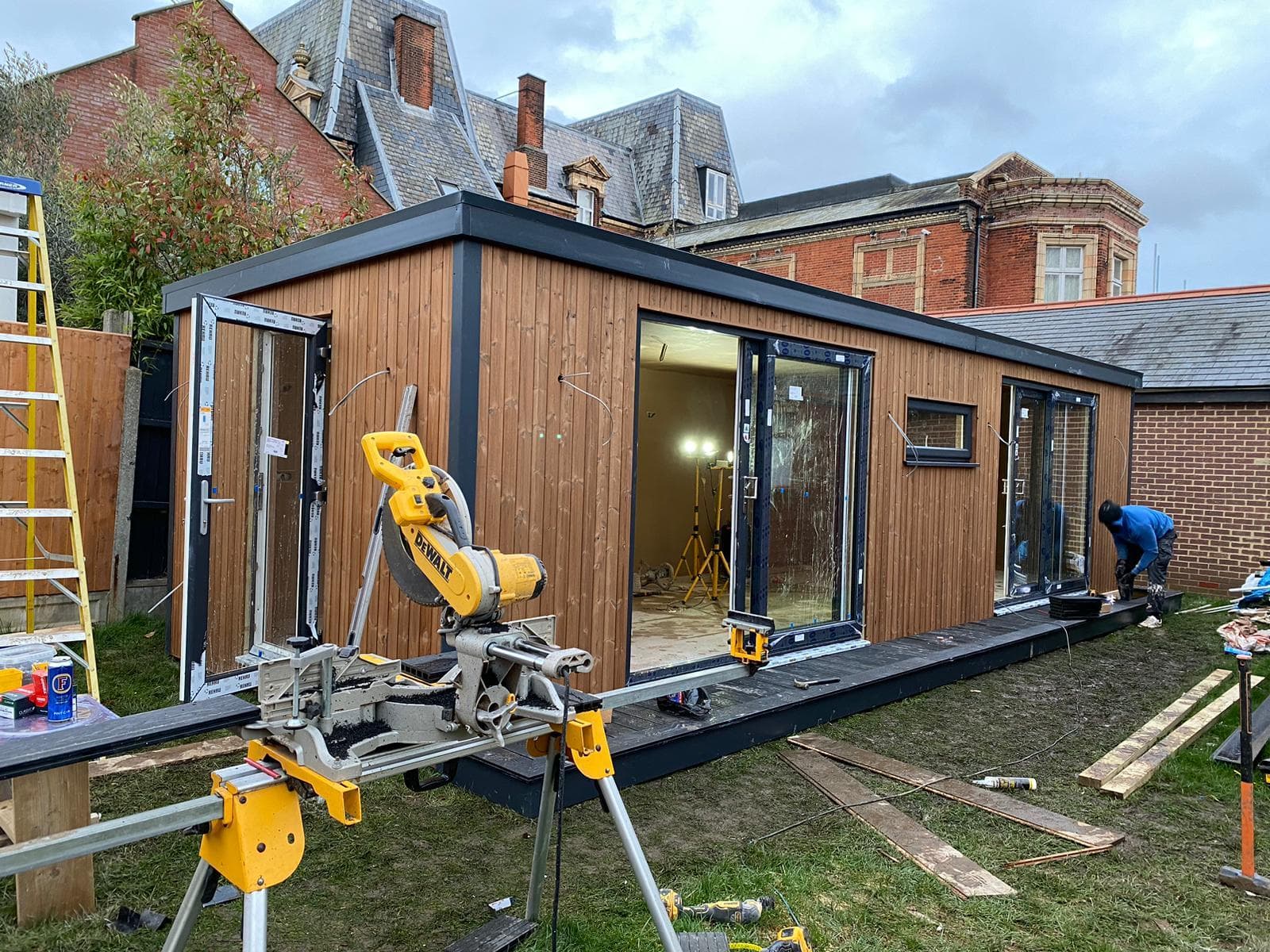
Do Garden Rooms Need Building Regulations Approval?
One of the most common questions customers ask when purchasing a garden room is whether Building Regulations approval is required.
In England, many detached garden rooms, garden offices and garden studios can be installed without requiring full Building Regulations approval, provided they meet the relevant exemption criteria.
These exemptions generally depend on the building's internal floor area, distance from property boundaries, construction materials and whether the building contains sleeping accommodation.
At Oeco Garden Rooms, we manufacture and install a wide range of fully insulated garden buildings designed for year-round use, including garden offices, studios, gyms, soundproof rooms and garden pods.
This guide explains the main garden room Building Regulations requirements, helping you understand when approval may be necessary and what to consider before purchasing your garden building.
What Are Building Regulations?
Building Regulations are legal requirements designed to ensure buildings meet appropriate standards of health, safety, structural performance, energy efficiency and accessibility.
They cover important aspects of construction, including structural stability, fire safety, insulation, ventilation, electrical installations and the suitability of building materials.
However, certain small detached buildings are exempt from many of these requirements when they meet specific conditions.
The main exemptions relevant to domestic garden rooms are contained within Schedule 2, Class 6 of the Building Regulations 2010.
Understanding these exemptions can help homeowners choose an appropriate garden building and establish whether Building Control approval is required.
Garden Room Building Regulations – The 15m² & 30m² Rules
The internal floor area of a garden room is one of the main factors determining whether the building qualifies for an exemption.
Garden Rooms Up to 15m²
A detached garden room with an internal floor area not exceeding 15m² will normally qualify for the small detached building exemption, provided it does not contain sleeping accommodation.
For this exemption, there is no general requirement for the building to be positioned at least 1 metre from the property boundary.
This makes smaller garden rooms and garden pods particularly suitable for properties with limited outdoor space.
However, exemption from the main Building Regulations requirements does not automatically remove obligations relating to electrical installations or other regulated work.
Garden Rooms Over 15m² and Up to 30m²
Detached, single-storey garden rooms with an internal floor area greater than 15m² but not exceeding 30m² can also qualify for exemption.
To qualify, the building must contain no sleeping accommodation and satisfy at least one of the following conditions:
- No part of the building is less than 1 metre from the property boundary.
- The building is constructed substantially from non-combustible materials.
Because Oeco garden rooms generally use timber-framed construction, positioning a qualifying building at least 1 metre from the boundary is normally the more straightforward approach.
The non-combustible construction alternative should not be assumed to apply simply because a timber-framed garden room has external composite or fire-rated cladding.
Garden Rooms Over 30m²
Garden rooms with an internal floor area exceeding 30m² do not qualify for the standard small detached building exemption.
Building Regulations approval will therefore normally be required, unless another specific exemption applies.
Larger garden rooms may need to demonstrate compliance with applicable requirements relating to structural design, fire safety, insulation, ventilation, foundations and electrical installations.
Customers considering a larger garden building should establish the relevant approval requirements before construction begins.
Garden Room Building Regulations – Quick Reference
| Internal Floor Area | General Requirements |
|---|---|
| Up to 15m² | Normally exempt if detached and contains no sleeping accommodation |
| Over 15m² to 30m² | Normally exempt if detached, single-storey, without sleeping accommodation and at least 1m from the boundary or substantially non-combustible |
| Over 30m² | Building Regulations approval normally required |
| Any size containing sleeping accommodation | Standard small detached building exemption does not apply |
These are general rules for England. Individual circumstances and the precise construction and use of a building can affect whether an exemption applies.
How Close Can a Garden Room Be to a Boundary?
Boundary distances are particularly important for garden rooms with an internal floor area greater than 15m².
For buildings over 15m² and up to 30m², the standard exemption requires the building to be at least 1 metre from the boundary unless it is constructed substantially from non-combustible materials.
For garden rooms not exceeding 15m², the small detached building exemption does not impose the same 1-metre boundary condition.
However, customers should still consider access for maintenance, drainage, roof overhangs and the position of neighbouring structures.
A garden room positioned close to a boundary may also require particular attention to fire safety, even where the building qualifies for an exemption.
Do Garden Offices Need Building Regulations Approval?
Many detached garden offices qualify for the same Building Regulations exemptions as other small garden buildings.
A garden office not exceeding 15m² will normally be exempt if it contains no sleeping accommodation.
Larger garden offices of up to 30m² may also qualify, subject to the relevant boundary distance or non-combustible construction requirements.
The building's actual use and whether it forms part of a separate commercial operation may affect the requirements.
Oeco's fully insulated garden offices feature practical internal finishes, energy-efficient glazing and complete electrical installations, creating comfortable working environments throughout the year.
Do Garden Gyms, Studios & Soundproof Rooms Need Building Regulations?
Garden gyms, art studios, hobby rooms and domestic soundproof music studios may qualify for the small detached building exemptions when they meet the relevant conditions.
The same general floor area, boundary distance and sleeping accommodation restrictions apply.
However, specialist uses can introduce additional considerations.
For example, a garden gym may need appropriate floor strength for heavy exercise equipment, while a recording studio may require enhanced acoustic construction, ventilation and electrical installations.
Where a building is intended for commercial use or regular public access, additional requirements may apply.
Do Garden Annexes & Bedrooms Need Building Regulations Approval?
Garden buildings intended for sleeping accommodation require particular attention.
The standard small detached building exemptions do not apply to buildings containing sleeping accommodation, regardless of their floor area.
A garden annexe intended for residential use will therefore normally require Building Regulations approval.
This may involve requirements relating to structural safety, insulation, fire protection, ventilation, sanitation, drainage and other relevant construction standards.
A garden room suitable for working or relaxing throughout the year should not automatically be considered suitable or approved for residential accommodation.
Customers considering a garden annexe or bedroom should establish the necessary requirements before placing an order.
Structural Strength & Garden Room Foundations
Structural strength is an important consideration when purchasing any garden building.
A well-designed structure must be capable of supporting its own weight and resisting relevant loads from wind, snow and normal use.
Oeco garden rooms incorporate substantial timber framing and engineered roof systems designed to provide strength and durability.
Our buildings also include suitable foundation systems selected according to the building design and ground conditions.
For garden rooms requiring Building Regulations approval, structural calculations and other supporting information may be necessary to demonstrate compliance with the relevant requirements.
Fire Safety & Garden Room Construction
Fire safety is an important aspect of garden building design, particularly where buildings are positioned close to property boundaries.
The applicable requirements depend on the building's size, construction, location and intended use.
For certain exempt buildings, boundary distances or substantially non-combustible construction form part of the exemption criteria.
Where Building Regulations approval is required, matters such as external wall construction, fire resistance, escape arrangements and separation from neighbouring buildings may need to be considered.
Customers should not assume that external cladding alone determines the fire performance of the complete building.
Insulation & Energy Efficiency
Even when a garden room is exempt from the main Building Regulations requirements, effective insulation remains essential for comfortable year-round use.
Oeco garden rooms feature insulation within the walls, roof and floor, helping to reduce heat loss during colder months and unwanted heat gain during warmer weather.
Our Premium Garden Rooms and Luxury Garden Studios incorporate insulation designed to meet relevant Building Regulations thermal standards.
Combined with energy-efficient double glazing, appropriate ventilation and weather-resistant construction, effective insulation can help reduce heating requirements and improve overall comfort.
However, insulation performance alone does not mean that an entire garden building has received Building Regulations approval.
Ventilation & Moisture Management
Appropriate ventilation is important for maintaining a comfortable and healthy garden room environment.
Without sufficient ventilation, moisture can accumulate, potentially leading to condensation and deterioration of internal finishes.
Oeco garden rooms incorporate protective membranes and construction methods designed to help manage moisture within the building structure.
Where Building Regulations apply, ventilation arrangements must satisfy the relevant requirements for the building's intended use.
Heating, air conditioning, occupancy levels and specialist activities may also influence ventilation needs.
Electrical Installations & Certification
Most modern garden rooms include lighting, power sockets and other electrical equipment.
Electrical safety is an important consideration, whether or not the garden building itself qualifies for a Building Regulations exemption.
Oeco garden rooms include electrical installations such as consumer units, lighting and power sockets, with appropriate certification for the work carried out.
Electrical installations must comply with applicable safety requirements, including Part P where relevant.
The connection between the garden room and the main property should also be appropriately designed and installed.
Why Choose Oeco Garden Rooms?
At Oeco, we believe that construction quality should remain a priority regardless of whether a garden building requires formal Building Regulations approval.
Our extensive range includes affordable Essential Garden Pods, Premium Garden Rooms and Luxury Garden Studios, with options suitable for different budgets and requirements.
Depending on the range and specification, our buildings incorporate substantial timber framing, fully insulated walls, roofs and floors, energy-efficient double glazing, protective membranes and durable external cladding.
Every Oeco garden building also benefits from professional on-site installation and a 10-year structural guarantee.
Our experienced sales team can discuss your proposed building size, intended use and installation requirements, helping you identify an appropriate garden building.
Building Regulations Advice for Your Garden Room
Understanding Building Regulations is an important part of planning a new garden room, particularly when considering larger buildings or accommodation involving sleeping facilities.
Whether you're looking for a garden office, gym, studio, soundproof room or garden pod, Oeco offers a choice of fully insulated garden buildings designed for comfort and long-term use.
Contact Oeco Garden Rooms today to discuss your requirements, request a free brochure or obtain a quotation.
Email: sales@oecogardenrooms.co.uk
Important: This guide provides general information about Building Regulations in England and is not a substitute for professional advice. Exemptions depend on the specific building and its intended use. Customers should confirm their requirements with their local authority Building Control department or an appropriately qualified building control professional before construction.
Garden Room Building Regulations – Frequently Asked Questions
1. Do I Need Building Regulations Approval for a Garden Room?
Many detached garden rooms in England are exempt from the main Building Regulations requirements, provided they meet specific conditions.
Generally, buildings not exceeding 15m² without sleeping accommodation qualify for exemption. Buildings over 15m² and up to 30m² may also qualify if they meet the relevant boundary distance or non-combustible construction requirements.
2. What Is the Maximum Size of a Garden Room Without Building Regulations Approval?
Under the standard small detached building exemption, the maximum internal floor area is 30m².
To qualify, the building must be single-storey, contain no sleeping accommodation and either be positioned at least 1 metre from the boundary or constructed substantially from non-combustible materials.
Buildings exceeding 30m² will normally require Building Regulations approval.
3. Does a Garden Room Under 15m² Need Building Regulations Approval?
A detached garden room with an internal floor area not exceeding 15m² will normally be exempt, provided it does not contain sleeping accommodation.
There is no specific 1-metre boundary requirement within this exemption, although other safety and installation considerations remain important.
4. Can I Build a Garden Room Within 1 Metre of a Boundary?
Yes, depending on the building's size and construction.
A detached garden room not exceeding 15m² may qualify for exemption without a minimum 1-metre boundary clearance.
For buildings over 15m² and up to 30m², the exemption requires either a minimum 1-metre boundary distance or construction substantially from non-combustible materials.
5. Do Building Regulations Apply to Garden Offices?
Many domestic garden offices qualify for the same exemptions as other detached garden buildings.
The requirements depend on floor area, boundary position, construction and intended use.
A garden office used for ordinary home working may qualify for exemption, while a larger office or building used for certain commercial purposes may require additional assessment.
6. Do Garden Rooms Used as Bedrooms Need Building Regulations Approval?
Yes, garden rooms containing sleeping accommodation do not qualify for the standard small detached building exemption.
Buildings intended as bedrooms, residential annexes or independent living accommodation will normally require Building Regulations approval, even if their floor area is less than 15m².
7. Do Fully Insulated Garden Rooms Need Building Regulations Approval?
Not necessarily. Whether approval is required depends primarily on the building's size, construction, boundary position and intended use.
A fully insulated garden room may qualify for exemption even when it incorporates high-performance insulation, double glazing and electrical installations.
However, exemption does not remove the importance of safe construction or compliance with any applicable requirements.
8. Do Garden Rooms Need Electrical Certification?
Electrical installations in garden rooms must meet applicable electrical safety requirements.
New circuits, lighting, sockets and connections to the main property should be designed, installed, inspected and tested appropriately.
Oeco garden rooms include electrical installations with appropriate certification for the work undertaken. Some electrical work may also require Building Regulations notification or certification under Part P.
9. Do Garden Rooms Over 30m² Need Building Regulations Approval?
Yes, garden rooms exceeding 30m² internal floor area will normally require Building Regulations approval because they fall outside the standard small detached building exemption.
Approval may involve assessment of structural design, foundations, insulation, fire safety, ventilation and other applicable requirements.
Customers considering larger garden rooms should establish the approval requirements before construction begins.
10. How Can I Check Whether My Garden Room Meets Building Regulations?
Start by confirming the proposed building's internal floor area, intended use, construction materials and distance from property boundaries.
These details will help establish whether the building qualifies for an exemption or requires Building Regulations approval.
For formal confirmation, contact your local authority Building Control department or an appropriately qualified building control professional.
Oeco can provide information about its garden building specifications to help customers understand their proposed installation.
- Environmental Policy
- Exterior Specifications
- Interior Specifications
- Ready to Order
- Planning Permission
- Building Regulations
- Soundproof Garden Rooms
- Garden Workshop Guide
- Garden Studio Guide
- Garden Shed Guide
- Garden Sauna Guide
- Garden Room Guide
- Garden Pod Guide
- Garden Office Guide
- Garden Lodge Guide
- Garden Annex Guide
- Affiliate Referral Programme