
The Complete Guide to Soundproof Garden Rooms
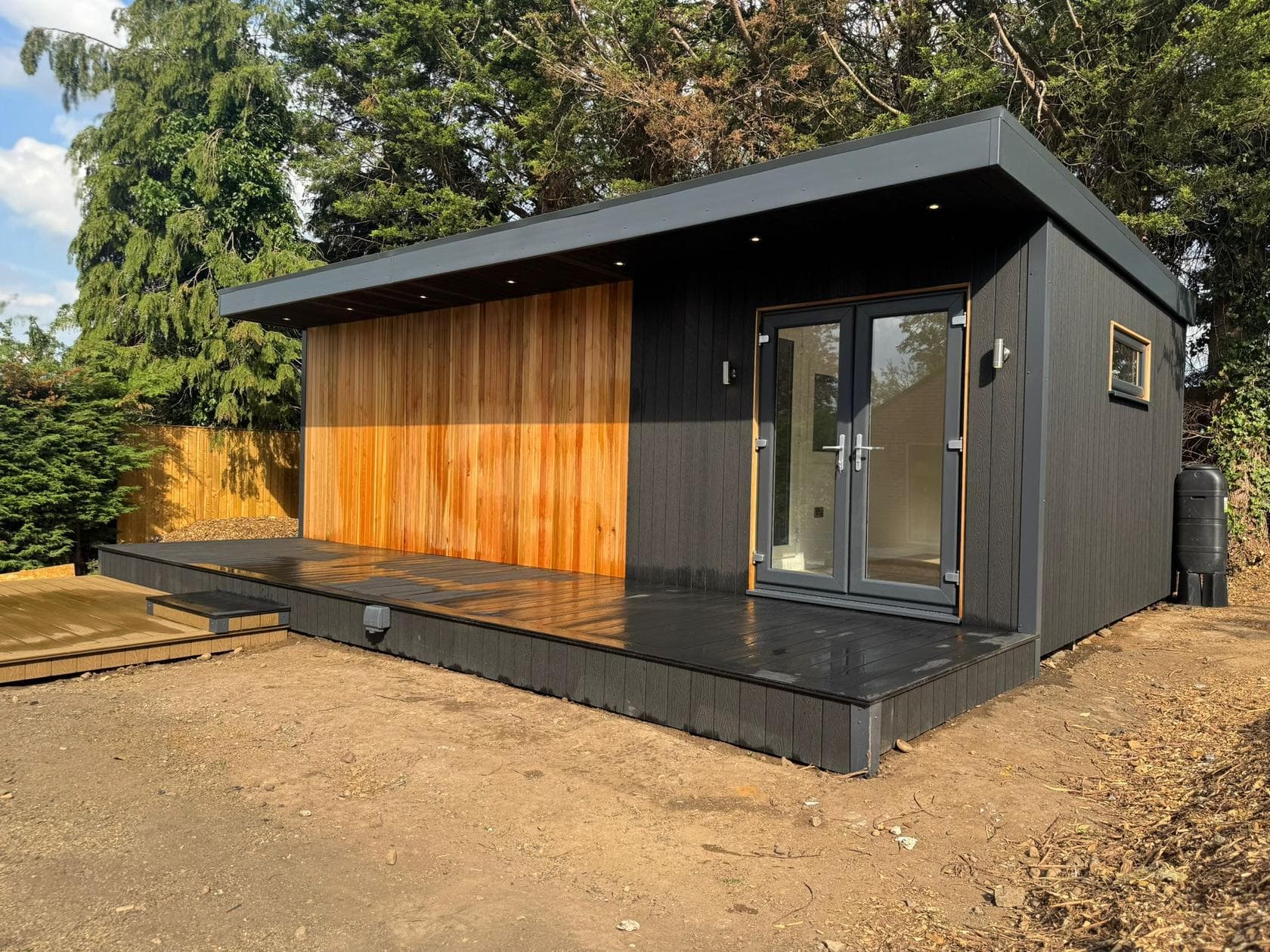
Garden Music Rooms, Recording Studios and Soundproof Practice Spaces
For musicians, recording artists, bands and music enthusiasts, having somewhere to practise or record without disturbing the rest of the household can be a constant challenge.
Whether you're a drummer rehearsing regularly, a guitarist working on new material, a music producer recording tracks or a professional musician developing your next project, finding a suitable space can make an enormous difference to your enjoyment and creativity.
Traditional home environments are rarely designed to accommodate musical instruments, amplifiers, recording equipment or extended practice sessions. Bedrooms, spare rooms and garages may provide temporary solutions, but unwanted noise, interruptions and limited space can quickly become frustrating.
A purpose-designed soundproof garden room offers an attractive alternative.
By creating a dedicated music or recording space away from the main house, you can enjoy greater freedom to practise, compose, record and develop your musical interests in a comfortable, professional environment.
Modern soundproof garden studios can be designed around the particular needs of musicians, incorporating specialist acoustic construction, carefully planned layouts and suitable electrical provision.
They can accommodate everything from individual instrumental practice to professional recording sessions and small band rehearsals.
At Oeco Garden Rooms, we offer specialist Soundproof Garden Rooms designed for music practice and recording, including dedicated music rooms and recording studios with separate acoustic spaces.
In this comprehensive guide, we'll explore the different types of soundproof garden buildings, their practical uses, important acoustic considerations, studio layouts and how to create a music space that suits your requirements.
What Is a Soundproof Garden Room?
A soundproof garden room is a purpose-designed outdoor building incorporating specialist acoustic measures intended to reduce the transmission of sound between the interior and surrounding environment.
Unlike conventional garden rooms, which are primarily designed for comfort, leisure or home working, soundproof garden rooms place particular emphasis on controlling noise.
This makes them suitable for activities that generate higher sound levels, including musical instruments, amplified music, recording sessions and rehearsals.
A properly designed soundproof garden studio may incorporate multiple layers of acoustic materials, isolated internal structures, specialist doors and carefully considered ventilation.
The objective is to reduce the amount of sound escaping from the building while also limiting unwanted external noise entering the room.
However, it is important to understand that no building should automatically be regarded as completely soundproof.
The level of sound isolation achieved depends on the design, construction, frequency of sound, volume levels and the surrounding environment.
For musicians and recording professionals, choosing a building designed specifically for acoustic performance is generally preferable to attempting to adapt a conventional garden shed or summerhouse.
Why Choose a Soundproof Garden Room for Music?
One of the greatest challenges facing musicians is finding somewhere they can practise regularly without creating problems for family members or neighbours.
Even relatively modest instruments can generate significant sound levels, particularly when played repeatedly over extended periods.
Drums, electric guitars, bass amplifiers and brass instruments can be especially difficult to accommodate within a conventional home.
A dedicated soundproof garden music room can help reduce these difficulties by providing a separate environment designed around musical activities.
Rather than constantly adjusting your practice schedule to suit everyone else, you can enjoy greater flexibility and independence.
Having a permanent music space also allows instruments, amplifiers and recording equipment to remain set up between sessions.
This makes spontaneous practice easier and eliminates the inconvenience of repeatedly assembling and dismantling equipment.
For musicians who practise frequently, the convenience of having a dedicated studio just a short walk from home can be particularly valuable.
Garden Music Rooms vs Garden Recording Studios
Although the terms are sometimes used interchangeably, a garden music room and a garden recording studio may serve different purposes.
Understanding the distinction can help you choose the most suitable layout.
Soundproof Garden Music Rooms
A garden music room is primarily intended for playing instruments, practising, rehearsing and enjoying music.
These buildings are particularly suitable for drummers, guitarists, pianists, singers and other musicians who want a dedicated practice environment.
Oeco's soundproof music room range features a separate entrance lobby connected to an acoustically isolated inner practice room.
The lobby provides a transition between the outside environment and the main music space, with specialist acoustic doors helping control sound transmission.
This arrangement can be especially useful where the main priority is practising music rather than operating a separate recording control room.
Garden Recording Studios
A garden recording studio is generally designed around recording, monitoring and producing music.
Professional recording environments often benefit from separating the performance area from the space used to operate recording equipment.
Oeco's recording studio range provides a control or recording area alongside a separate room-within-a-room live practice space.
This allows musicians and recording engineers to work in distinct areas, depending on the selected layout and available space.
For customers recording vocals, instruments or bands, the separation can offer greater flexibility when organising recording sessions.
The most suitable arrangement depends on whether your priority is individual practice, full-band rehearsals, music production or recording live performances.
Understanding Soundproofing and Acoustic Treatment
One of the most important distinctions when planning a garden music studio is the difference between soundproofing and acoustic treatment.
Although both are essential considerations, they perform different functions.
Soundproofing – Controlling Sound Transmission
Soundproofing, more accurately described as sound isolation, aims to reduce sound travelling between the inside and outside of a building.
This is particularly important when practising drums, playing amplified instruments or recording music near neighbouring properties.
Effective sound isolation typically relies on a combination of mass, structural separation, airtightness and carefully designed acoustic components.
Doors, windows, ventilation openings and structural connections all influence performance.
Acoustic Treatment – Improving Sound Inside the Room
Acoustic treatment focuses on controlling how sound behaves within the room itself.
Hard surfaces can reflect sound, creating echoes, reverberation and unwanted resonances.
Acoustic panels, bass traps and other specialist treatments can help manage these reflections and improve the listening environment.
For recording studios, appropriate acoustic treatment can make it easier to judge recordings and produce more accurate mixes.
For music practice rooms, it can improve clarity and reduce excessive reverberation.
A well-designed music studio may therefore require both sound isolation and internal acoustic treatment.
One does not automatically replace the other.
What Is a Room-Within-a-Room Music Studio?
The room-within-a-room principle is widely used in specialist acoustic construction.
Rather than relying entirely on the external walls of a building, an additional internal structure is created to help separate the music space from the surrounding building.
This separation, often called decoupling, can reduce the transmission of vibration and sound through structural connections.
It is particularly relevant when dealing with powerful instruments such as drums and bass amplifiers.
Oeco's specialist music and recording rooms use a room-within-a-room approach, incorporating multiple layers of acoustic materials and an inner space separated from the outer structure.
The precise acoustic performance depends on the complete construction and the frequencies involved.
A room-within-a-room design is an important part of effective sound isolation, but its success also depends on doors, ventilation, glazing and other details.
For customers investing in a dedicated music environment, understanding this principle helps explain why a specialist soundproof garden room differs substantially from a conventional insulated garden building.
Soundproof Garden Rooms for Drummers
Drums are among the most challenging instruments to accommodate within a residential property.
Acoustic drum kits can generate substantial sound levels, including powerful low-frequency energy and vibrations transmitted through floors and walls.
Practising inside a spare bedroom or garage can therefore create considerable disturbance.
A purpose-designed soundproof garden drum room provides a dedicated environment where acoustic isolation can be considered from the outset.
The size of the room should allow sufficient space for the drum kit, stool, cymbals and comfortable movement.
Additional space may be needed for recording microphones, monitors and other equipment.
Low-frequency sound and vibration require particular attention, as they can be more difficult to control than higher-frequency sounds.
It is important to discuss your intended playing levels and equipment with the supplier before choosing a specification.
A soundproof garden drum studio can provide greater flexibility for practice, although the extent to which noise is reduced will depend on the acoustic design and surrounding conditions.
Garden Music Studios for Guitarists and Bass Players
Guitarists and bass players often benefit from having a dedicated environment where amplifiers, effects pedals and recording equipment can remain permanently arranged.
Electric guitars can be practised quietly through headphones, but many musicians prefer the experience of playing through an amplifier.
Bass amplifiers present particular acoustic challenges because low-frequency sound can travel through building structures and remain noticeable at considerable distances.
A specialist garden music room provides the opportunity to plan suitable sound isolation around the instruments and equipment you intend to use.
Wall-mounted guitar racks, amplifier stands and equipment storage can help create an organised environment.
For musicians who record their performances, a computer workstation and audio interface can be incorporated into the layout.
Having everything permanently connected makes it easier to practise, experiment with different sounds and record ideas whenever inspiration strikes.
Soundproof Garden Rooms for Bands and Rehearsals
Finding suitable rehearsal space is a common challenge for bands.
Commercial rehearsal studios can be expensive, require advance booking and involve transporting instruments and equipment between locations.
A dedicated garden rehearsal room offers an alternative for musicians who regularly practise together.
The required size depends on the number of performers, their instruments and the equipment involved.
A small group using compact amplifiers may need considerably less space than a full band with acoustic drums, keyboards, large speaker cabinets and vocal equipment.
When planning a rehearsal room, consider the arrangement of musicians, access to electrical sockets and safe movement around equipment.
Ventilation is particularly important because several people performing in an enclosed space can generate substantial heat.
Acoustic treatment can also improve the internal sound environment, making it easier for musicians to hear each other clearly.
For louder bands, it is essential to establish realistic sound-isolation expectations before installation, particularly where neighbouring homes are close to the proposed building.
Creating a Professional Garden Recording Studio
A garden recording studio can provide a permanent environment for musicians, producers and recording engineers who want greater control over their working space.
Unlike recording in a bedroom or living room, a dedicated studio allows equipment to remain permanently arranged.
Computers, audio interfaces, mixing consoles, studio monitors and microphones can all be positioned around the recording workflow.
A separate control area can be particularly useful when recording live instruments or vocals.
This allows the recording engineer to monitor performances from a different space, reducing the influence of sound generated by the instruments being recorded.
The live room can be arranged around microphones, instruments and performers, while the control area accommodates the recording equipment.
Careful acoustic treatment is important for accurate monitoring and recording quality.
For professional users, it may also be worth considering future expansion, additional equipment and the possibility of welcoming visiting musicians or clients.
Garden Studios for Music Production
Not every garden recording studio needs to accommodate acoustic drums or a full band.
Many modern music producers work primarily with computers, synthesisers, MIDI controllers and electronic instruments.
For these users, a garden production studio can provide a quiet, dedicated environment for composing, arranging, editing and mixing music.
A comfortable workstation, correctly positioned monitors and appropriate acoustic treatment are often more important than having a large performance area.
Electronic music producers may also benefit from sufficient desk space for keyboards, controllers and hardware synthesisers.
A dedicated garden studio allows creative work to remain separate from household distractions.
It can also provide a more professional environment for collaborating with singers, musicians and other producers.
Soundproof Garden Rooms for Singers and Vocal Recording
Vocal recording benefits from a controlled acoustic environment with minimal unwanted background noise.
Household sounds, traffic, nearby conversations and other disturbances can become particularly noticeable when using sensitive recording microphones.
A specialist garden recording studio can help reduce the intrusion of external sound while providing a dedicated space for vocal performances.
Internal acoustic treatment can help control reflections that might otherwise affect recording quality.
The room should also provide comfortable ventilation, suitable lighting and sufficient space for microphones, stands and performers.
For singers who regularly record demos, voiceovers or professional material, a permanent recording environment can make the process more convenient and consistent.
Garden Studios for Piano and Keyboard Practice
Pianists and keyboard players can also benefit from having a separate music room.
An acoustic piano produces sound across a wide frequency range, while larger instruments can occupy considerable floor space.
Before selecting a garden music room, consider the dimensions and weight of the instrument, access for delivery and suitable internal conditions.
Acoustic pianos are sensitive to temperature and humidity changes, so a stable environment is particularly important.
Digital pianos and electronic keyboards offer greater flexibility, especially where headphone practice is possible.
A dedicated garden piano room can provide a peaceful setting for lessons, practice and composition without occupying valuable space inside the home.
Choosing the Right Size Soundproof Garden Room
The ideal size depends on the activities you intend to undertake and the equipment required.
A compact studio may be suitable for individual instrument practice or music production, while larger buildings offer more flexibility for recording and rehearsals.
It is particularly important to distinguish between external building dimensions and the usable space inside the acoustically isolated room.
Specialist acoustic construction can reduce internal dimensions because additional wall, floor and ceiling layers occupy space.
Oeco's price list includes soundproof buildings with nominal sizes beginning at 3m x 4m and extending to larger configurations.
The recording studio layouts divide the available space between a control or recording area and a separate live room.
The music room layouts incorporate an entrance lobby and dedicated practice area.
When choosing a size, consider the number of musicians, instrument dimensions, equipment storage and the clearance required for safe movement.
It is also worth allowing some flexibility for future equipment purchases or changes in how the room will be used.
Recording Studio Layout and Equipment Positioning
A successful recording studio layout should support the way you intend to work.
For computer-based production, the main workstation is usually positioned to provide comfortable access to monitors, keyboards and recording equipment.
Studio monitors should be arranged carefully to create a balanced listening position.
For live recording, sufficient space is needed around instruments and microphones.
Cable management is another important consideration.
Audio cables, power leads and microphone connections should be organised to reduce clutter and minimise trip hazards.
Suitable storage for microphones, stands, headphones and accessories can help keep the studio tidy.
If you regularly work with visiting musicians, consider how performers will move between the control area and live room.
A practical layout can make recording sessions more efficient and enjoyable.
Lighting and Atmosphere in a Garden Music Studio
The atmosphere of a music studio can influence how comfortable and creative the space feels.
Some musicians prefer a bright, modern environment, while others enjoy subdued lighting and a more intimate studio atmosphere.
Adjustable LED lighting can provide flexibility for different activities.
Bright task lighting is useful when connecting equipment, reading music or adjusting controls.
Softer lighting may be preferable during recording sessions or relaxed practice.
Decorative lighting can also help create a distinctive studio identity.
However, electrical equipment and lighting should be selected and installed appropriately to avoid interference, excessive heat or safety problems.
A well-designed music studio should combine practical lighting with an environment that encourages creativity.
Heating and Ventilation in Soundproof Music Rooms
Comfort is particularly important in music rooms because musicians may spend several hours practising or recording.
Computers, amplifiers, recording equipment and multiple occupants can generate considerable heat.
Suitable heating is important during colder months, while ventilation helps maintain air quality and prevent the room from becoming uncomfortable.
Acoustically isolated rooms require particular attention to ventilation because ordinary open vents can provide a route for sound transmission.
Specialist acoustic ventilation arrangements may therefore be needed to balance fresh-air requirements with noise control.
For customers using sensitive microphones, the noise generated by fans and ventilation equipment should also be considered.
The ideal solution depends on the room's intended use, occupancy and acoustic requirements.
Can a Soundproof Garden Room Be Used for Other Activities?
Although soundproof garden rooms are particularly attractive to musicians, their acoustic properties can also make them useful for other activities.
Potential applications include voiceover recording, podcast production, audiobook narration, audio editing and certain forms of video content creation.
Some users may also appreciate a quieter environment for focused creative work.
However, the appropriate specification depends on the type and level of sound involved.
A room intended for quiet speech recording has different requirements from one used for acoustic drums or amplified bass instruments.
Similarly, reducing outside noise for recording purposes is not the same as containing high sound levels generated inside the room.
Choosing the right design begins with understanding how the space will actually be used.
Planning Permission for Soundproof Garden Rooms
Many domestic garden buildings in England can qualify as permitted development, provided they satisfy the relevant planning conditions.
These include restrictions relating to height, location, garden coverage and intended use.
However, a soundproof garden music room introduces an additional consideration: the potential impact of noise on neighbouring properties.
Even where a building itself qualifies as permitted development, its use must not create a statutory noise nuisance.
Planning considerations may also differ where the studio is used commercially, particularly if it involves regular clients, employees, deliveries or frequent band rehearsals.
For professional recording businesses, it is advisable to establish whether the proposed use requires additional planning permission.
The safest approach is to discuss the intended activities and expected sound levels before purchasing.
Understanding Acoustic Performance
When comparing soundproof garden studios, it is important to understand what acoustic performance claims actually mean.
Sound reduction is often expressed in decibels, but a single figure does not necessarily describe how a room will perform under every condition.
Different frequencies behave differently.
High-frequency sounds may be easier to control than powerful low-frequency energy from bass instruments and kick drums.
The measured performance of an individual wall or door also does not necessarily represent the performance of the complete building.
For customers with demanding acoustic requirements, it is sensible to request details of any available test evidence, the measurement method and the conditions under which results were obtained.
It is equally important to consider the surrounding environment, neighbouring properties and intended playing levels.
A specialist soundproof garden room can provide substantial benefits, but realistic expectations are essential.
Why Choose Oeco Soundproof Garden Rooms?
Established in 2006, Oeco Garden Rooms is a family-run British manufacturer specialising in high-quality garden buildings, including purpose-designed soundproof music rooms and recording studios.
We understand that musicians, recording artists and music producers have very different requirements from customers purchasing a conventional garden room.
Whether you're practising drums, rehearsing with a band, recording vocals or producing professional music, effective sound isolation is essential for creating a practical and enjoyable working environment.
Our specialist soundproof garden rooms are designed to provide dedicated spaces for music practice, recording and production, helping reduce noise transmission between the building and its surroundings.
Unlike standard insulated garden rooms, which are primarily designed for thermal comfort, our soundproof buildings incorporate specialist acoustic construction methods intended to achieve greater sound isolation.
Two Specialist Soundproof Garden Room Ranges
At Oeco, we offer two distinct soundproof garden building designs to accommodate different musical activities and requirements.
Soundproof Recording Studios
Our Recording Studio range is designed for musicians, producers and recording artists who require separate areas for recording and monitoring.
These buildings incorporate a dedicated control or recording area alongside a separate, acoustically isolated room-within-a-room live practice space.
This arrangement allows recording equipment, mixing desks and computers to be positioned away from the main performance area, providing greater flexibility for music production and recording.
The separate live room is particularly useful for recording vocals, instruments and other performances while helping reduce unwanted sound transmission.
Soundproof Music Rooms
Our Music Room range is designed primarily for musicians who need a dedicated space for practising, playing instruments and rehearsing.
These buildings feature a separate entrance lobby leading into an acoustically isolated room-within-a-room practice area.
The lobby provides an additional separation between the external entrance and the main music space, helping improve the overall acoustic isolation.
This design is particularly suitable for drummers, guitarists, pianists, instrumentalists and musicians who want to practise at home without causing unnecessary disturbance.
Specialist Acoustic Construction
Effective soundproofing requires more than simply adding insulation to the walls of a conventional garden building.
Our soundproof rooms incorporate specialist acoustic materials and construction techniques designed to reduce the transmission of sound.
These include acoustically separated internal structures, specialist acoustic linings and carefully considered doors and glazing.
The room-within-a-room principle helps reduce the direct transfer of vibration between the inner music space and the outer building structure.
This is particularly important when dealing with instruments that produce substantial sound levels, such as drums, amplified guitars and bass instruments.
The objective is to create a dedicated environment where musicians can enjoy their instruments while reducing the impact on neighbouring properties and other household members.
Actual sound isolation depends on factors including building configuration, installation details, sound frequencies and playing volumes. No building should be assumed to eliminate all sound transmission.
Designed for Musicians and Recording Artists
Our soundproof garden rooms are suitable for a wide variety of musical activities.
Whether you're a professional musician, an enthusiastic amateur, a music teacher or someone developing a home recording setup, a dedicated soundproof building provides the freedom to create a space around your requirements.
Popular applications include drum practice, guitar rehearsals, piano playing, vocal recording, music production, band rehearsals and recording sessions.
Having a separate building also allows equipment to remain permanently installed, avoiding the inconvenience of repeatedly setting up and dismantling instruments, microphones, amplifiers and recording equipment.
For recording artists and producers, this can make the creative process more efficient and enjoyable.
Professional Installation and Long-Term Quality
As an established British manufacturer, Oeco takes pride in producing high-quality garden buildings supported by experienced installation teams.
Our soundproof garden rooms are designed around the specialist requirements of music practice and recording, combining practical layouts with carefully considered acoustic construction.
We offer a range of sizes and configurations to accommodate different instruments, equipment and intended uses.
Our team can help customers understand the differences between our Music Room and Recording Studio ranges and discuss the most suitable option for their requirements.
Customers are also welcome to visit our two indoor showrooms in Ripon, North Yorkshire, to learn more about our buildings, construction methods and available specifications.
Explore our complete range of Oeco Soundproof Garden Rooms to discover our specialist Music Rooms and Recording Studios.
Conclusion – Create Your Perfect Garden Music or Recording Studio
For musicians, bands, recording artists and music producers, having a dedicated space to practise and create music can make an enormous difference.
A soundproof garden room provides the opportunity to enjoy your instruments, develop your skills and work on creative projects without taking over valuable space inside your home.
Unlike conventional garden rooms, purpose-designed soundproof buildings incorporate specialist acoustic construction intended to reduce noise transmission and provide a more suitable environment for music practice and recording.
Whether you're a drummer looking for somewhere to practise, a guitarist wanting a dedicated rehearsal space or a producer creating a professional recording environment, choosing the right acoustic layout is essential.
A separate garden music room can provide a convenient place to practise regularly, while a recording studio with dedicated control and live areas offers additional flexibility for recording and production.
Careful consideration should be given to the instruments being used, expected sound levels, room dimensions, ventilation, electrical requirements and the surrounding environment.
At Oeco Garden Rooms, we recognise that every musician has different requirements.
That's why we offer specialist Music Rooms and Recording Studios designed around the practical needs of musicians and recording artists.
Our aim is to provide attractive, comfortable and acoustically considered garden buildings that allow customers to enjoy music in a dedicated environment.
Whether music is your profession, your passion or simply something you love doing in your spare time, having your own garden music room or recording studio can provide a valuable creative space for years to come.
Discover our Oeco Soundproof Garden Rooms and explore the possibilities for your own dedicated music or recording space.
From individual practice rooms to specialist recording studios, Oeco can help you create a garden building designed around your musical ambitions.
10 Benefits of Owning a Soundproof Garden Room
1. Practise Music Without Disturbing Your Neighbours
One of the greatest advantages of a soundproof garden room is the ability to practise musical instruments while significantly reducing noise transmission to neighbouring properties. Specialist acoustic construction helps contain sound within the building, allowing musicians to enjoy their instruments more freely while minimising disturbance to family members and neighbours.
2. Create Your Own Private Music Studio
A soundproof garden room provides a dedicated space where you can enjoy playing, practising and creating music whenever it suits you. Whether you're a guitarist, drummer, pianist or vocalist, having your own private music studio allows you to concentrate on your passion without taking over valuable living space inside your home.
3. Ideal for Drummers and Loud Instruments
Drums, amplified guitars and bass instruments can produce substantial sound levels that are difficult to contain within a conventional home. A purpose-designed soundproof garden room incorporates specialist acoustic isolation to help reduce the transmission of airborne sound and structural vibration, making it a practical solution for musicians who regularly play louder instruments.
4. Create a Professional Garden Recording Studio
A dedicated garden recording studio provides an excellent environment for recording vocals, instruments and music productions. Oeco's Recording Studio range features a separate control or recording area alongside an acoustically isolated room-within-a-room live space, allowing musicians and producers to create a more organised and practical recording environment.
5. Enjoy a Dedicated Band Rehearsal Space
A soundproof garden room can provide a convenient rehearsal space for bands and small musical groups. With sufficient room for instruments, amplifiers and equipment, musicians can practise together without repeatedly hiring external rehearsal facilities. A dedicated garden rehearsal room also allows equipment to remain set up between sessions, saving time and making regular practice more convenient.
6. Improve Concentration and Musical Creativity
Having a separate music room away from everyday household distractions can help musicians concentrate on practising, composing and recording. A dedicated creative environment allows you to focus on developing your skills, experimenting with new ideas and working on musical projects without frequent interruptions, helping make practice sessions more productive and enjoyable.
7. Keep Instruments and Recording Equipment Organised
A garden music studio provides permanent space for instruments, amplifiers, microphones, mixing desks, computers and other specialist equipment. Instead of repeatedly setting up and packing away your equipment, everything can remain organised and ready for use. This is particularly beneficial for recording artists and producers who regularly work with multiple instruments and recording systems.
8. Enjoy Greater Privacy and Independence
A separate soundproof garden room provides a private environment where musicians can practise and record without unnecessarily disrupting household routines. Whether you're taking music lessons, recording vocals or rehearsing with other musicians, having your own dedicated space offers greater independence while allowing family members to continue their everyday activities with fewer interruptions.
9. Create a Comfortable Year-Round Music Space
Modern soundproof garden rooms combine specialist acoustic construction with insulation, double glazing and suitable heating and ventilation. This helps create a comfortable environment for practising and recording throughout the year. A dedicated garden music room can also provide a more consistent setting for instruments and electronic equipment than an uninsulated garage or conventional garden shed.
10. Invest in a Versatile Long-Term Music Facility
A purpose-designed soundproof garden room can adapt as your musical interests and requirements develop. A space initially used for individual instrument practice may later accommodate recording equipment, music production or small rehearsals. With careful planning, a high-quality garden music studio can provide a practical and enjoyable creative environment for many years.
10 Frequently Asked Questions About Soundproof Garden Rooms
1. How Effective Are Soundproof Garden Rooms at Reducing Noise?
A purpose-designed soundproof garden room can significantly reduce the amount of noise transmitted between the building and its surroundings.
Unlike conventional insulated garden rooms, specialist soundproof buildings incorporate acoustic isolation techniques, including decoupled internal structures, sound-absorbing materials and carefully designed doors and glazing.
The level of noise reduction depends on the building's acoustic specification, the frequencies produced and the volume of the instruments being played.
Although no building can guarantee complete sound elimination, a professionally designed soundproof garden room can provide substantially better acoustic isolation than a conventional garden building.
2. Can You Play Drums in a Soundproof Garden Room?
Yes. Soundproof garden rooms are particularly popular with drummers who need a dedicated space to practise without causing unnecessary disturbance to family members and neighbours.
Acoustic drum kits produce substantial sound levels, including low-frequency noise and vibration that can be difficult to control.
Oeco's specialist soundproof Music Rooms incorporate a room-within-a-room design intended to reduce sound transmission through the building structure.
However, the amount of noise audible outside will depend on the drum kit, playing intensity, building specification and surrounding environment.
Customers intending to play acoustic drums should discuss their requirements before choosing a particular design.
3. Will My Neighbours Be Able to Hear Music from My Garden Studio?
A properly designed soundproof garden studio can substantially reduce the amount of music heard outside, but some sound may still be audible, particularly when playing loud instruments.
Bass frequencies, drums and amplified music can be especially challenging because low-frequency sound travels through structures and surrounding environments differently from higher-frequency sound.
The distance to neighbouring properties, background noise levels and the volume of music will also influence how noticeable any remaining sound becomes.
Specialist acoustic construction helps minimise disturbance, but customers should not assume that a soundproof room will make loud music completely inaudible.
4. What Is the Difference Between Soundproofing and Acoustic Treatment?
Soundproofing and acoustic treatment serve two different purposes.
Soundproofing is designed to reduce the transmission of sound between spaces. This generally involves acoustic isolation, additional mass, structural separation and careful control of gaps and sound leakage.
Acoustic treatment improves how sound behaves inside a room by controlling reflections, reverberation and unwanted echoes.
Materials such as acoustic panels, bass traps and diffusers can improve recording and listening conditions, but they do not necessarily prevent sound escaping.
A professional recording studio may require both effective sound isolation and appropriate internal acoustic treatment.
5. What Is a Room-Within-a-Room Soundproof Studio?
A room-within-a-room is a specialist acoustic construction method in which an internal room is structurally separated, as far as practical, from the surrounding building.
This separation helps reduce the direct transmission of sound and vibration through the walls, floor and ceiling.
Additional acoustic materials and carefully designed connections are used to improve isolation.
The principle is particularly useful for music practice, recording studios and rooms containing loud instruments.
Oeco incorporates room-within-a-room construction within the specialist live or practice areas of its Soundproof Music Rooms and Recording Studios.
6. What Is the Difference Between an Oeco Music Room and Recording Studio?
Oeco offers two specialist soundproof garden building ranges designed for different musical requirements.
Our Soundproof Music Rooms feature a separate entrance lobby leading into a room-within-a-room practice area. This design is particularly suitable for drummers, guitarists, pianists and musicians requiring a dedicated rehearsal space.
Our Soundproof Recording Studios incorporate a separate control or recording area alongside an acoustically isolated room-within-a-room live practice space.
The Recording Studio layout is particularly useful for music producers and recording artists who require separate areas for recording performances and operating recording equipment.
Both ranges are designed to provide enhanced acoustic isolation compared with conventional garden rooms.
7. Can a Soundproof Garden Room Be Used for Band Rehearsals?
Yes. A soundproof garden room can provide a practical rehearsal environment for bands and small musical groups, provided the building is appropriately sized and specified.
A dedicated rehearsal room allows instruments, amplifiers and equipment to remain permanently installed, making regular practice more convenient.
However, full-band rehearsals can generate substantial sound levels, particularly when acoustic drums, bass guitars and amplified instruments are used together.
The required level of sound isolation will depend on the instruments, playing volumes, rehearsal frequency and proximity to neighbouring properties.
Customers planning regular band rehearsals should discuss these requirements with Oeco before selecting a building.
8. How Do You Ventilate a Soundproof Garden Room Without Letting Noise Escape?
Ventilation is particularly important in soundproof music rooms because musicians, recording equipment and electronic instruments can generate heat during use.
However, ordinary ventilation openings can allow sound to escape, potentially reducing the effectiveness of the acoustic isolation.
Specialist acoustic ventilation systems can incorporate sound-attenuating ducts, silencers and carefully designed airflow routes to provide fresh air while limiting noise transmission.
The ventilation system should be considered as part of the overall acoustic design rather than added as an afterthought.
For recording studios and rehearsal rooms used for extended periods, suitable ventilation and temperature control are essential for comfort and equipment performance.
9. Can a Soundproof Garden Room Be Used as a Professional Recording Studio?
Yes. A purpose-designed soundproof garden room can provide an excellent environment for home recording, music production and certain professional recording activities.
Oeco's Recording Studio range features a separate control or recording area and an acoustically isolated live practice space.
This arrangement allows recording equipment, computers and mixing desks to be positioned separately from the main performance area.
For professional recording applications, additional internal acoustic treatment may be required to achieve the desired recording and monitoring characteristics.
The suitability of the room will depend on the type of music being recorded, equipment requirements and the acoustic performance needed.
10. Why Choose an Oeco Soundproof Garden Room?
Established in 2006, Oeco Garden Rooms is a family-run British manufacturer specialising in high-quality garden buildings, including purpose-designed soundproof Music Rooms and Recording Studios.
Unlike conventional garden rooms, our specialist soundproof buildings incorporate acoustic construction techniques designed to reduce noise transmission and provide a more suitable environment for music practice and recording.
We offer two dedicated ranges: Music Rooms with a separate entrance lobby and room-within-a-room practice area, and Recording Studios with separate control and acoustically isolated live areas.
Our buildings are professionally installed, with a choice of sizes and configurations to accommodate different musical requirements.
Customers are also welcome to visit our two indoor showrooms in Ripon, North Yorkshire, to discuss their requirements with our experienced team.
Discover our complete range of Oeco Soundproof Garden Rooms and explore the possibilities for your own music or recording studio.
- Environmental Policy
- Exterior Specifications
- Interior Specifications
- Ready to Order
- Planning Permission
- Building Regulations
- Soundproof Garden Rooms
- Garden Workshop Guide
- Garden Studio Guide
- Garden Shed Guide
- Garden Sauna Guide
- Garden Room Guide
- Garden Pod Guide
- Garden Office Guide
- Garden Lodge Guide
- Garden Annex Guide
- Affiliate Referral Programme